SpaceX targets record $75 billion IPO at $1.75 trillion valuation
SpaceX’s IPO target reached $1.75 trillion, but Morningstar’s $780 billion valuation showed how far private-market optimism had drifted from fundamentals.

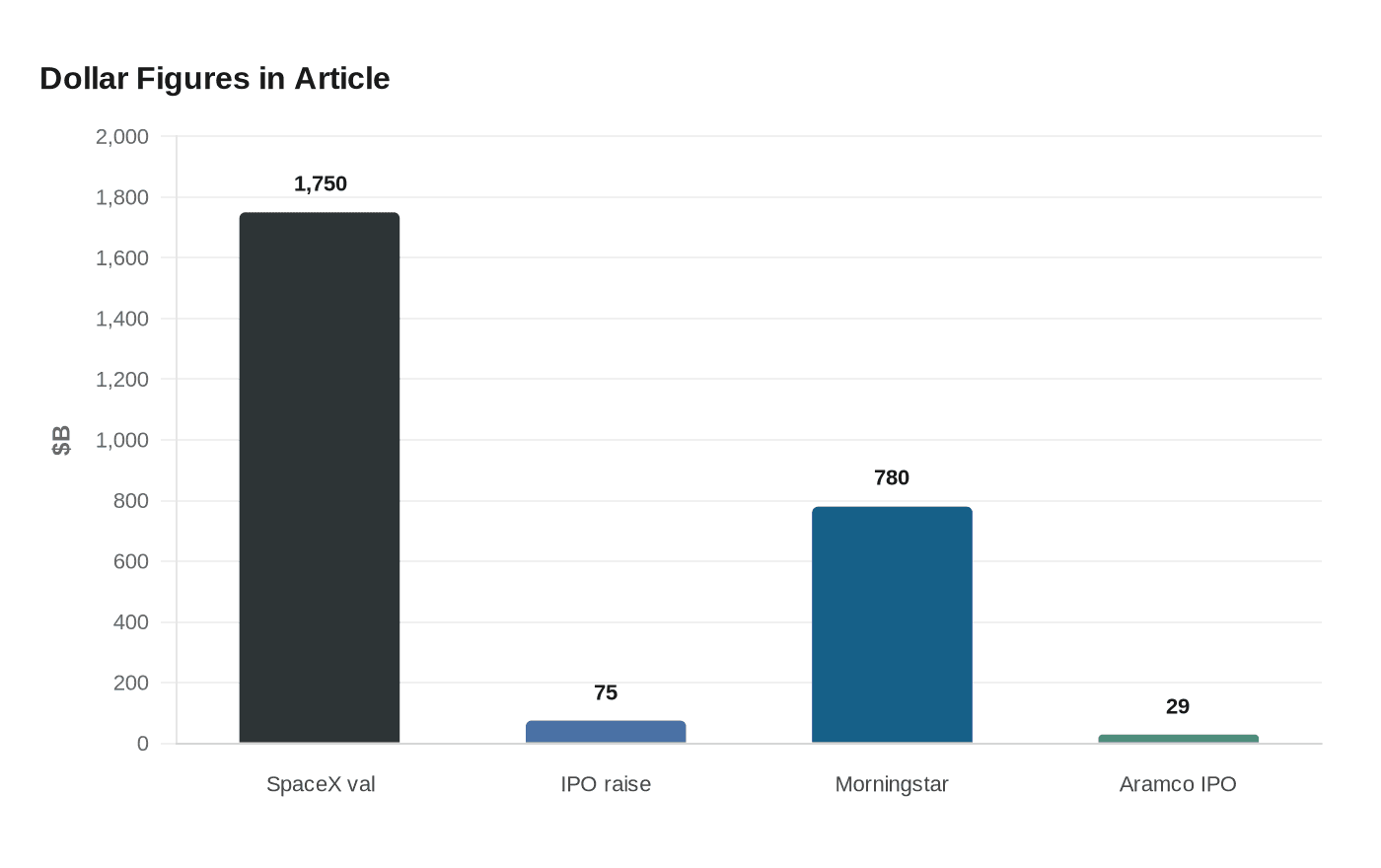
SpaceX was targeting a $1.75 trillion valuation in a blockbuster IPO that could raise as much as $75 billion, a scale that would make it the largest offering ever and push Elon Musk closer to becoming a trillionaire. Reuters said the deal was structured entirely with new shares, while retail-access brokerages including Robinhood, Fidelity, Charles Schwab, SoFi and E*TRADE were being used to bring individual investors into the offering. CNBC also reported that SpaceX set aside up to 5% of the shares for certain employees and friends through a direct share program.
The valuation reset matters beyond one company. Morningstar launched coverage of SpaceX with a far lower estimate of about $780 billion, less than half the IPO target, and said investors may get better entry points after the offering rather than chasing the price at the top of the range. That gap between the private-market narrative and the analyst view is a warning sign for the wider market: when even the era’s most celebrated private company needs a trillion-dollar-plus price tag to tell its story, expectations may be outrunning the underlying business.
Morningstar’s case rested on both strength and strain. SpaceX disclosed $18 billion of revenue in 2025, up 33% from 2024, and revenue rose another 15% year over year in the first three months of 2026. Even so, Morningstar said the company was still operating at a net loss and remained highly capital intensive, a reminder that growth at this scale does not automatically translate into durable profitability.
The core of the bullish argument is Starlink, which Morningstar described as SpaceX’s most profitable segment. It said Starlink’s adjusted EBITDA rose 86% between 2024 and 2025 and that subscribers doubled over the same period. SpaceX’s pitch is also expanding beyond launch and satellite internet. Morningstar said the company was being marketed as a platform business, with new rocket development, data centers in space and an aspirational Moonbase Alpha concept all folded into the valuation story.
That broader framing is precisely why the IPO has become a market signal. A $75 billion offering would eclipse Saudi Aramco’s $29 billion record from 2019, but the spread between $1.75 trillion and Morningstar’s estimate shows how much faith is now priced into the AI- and space-driven growth trade. For public-market investors, the message is clear: private valuations can reset quickly when they meet harder scrutiny, and the biggest names in the market are no longer immune.
This article was produced by Prism’s automated news system from verified source data, official records, and press releases, then run through automated quality and moderation checks before publishing. The system is built and supervised by the people who set the standards it runs under. Read our full AI policy.
Know something we missed? Have a correction or additional information?
Submit a Tip