U.S. factory orders jump 4.8% in April, led by aircraft demand
Aircraft orders lifted factory demand to an 11-month high, but the broader data showed a narrower rebound and a weaker signal for business investment.
A surge in commercial aircraft demand pushed U.S. factory orders up 4.8% in April, the biggest monthly gain in nearly a year and a stronger showing than economists expected. The Commerce Department’s Census Bureau said orders rose after a revised 1.8% increase in March, leaving them 6.0% above April 2025 and giving manufacturers an unexpectedly firm start to the second quarter.
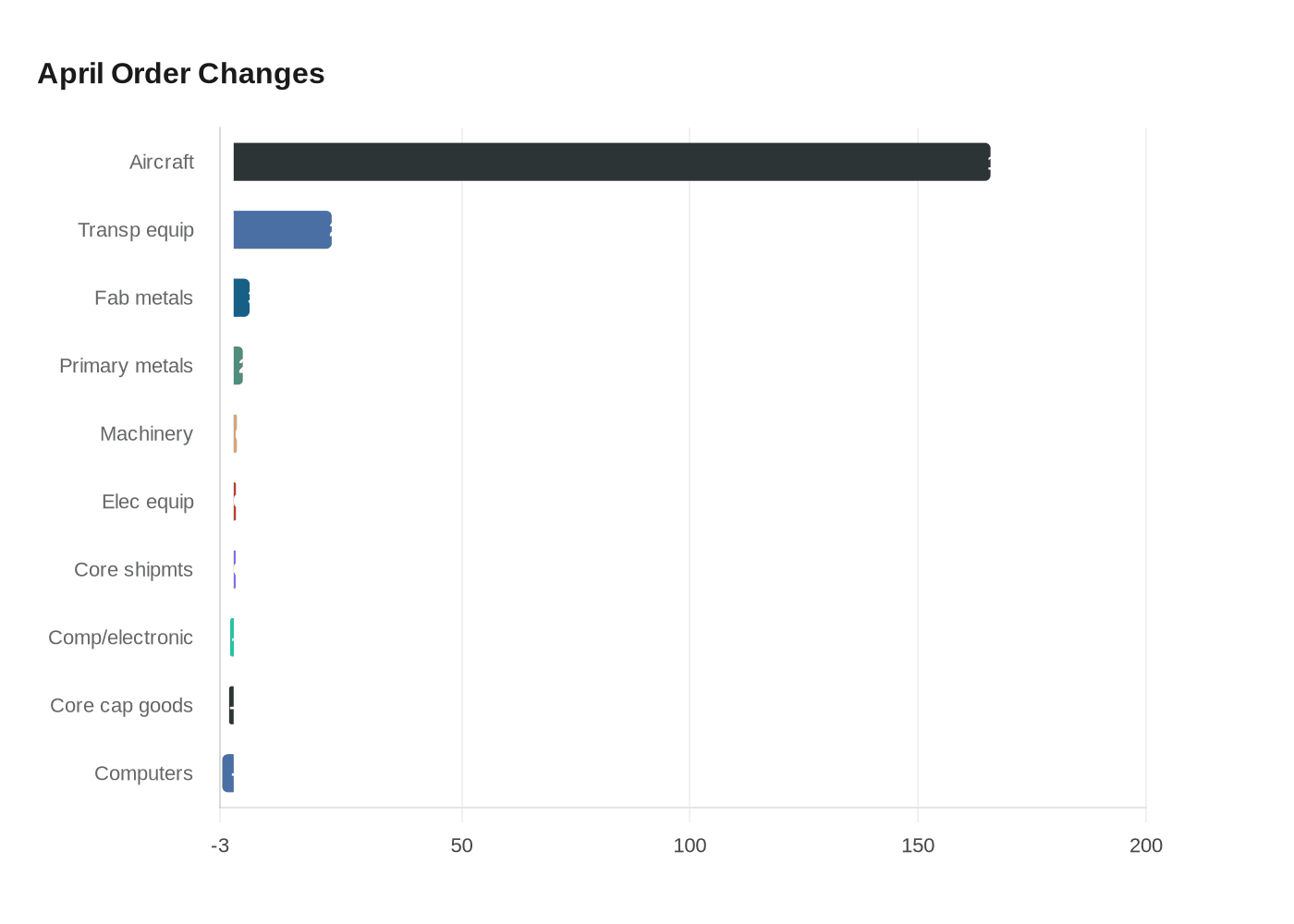
The headline number was driven heavily by transportation equipment, which jumped $23.1 billion, or 21.5%, to $130.9 billion, according to the bureau’s durable-goods report. New orders for manufactured durable goods climbed $25.5 billion, or 7.9%, to $346.0 billion. Strip out transportation and orders still rose 1.1%, but that far smaller gain showed how concentrated the strength was. Excluding defense, orders increased 8.1%.
Commercial aircraft were the main swing factor. Reuters reported that such orders soared 165.9% in April after falling 23.0% in March, and Boeing said it received 136 orders, up from 33 in March, with most tied to more expensive models. Orders for primary metals rose 2.0%, fabricated metal products climbed 3.5%, machinery gained 0.7% and electrical equipment, appliances and components edged up 0.5%. Computers and electronic products slipped 0.7%, while computer orders fell 2.5%.
For all the strength in the headline, the report offered a mixed read on business investment. Non-defense capital goods orders excluding aircraft, a closely watched proxy for corporate spending plans, fell 1.0% in April, while shipments of those core capital goods rose 0.4%. That combination suggests firms were still taking delivery of equipment, but were less aggressive in placing new orders than the aircraft-driven headline implied.
The factory data matters because manufacturing accounts for 9.4% of U.S. economic output, and changes in orders can ripple into GDP, hiring and capital spending. The Census Bureau’s M3 survey is designed to provide broad monthly evidence on conditions in domestic manufacturing and signal future business trends. The April figures pointed to resilience, but they also reinforced how dependent the sector has become on a few volatile categories, especially aircraft.
That leaves the rebound vulnerable to swings in large-ticket orders, front-loading ahead of higher tariffs, and the artificial-intelligence spending boom that has been supporting parts of the manufacturing ecosystem. At the same time, economists are watching whether the U.S.-Israeli war with Iran keeps pushing up energy, aluminum and fertilizer prices and further complicates supply chains. The latest factory-orders report showed a manufacturing sector on firmer ground, but not yet one broad enough to call a clean, durable turnaround.
This article was produced by Prism’s automated news system from verified source data, official records, and press releases, then run through automated quality and moderation checks before publishing. The system is built and supervised by the people who set the standards it runs under. Read our full AI policy.
Know something we missed? Have a correction or additional information?
Submit a Tip