Trump proposes new tariffs on 60 economies over forced labor claims
Trump’s tariff team recast a broad trade fight as a forced-labor crackdown, targeting 60 economies with duties up to 12.5%. Critics said it looks like a sturdier legal cover for protectionism.
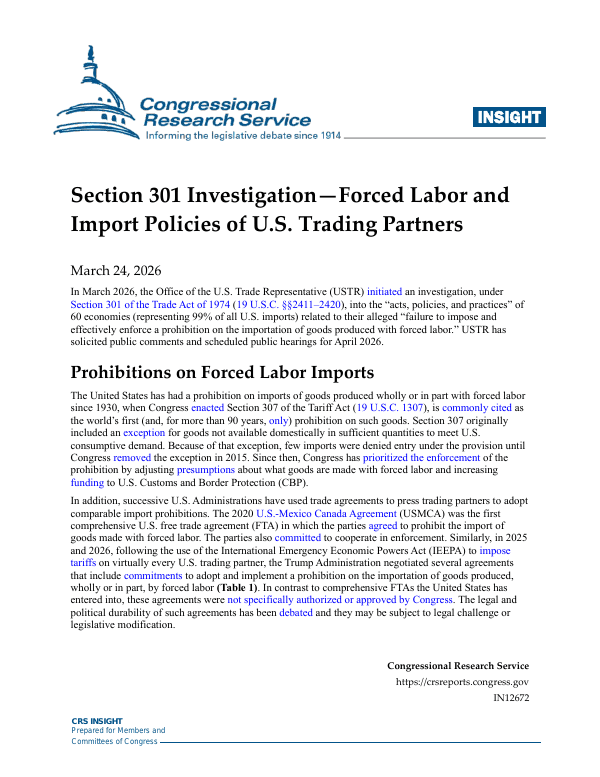
The Trump administration has recast its tariff agenda around forced-labor enforcement, proposing new import duties of up to 12.5% on goods from 60 economies after a Section 301 investigation concluded they had not done enough to curb trade in products made with forced labor.
The legal framing matters as much as the tariff rate. More than three months after the Supreme Court of the United States struck down the administration’s earlier broad reciprocal tariffs, the new proposal was designed to be harder to challenge in court. By anchoring the policy in a Section 301 unfair trade practices case, the White House is leaning on a narrower statutory rationale that may survive longer than the earlier across-the-board levies did.
The targets reach well beyond the usual list of trade offenders. Canada, Mexico, the European Union, Japan, Taiwan and the United Kingdom were among the economies affected or potentially affected, along with dozens of others. Under the proposal, most trading partners would face the new duties unless they won exemptions or complied with U.S. requirements. Some reports said goods that comply with the USMCA, also known as CUSMA, could be exempt, suggesting the final design could still change as the package is finalized.
The administration said the move was aimed at countries that had failed to police supply chains tied to forced labor. But that rationale has already drawn sharp pushback from trading partners and critics who see a familiar protectionist strategy in a new legal wrapper. Brazil publicly rejected the justification, saying it had “deep disagreements” with the U.S. move and that it distorts labor-protection concerns to justify unilateral tariffs.
Trade advisers inside Washington have also treated the proposal as part of a broader rebuild of Trump’s tariff wall after the court setback. In that view, the forced-labor language gives the administration a politically tougher and legally more durable way to revive duties that could ripple through manufacturing, agriculture and consumer supply chains. The proposal’s rates remain proposed and not yet final, but the direction is clear: the administration is trying to turn a court defeat into a new tariff architecture.
This article was produced by Prism’s automated news system from verified source data, official records, and press releases, then run through automated quality and moderation checks before publishing. The system is built and supervised by the people who set the standards it runs under. Read our full AI policy.
Know something we missed? Have a correction or additional information?
Submit a Tip