Spain Detects African Swine Fever Near Barcelona, Exports Disrupted
Spanish authorities announced the first detection of African swine fever in a wild boar near Barcelona, the country’s first cases since 1994, prompting immediate animal health measures and international trade restrictions. The development matters because China and other major buyers have suspended imports, threatening Spanish pork exports and rural livelihoods while officials race to contain the outbreak.

On November 28, 2025 Spanish authorities confirmed the detection of African swine fever in a wild boar found near Barcelona, marking the first identification of the virus on Spanish soil since 1994. The discovery triggered rapid animal health responses, international trade actions and a flurry of containment measures aimed at keeping the virus out of commercial herds.
China moved quickly to suspend pork imports and other trading partners either halted certificates or imposed restrictions tied to affected regions. Reuters reported that around one third of Spain’s pork export certificates were blocked following the discovery, an immediate blow to an industry that ranks among Spain’s largest agricultural exports. The abrupt loss of key markets, particularly China which remains a major buyer, has immediate implications for prices, processing plants and the small scale producers who supply them.
Domestic authorities activated protocols that public health and veterinary experts describe as essential for limiting spread. Culling of suspect wild and domestic animals in affected zones, strict movement restrictions on pigs and vehicle and personnel decontamination procedures were ordered, alongside expanded surveillance and tracing to map possible transmission routes. Officials emphasized containment and tracing efforts as investigations continued, seeking to determine whether the finding represents an isolated spillover in wildlife or an early sign of broader circulation.
African swine fever is highly lethal to pigs and wild boar but does not infect humans, a distinction that shapes the public health response. The primary consequences are economic and agricultural, yet the effects ripple through communities and household food security. Rural towns that depend on pig farming for employment and income are particularly vulnerable, and disruption to processing and export flows can cascade into job losses and price shocks for both domestic consumers and global buyers.
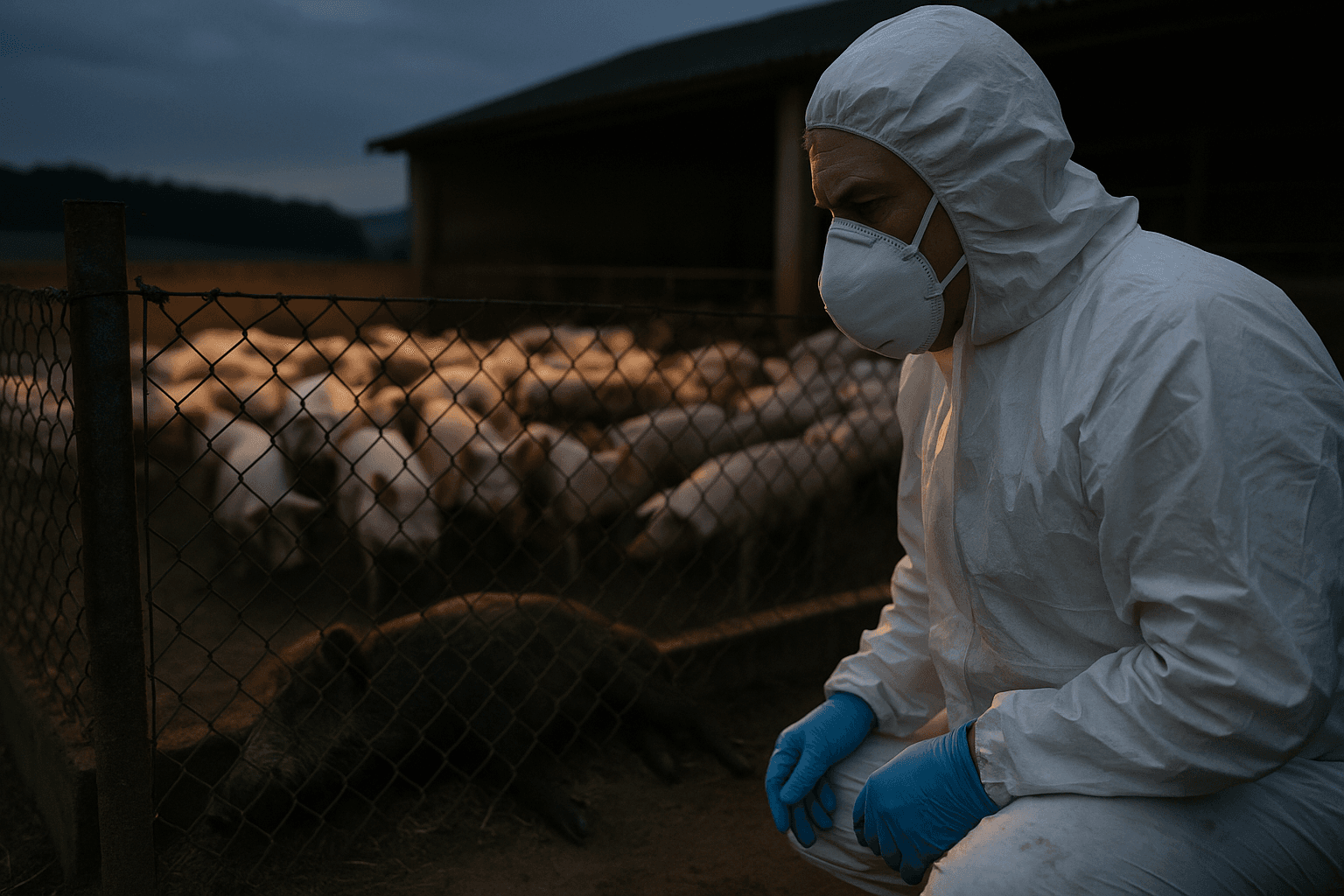
The outbreak raises questions about preparedness and social equity in disease response. Compensation schemes, access to emergency support and the capacity to enforce biosecurity vary widely across Spain’s diverse farming sector. Small holdings and independent farmers often lack the infrastructure to isolate animals or absorb long export stoppages, making targeted financial assistance and clear guidance on testing and safe disposal crucial to prevent disproportionate harm.
Trade policy responses will test bilateral and multilateral mechanisms for managing animal disease outbreaks without imposing unnecessary barriers. For Spain, rapid, transparent reporting and robust surveillance will be key to convincing trading partners that containment is effective. At the same time, authorities must balance the urgent need to protect commercial herds with measures that shield vulnerable workers and farm families from the economic fallout.
Investigations into the origin and extent of the infection were continuing on November 29, 2025, with veterinary teams conducting field testing and tracing potential contacts. The coming days will be critical to determine whether this episode can be contained as an isolated wildlife case or whether wider measures will be required to protect Spain’s pig sector and the communities that depend on it.
This article was produced by Prism’s automated news system from verified source data, official records, and press releases, then run through automated quality and moderation checks before publishing. The system is built and supervised by the people who set the standards it runs under. Read our full AI policy.
Did this article answer your question?


