Special counsel raids labor ministry in Coupang severance-pay probe
Special counsel searches South Korea labor ministry offices over alleged interference in a Coupang severance-pay investigation, raising oversight and market concerns.
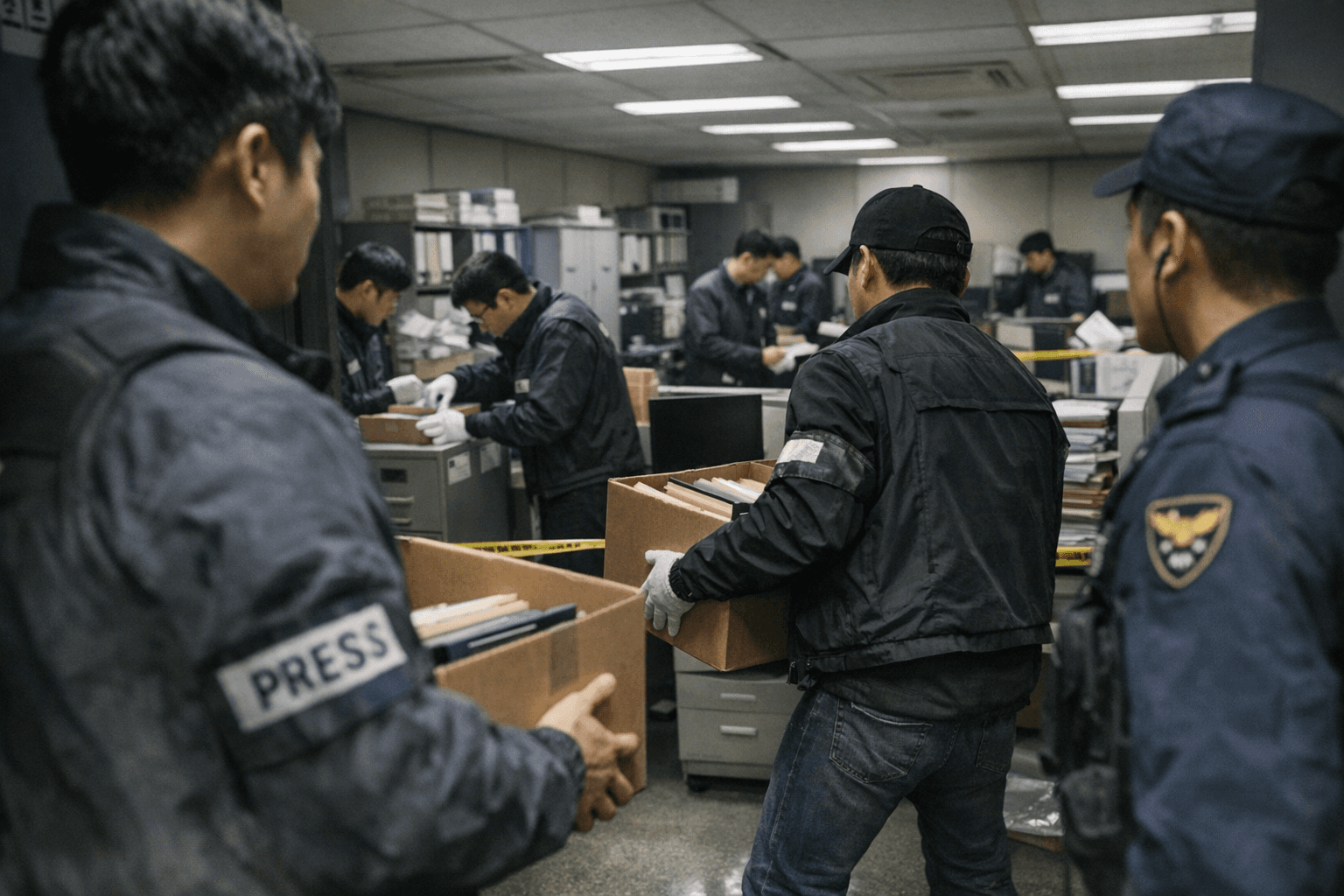
A special counsel team investigating alleged interference and irregularities tied to a Coupang severance-pay probe executed searches of the Ministry of Employment and Labor offices in Sejong and the Seoul Regional Employment and Labor Office on Jan. 27, 2026. Investigators are seeking documents and records related to the ministry's handling of an inquiry into severance-pay practices at Coupang, South Korea's largest e-commerce company.
The move marks an escalation in scrutiny of both corporate compliance and the independence of government labor enforcement. Authorities say the investigation centers on whether ministry officials improperly influenced or intervened in enforcement actions involving Coupang, potentially affecting how the probe was opened, pursued or closed. The special counsel team has not released a roster of targets or detailed allegations, and the inquiry remains active.
Coupang employs tens of thousands of workers across a nationwide logistics network, and severance-pay obligations represent a core element of labor costs in the delivery and e-commerce sector. Under South Korean labor law, employers must provide severance pay to eligible workers, typically calculated as roughly one month's average wages per year of service. Allegations that a government agency may have mismanaged or interfered with enforcement of those rules could have ripple effects beyond a single company.
Economically, the raid introduces near-term uncertainty for markets and corporate governance watchers. Regulatory probes can shift investor sentiment by raising the prospect of fines, retroactive liabilities or mandated changes to labor practices that increase operating costs. For firms with large workforces and complex contractor arrangements, heightened enforcement could translate into higher provisions for labor liabilities and altered business models to reduce exposure.
The action also spotlights long-running policy debates about the relationship between large private employers and state regulators. South Korea has seen disputes over platform labor models and benefits as e-commerce and logistics firms expanded rapidly. Critics of current oversight systems argue that regulatory capture or uneven enforcement can erode worker protections and distort competition. Proponents of reform say stronger, more transparent inspection regimes and clearer rules on employment classification would reduce ambiguity and compliance gaps.
Investigators' search of both Sejong, the administrative hub where many ministries moved in recent years, and the Seoul regional office underscores the inquiry's institutional focus. The seizure of internal records could yield evidence of communications, directives or procedural steps that clarify whether the alleged interference involved a small number of officials or reflected broader management practices within the ministry.
The probe arrives amid a broader global trend of intensified scrutiny of labor practices at major technology-enabled employers. Governments are increasingly weighing stricter enforcement, clearer employer obligations and measures to protect gig and platform workers. In South Korea, the outcome of this investigation could influence legislative and regulatory responses, potentially prompting tighter oversight of how labor inspections are conducted and how large employers account for severance liabilities.
The special counsel has not announced a timeline for concluding the investigation. Analysts say the case could take months to resolve and that any formal charges or administrative penalties would be closely watched by investors, policymakers and labor groups for what they reveal about the boundary between state oversight and corporate influence.
This article was produced by Prism’s automated news system from verified source data, official records, and press releases, then run through automated quality and moderation checks before publishing. The system is built and supervised by the people who set the standards it runs under. Read our full AI policy.
Did this article answer your question?


