Starmer fights Labour revolt as leadership challenge rules loom
Starmer faces a revolt from more than 40 Labour MPs, but a formal challenge needs 81 signatures. The rules make a coup hard, not impossible.

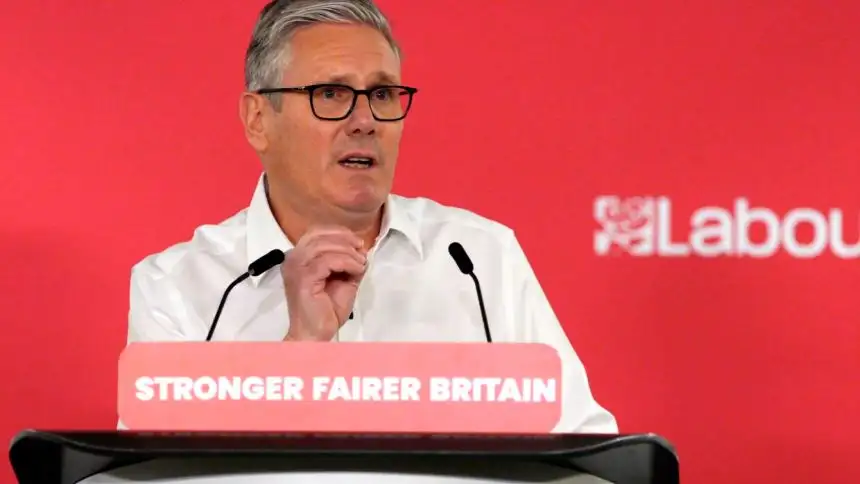
Sir Keir Starmer is trying to contain a Labour revolt that spread after heavy local-election losses across England, Scotland and Wales, with more than 30 MPs demanding a timetable for his departure and more than 40 calling for his resignation. Starmer says he will not stand down and intends to lead Labour into the 2029 general election, while his allies argue a leadership fight would freeze the government for months.
The obstacle for his critics is not just political noise but the party’s rulebook. Any challenger must be an MP and must win backing from 20% of Labour MPs, a bar raised from 10% in 2021. With 405 Labour MPs, that means 81 names are needed to trigger a contest. If the Labour leader is also prime minister and the post becomes vacant, the Cabinet, after consulting the National Executive Committee, would appoint an interim party leader until a ballot could be organised. Even then, further backing from constituency parties or affiliates is needed before the race reaches the membership stage.
That framework explains why the current manoeuvring looks like both destabilisation and leverage. Catherine West, the Hornsey and Friern Barnet MP, set colleagues a Tuesday morning deadline to back her move and told the Cabinet it was on notice. She has signalled she wants the minimum-fuss route, even a reshuffle, rather than a full leadership showdown. Andy Burnham, the Greater Manchester mayor, would be shut out of any immediate contest because he is not in the House of Commons. If a fight is forced, Wes Streeting and Angela Rayner, both MPs, could become beneficiaries.

Labour has moved quickly before. When Angela Rayner resigned as a government minister and as deputy leader on 5 September 2025, David Lammy was appointed deputy prime minister the same day and the party launched a deputy leadership election immediately. Lucy Powell won that race on 25 October 2025 with 54.3% of valid votes on a turnout of 16.6%, showing how fast the party can reset once the machinery is set in motion.

The bigger risk now is that even the threat of a contest is feeding wider market unease. Speculation over Starmer’s future has added pressure to already-high government borrowing costs, making the internal fight more than a Westminster drama. For the moment, the numbers suggest a full leadership challenge is difficult to assemble, but the scale of the revolt means Starmer can no longer treat succession talk as background noise.
This article was produced by Prism’s automated news system from verified source data, official records, and press releases, then run through automated quality and moderation checks before publishing. The system is built and supervised by the people who set the standards it runs under. Read our full AI policy.
Did this article answer your question?


%3Amax_bytes(150000)%3Astrip_icc()%2FTrumpandBitcoin2-58606bf51eda48bdaef9a9853f2541ad.png&w=1920&q=75)