Starmer steps down as Labour leader, Britain faces new political upheaval
Starmer’s resignation sets Britain on course for its seventh prime minister in a decade, with Labour’s succession fight now deciding how fast he goes.

Keir Starmer’s decision to step down as Labour leader has thrown Britain back into political upheaval, putting the country on track for its seventh prime minister in roughly 10 years. Starmer said he was not best placed to lead Labour into the next general election and told King Charles III of his resignation after making the announcement outside 10 Downing Street in London.
His exit is expected to end a turbulent premiership less than two years after Labour won a landslide general election in July 2024. Starmer had been under rising pressure inside his own party for weeks, especially after a disastrous round of local elections in early May 2026. The pressure sharpened further when former Manchester mayor Andy Burnham emerged as a political rival and made clear he could challenge for the leadership.
The timing now depends on how quickly Labour can settle on a successor. If the party unites behind one candidate without a contest, Starmer could be out by July. If the leadership race becomes a full contest, a new leader could be in place by September 2026, when Parliament returns from summer recess. Starmer said he would give his successor his full support, but his departure leaves Labour’s governing authority and policy agenda in limbo at a moment when the party is expected to be in command of the state.
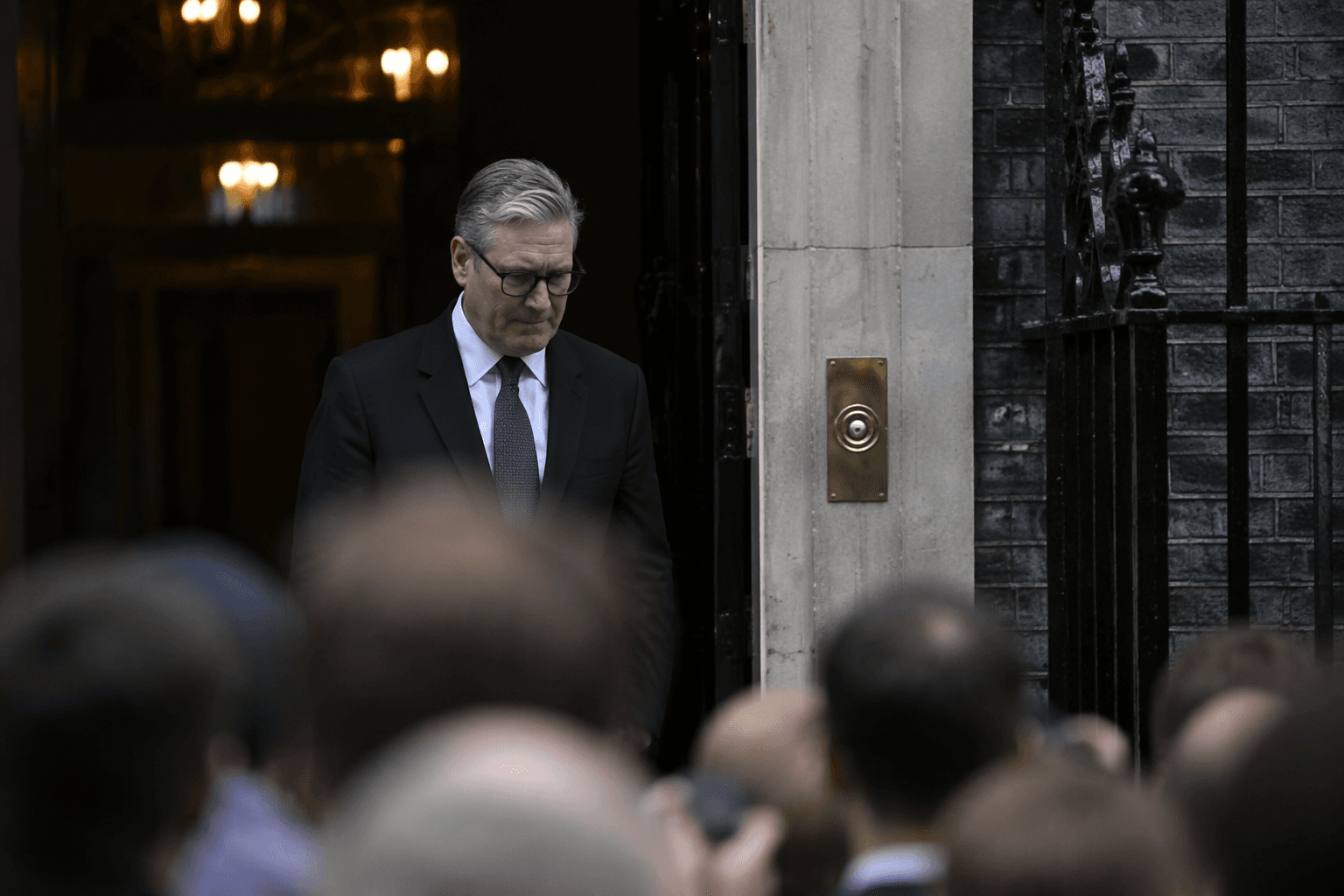
Burnham’s return to Parliament last week added weight to the succession battle, because prime ministers must sit in the House of Commons. That move transformed him from a prominent voice in Manchester into a viable national challenger, and it helped accelerate the timetable around Starmer’s exit. For Labour, the problem is no longer only Starmer’s standing; it is whether the party can avoid a drawn-out fight that would expose deeper fractures in its ranks.
The broader picture is one of post-Brexit instability that has become a defining feature of British politics. Since David Cameron resigned in July 2016, Britain has gone through Theresa May, Boris Johnson, Liz Truss, Rishi Sunak and Starmer, with the country now set to turn to another leader. The speed of that turnover raises a question far beyond Labour’s internal politics: whether the United Kingdom’s system can still sustain durable governing capacity, or whether the churn itself has become the problem.
This article was produced by Prism’s automated news system from verified source data, official records, and press releases, then run through automated quality and moderation checks before publishing. The system is built and supervised by the people who set the standards it runs under. Read our full AI policy.
Know something we missed? Have a correction or additional information?
Submit a Tip