Stolen rifle used in Louisiana mass shooting traced to previous owner
A stolen rifle traced to its owner ended up in a Shreveport massacre that killed eight children, exposing how weak storage can turn negligence into lethal access.
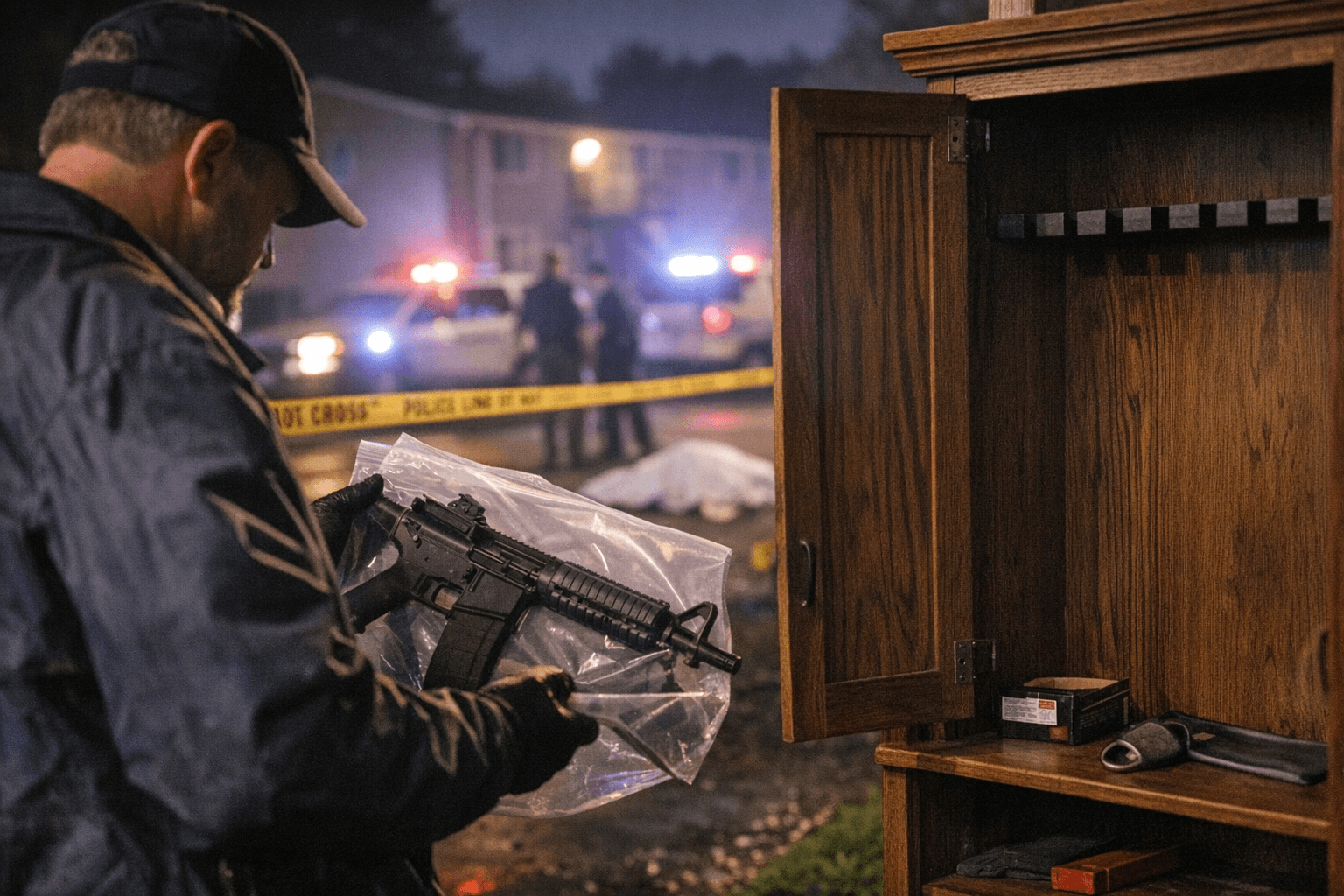
A rifle used to kill eight children in a Shreveport mass shooting was traced back to a previous owner now charged in federal court, a case that sharpens the accountability gap between a gun being stolen and the decision to leave it vulnerable in the first place.
Charles Ford, a 56-year-old Shreveport resident, was charged on April 21, 2026, with being a felon in possession of a firearm and making a false statement to federal agents. Federal prosecutors say Ford told investigators he believed Shamar Elkins stole the assault-style rifle from his truck in the weeks before the April 19 rampage in a Shreveport neighborhood.
Ford said he noticed the gun was missing around March 9, then later confronted Elkins about it. Prosecutors said Ford initially denied ever possessing the firearm when first approached by investigators after the shooting, then later admitted he had owned it and kept it under his seat. He faces up to 15 years in federal prison on the firearm charge and up to five years on the false-statement charge.
The Bureau of Alcohol, Tobacco, Firearms and Explosives and Shreveport police traced the weapon after the massacre, a process that linked the killings back to a gun that had already slipped out of its owner’s control. U.S. Attorney Zachary A. Keller said the goal is to hold accountable the person whose gun Elkins used, even though Elkins died before facing justice. The ATF has said its work includes holding accountable those who give access to firearms later used in violent crime.

The shooting left eight children dead and two women wounded. Authorities said the victims were three boys and five girls, ages 3 to 11, and that 10 people in all were struck by gunfire. Police described the killings as domestic in nature, and local officials have called domestic violence an urgent problem in Shreveport.
Officials said the attack unfolded at multiple scenes, beginning just after 6 a.m. on April 19. Elkins fled and was later found dead after a police pursuit; investigators said it was not immediately clear whether he was shot by officers or died from a self-inflicted gunshot.
The case has become a grim example of how a gun can pass from a truck to a crime scene long before the shooting itself. In a city where police and local leaders say domestic violence is already an epidemic, the failure to secure a firearm helped widen the path from theft to mass death.
This article was produced by Prism’s automated news system from verified source data, official records, and press releases, then run through automated quality and moderation checks before publishing. The system is built and supervised by the people who set the standards it runs under. Read our full AI policy.
Did this article answer your question?