Strait of Hormuz Remains Closed as Trump Demands Iran End Tolls
Iran charged at least two tankers $2 million each in Chinese yuan to cross the Strait of Hormuz, directly defying the ceasefire Trump brokered just three days ago.
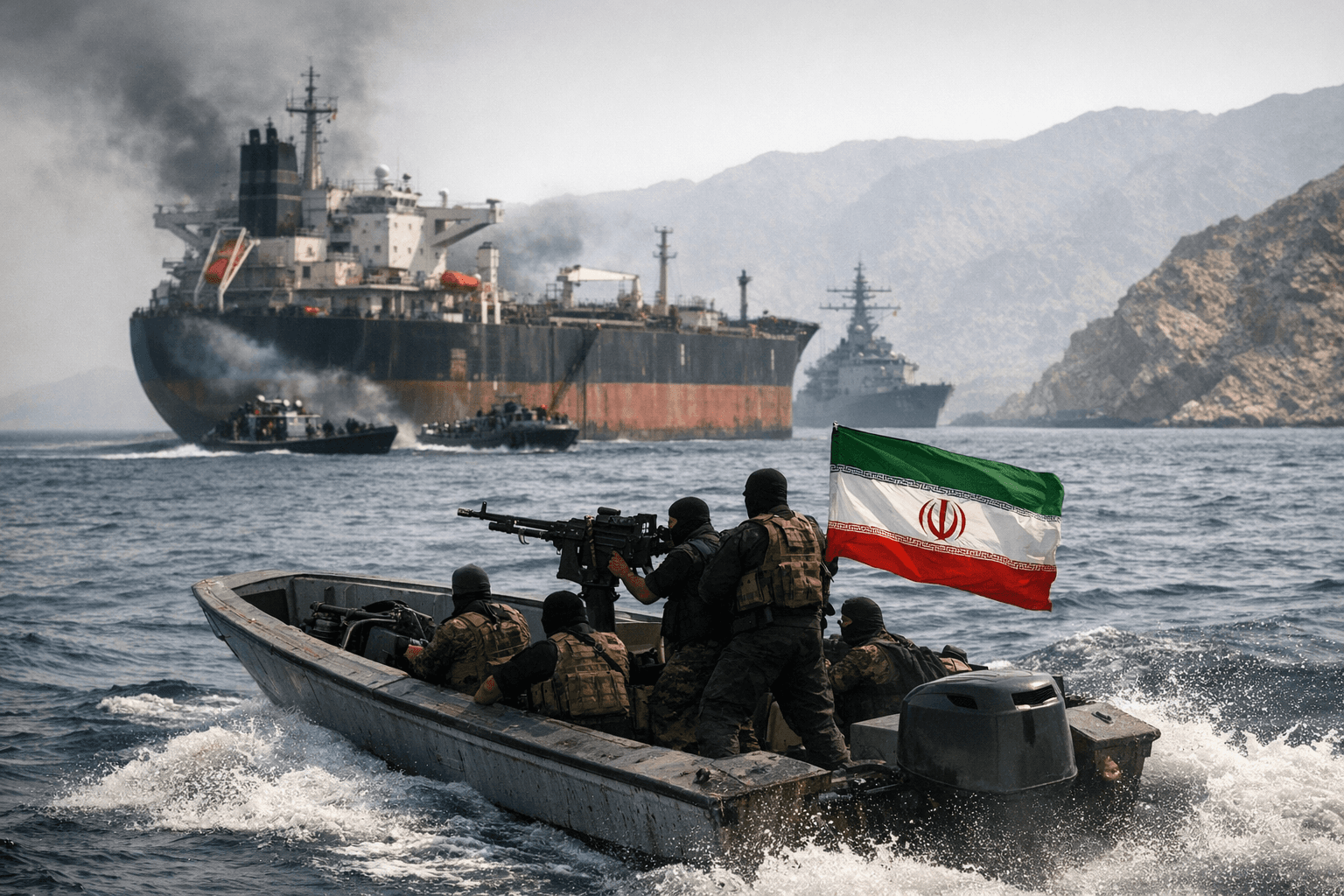
Iran's shadow toll operation along the Strait of Hormuz is pushing the fragile U.S.-Iran ceasefire to the breaking point before peace talks in Islamabad have even begun. President Trump issued an unambiguous warning Thursday on Truth Social: "There are reports that Iran is charging fees to tankers going through the Hormuz Strait — They better not be and, if they are, they better stop now!" In a follow-up post, he added: "Iran is doing a very poor job, dishonorable some would say, of allowing Oil to go through the Strait of Hormuz. That is not the agreement we have!"
The scheme, which shipping analysts have taken to calling the "tollbooth," diverts vessels away from the strait's center and around Iran's Larak Island. Ships are required to submit detailed crew and cargo information to intermediaries connected to Iran's Islamic Revolutionary Guards Corps before being permitted to proceed. At least two ships have reportedly paid the equivalent of $2 million each in Chinese yuan to pass through. White House Press Secretary Karoline Leavitt said Wednesday the ceasefire's validity depends on the strait being opened "without limitation, including tolls."
The toll dispute has emerged barely 72 hours after a ceasefire was struck on April 7, just hours before Trump's self-imposed 8 p.m. EDT deadline. Trump had warned that Iran's "whole civilization will die tonight" if Tehran did not reopen the waterway. The deal, brokered by Pakistani Prime Minister Shehbaz Sharif and Field Marshal Asim Munir, prompted Trump to credit both men by name when announcing he would "hold off the destructive force being sent tonight to Iran."
The two sides, however, never agreed on what the deal actually said. Trump declared Iran had consented to the "complete, immediate, and safe opening" of the strait. Iranian Foreign Minister Abbas Araghchi described something far more conditional: passage would be permitted "via coordination with Iran's Armed Forces and with due consideration of technical limitations." Iran's supreme leader went further, publicly promising the country would retain control over the waterway. MarineTraffic, the global ship-tracking organization, confirmed early vessel movement on April 8, but Iran shut passage again shortly afterward.
Iran's 10-point peace proposal formalized the toll concept, including a provision authorizing Iran and Oman to charge ships for passage, a demand legal analysts at Just Security argue violates UNCLOS transit passage rights, which guarantee unimpeded transit through internationally critical straits. The strait is shared by Iran and Oman and had remained toll-free throughout its modern history as a trade route. Iran's broader demands also include sanctions relief, reparations, formal recognition of its sovereignty over the waterway, and full U.S. military withdrawal from the region. Washington's 15-point counterproposal demands unconditional reopening of the strait alongside commitments on Iran's nuclear program and limits on its ballistic missile capabilities. The two positions, Council on Foreign Relations experts have noted, contain hard lines that appear "almost impossible to reconcile."
Iranian Parliament Speaker Mohammad stated plainly: "The Strait of Hormuz situation won't return to its pre-war status."
The conflict that produced this standoff began February 28, 2026, when Israel and the United States launched an air campaign against Iran. Tehran retaliated by attacking merchant ships in the strait, effectively closing the waterway that carries roughly 20 percent of the world's oil and liquefied natural gas in peacetime, touching off what analysts have described as one of the worst global energy distribution crises on record.
Adding a layer of political awkwardness to Trump's toll demands, the president himself floated earlier this week the idea of the United States charging its own transit fees as the "winner" of the war, even suggesting a possible "joint venture" with Iran over the strait. He has since abandoned that posture entirely.
Iran's Supreme National Security Council confirmed peace talks will proceed today in Islamabad. Vice President JD Vance, who characterized the ceasefire as a "fragile truce" and warned Iran that "if they're going to lie, if they're going to cheat...then they're not going to be happy," will lead the U.S. negotiating team. Saudi Arabia's Foreign Ministry called for "comprehensive and sustainable de-escalation" following the ceasefire announcement, a position shared by other Gulf Cooperation Council members including Oman.
Congressional Democrats have been sharply critical of the administration's handling of the entire episode. Rep. Glenn Ivey of Maryland said "it's clear that their ability to negotiate with Iran is nonexistent," while Reps. Madeleine Dean of Pennsylvania and John Larson of Connecticut were among those invoking the 25th Amendment. Lawmakers also vowed to continue pushing resolutions to end the war and block additional war funding.
Whether the Islamabad talks produce any movement depends in large part on whether the toll dispute can be resolved before negotiations begin in earnest. With Iran's supreme leader publicly staking out sovereignty over the strait and Trump demanding an unconditional halt to collections, the gap between the two positions entering Friday's session is wide.
This article was produced by Prism’s automated news system from verified source data, official records, and press releases, then run through automated quality and moderation checks before publishing. The system is built and supervised by the people who set the standards it runs under. Read our full AI policy.
Did this article answer your question?


