Streeting quits, opening challenge to Starmer after Labour turmoil
Streeting’s exit exposed Labour’s first open leadership test, with Starmer facing a party split after local-election losses and a challenge threshold of 81 MPs.
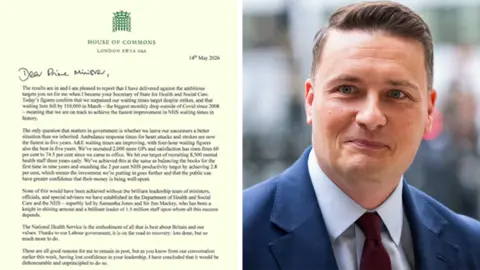
Wes Streeting’s resignation as health secretary has turned Labour’s local-election humiliation into a direct test of Keir Starmer’s authority. Streeting became the first senior minister to quit Starmer’s Cabinet on May 14, and his letter said it was now clear that Starmer would not lead Labour into the next general election.
The significance lies less in the personal rupture than in what it revealed about a party already sliding into open instability. Streeting said that where the government needed “vision,” it had “a vacuum,” and where it needed direction, it had “drift.” He said his departure was meant to open a broad debate about “what comes next,” a phrase that signals an argument about Labour’s future leadership, not just one minister’s fate.

That argument was sharpened by Labour’s disastrous local-election results last week. Starmer won a large majority in July 2024 on a promise to restore stability after a decade of political chaos, but the latest losses have left the party in crisis less than two years into government. Labour has been losing ground across the map, with Reform UK advancing in Brexit-voting areas, the Greens making gains in progressive urban seats, and nationalist parties also cutting into Labour support. Inside the party, MPs have been sharpening criticism of Starmer’s leadership, judgment and lack of a clear governing purpose.
The barrier to turning that discontent into a formal challenge is high, but not insurmountable. Labour’s rules require a challenger to win nominations from 20 percent of Labour MPs. With 403 Labour MPs, that means 81 would have to sign on. The House of Commons Library says that if a Labour prime minister’s leadership becomes vacant, the Cabinet, consulting the party’s National Executive Committee, appoints one of its own members as interim leader until a ballot can be organized. Candidates then need support from constituency parties or affiliates before reaching the final members’ vote.
Streeting’s move has already encouraged speculation about who could step forward. Reuters reported that Greater Manchester mayor Andy Burnham was positioning himself for a possible contest, while Angela Rayner and Ed Miliband were also being discussed as possible contenders. Burnham’s route back into Westminster may matter: Labour’s governing body allowed him to stand in the Makerfield by-election on May 15, after previously blocking a by-election bid in February.
For now, Starmer remains in office, but the balance of power inside Labour has clearly shifted. Streeting’s resignation showed that the question is no longer whether dissatisfaction exists, but whether enough MPs decide that the party’s drift has become a threat to the prime minister’s hold on power.
This article was produced by Prism’s automated news system from verified source data, official records, and press releases, then run through automated quality and moderation checks before publishing. The system is built and supervised by the people who set the standards it runs under. Read our full AI policy.
Did this article answer your question?

