Students Lead March of the Torches Honoring Martí and Fidel Centennial
Students led a torchlit procession from the University of Havana to the Fragua Martiana to honor José Martí and mark Fidel Castro’s centenary, signaling youth mobilization amid political tensions.
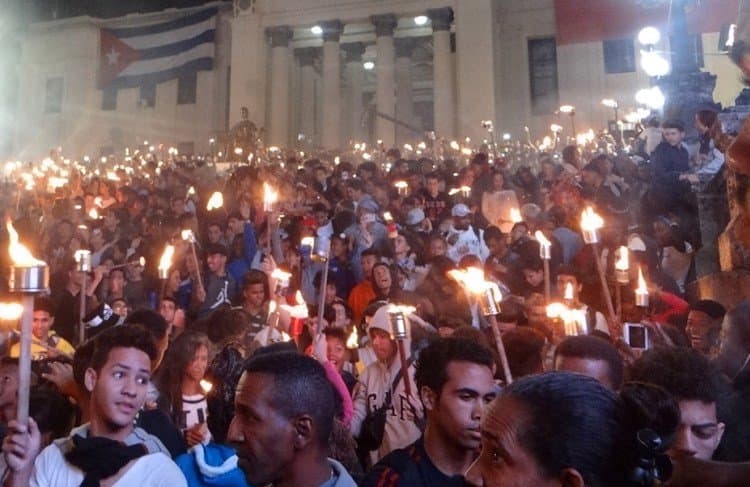
A torchlit student procession wound from the steps of the University of Havana to the Fragua Martiana as part of the annual March of the Torches held on the eve of José Martí’s birthday. The January 27 event combined the island’s long-standing homage to Martí with a revival framed around the 100th anniversary of Fidel Castro’s birth.
Student contingents assembled on the university steps and moved through central Havana carrying torches and banners under the organizers’ slogan “Centennial Anti‑Imperialist Torch.” The march drew large groups of young people, many of them university students, and was staged as a public reaffirmation of Martí’s ideas and of political resistance in a period of heightened tensions with the United States and an unsettled regional picture.
Organizers presented the event as a demonstration of youth commitment to the revolutionary tradition that links Martí’s literary and patriotic legacy with the revolutionary legacy represented by Fidel Castro. For many participants the march served both as a ritual of remembrance and as a visible statement of solidarity with state commemorations scheduled for the centenary year.
The procession unfolded against a backdrop of domestic grievances. Critics and independent observers emphasized a contrast between the state-organized celebrations and ongoing long power outages across the island, saying the pageantry highlighted competing priorities for a population coping with infrastructure challenges. Those local concerns framed how some Havana residents and students experienced the march, affecting turnout and local conversations even as torch-bearing contingents advanced toward the Fragua Martiana.
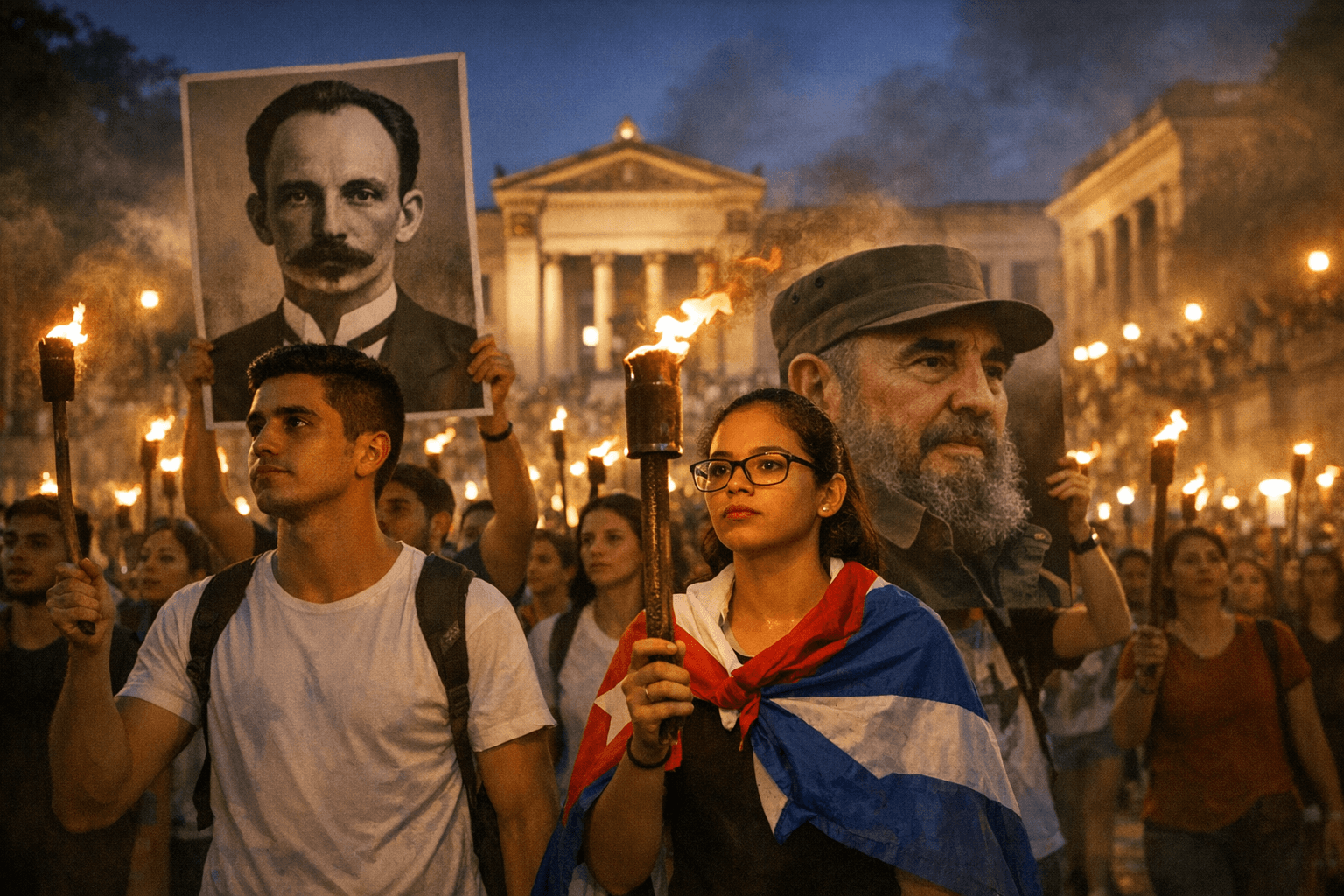
Practical outcomes for readers include a clearer sense of how youth activism and official commemoration intersect ahead of key anniversaries. University of Havana students remain a visible mobilizing force for public rituals tied to national identity, and the march signals a deliberate push by organizers to center young Cubans in public commemoration during a politically charged moment. The event also suggests how state messaging will seek to link Martí’s national symbolism with broader geopolitical themes through the centenary year.
As the island moves into José Martí’s 173rd birthday observances and a calendar of centenary events for Fidel Castro, expect additional public acts, campus programs, and official ceremonies to feature students prominently. For Havana residents and Cuban communities beyond the capital, the march underlines both continuity in national ritual and the tensions between symbolic commemoration and everyday challenges that will shape public response in the weeks ahead.
Know something we missed? Have a correction or additional information?
Submit a Tip