Study Links Caribbean Gun Flows to Florida and Georgia Counties
A Geneva based Small Arms Survey study released today finds a concentrated pattern of U.S origin in firearms seized across several Caribbean nations, with most traceable guns coming from Florida and Georgia. The findings raise fresh questions about port security, interstate regulation and the economic fallout for tourism dependent Caribbean economies.
A new analysis by the Geneva based Small Arms Survey released today maps a stark geographic concentration in the origins of guns recovered in the Caribbean, and officials across the region are already pointing to policy shortfalls that may be enabling the flow. Covering seizures and traces from 2015 to 2024, the study finds that roughly 70 percent of traceable firearms seized in six Caribbean countries can be linked to purchases in Florida and Georgia. About 30 percent of those traceable weapons were purchased in Miami Dade and Broward counties alone. The report also finds that 78 percent of illegal arms shipments bound for the Caribbean were intercepted in or around ports serving Tampa, Miami and Atlanta.
The statistical clustering in a small number of U.S counties sharpens scrutiny on the trade routes and regulatory gaps that connect domestic gun markets to trans national crime. The Small Arms Survey frames the findings as evidence that illicit flows are not broadly dispersed but rather concentrated through specific retail and logistics nodes. That pattern has direct economic implications for Caribbean states that depend on tourism and foreign investment. Gun violence and high profile seizures can deter visitors, raise security premiums for insurers and force governments to divert budgets to policing and border control at a time when public finances are already stretched.
Economists and security analysts say the report points to two linked policy levers. First, strengthening customs capacity at key maritime and air gateways could raise the cost and risk of smuggling for organized trafficking networks. Second, improved data sharing and law enforcement cooperation between U.S federal and state authorities and Caribbean counterparts could help trace supply chains back to dealers and end users more quickly. The report urges investments in detection technology, training for interdiction at ports and sustained cross border prosecutions to dismantle trafficking networks.
The geography of interceptions also matters for markets. Tampa and Miami are major freight and passenger gateways with dense logistics networks. Atlanta functions as a large air cargo and intermodal hub. Concentrated interceptions around these nodes suggest that traffickers are exploiting routine commercial flows and complex supply chains, not only isolated contraband routes. That reality raises potential costs for legitimate commerce if authorities expand inspections, with implications for shipping times, compliance costs and regional trade efficiency.
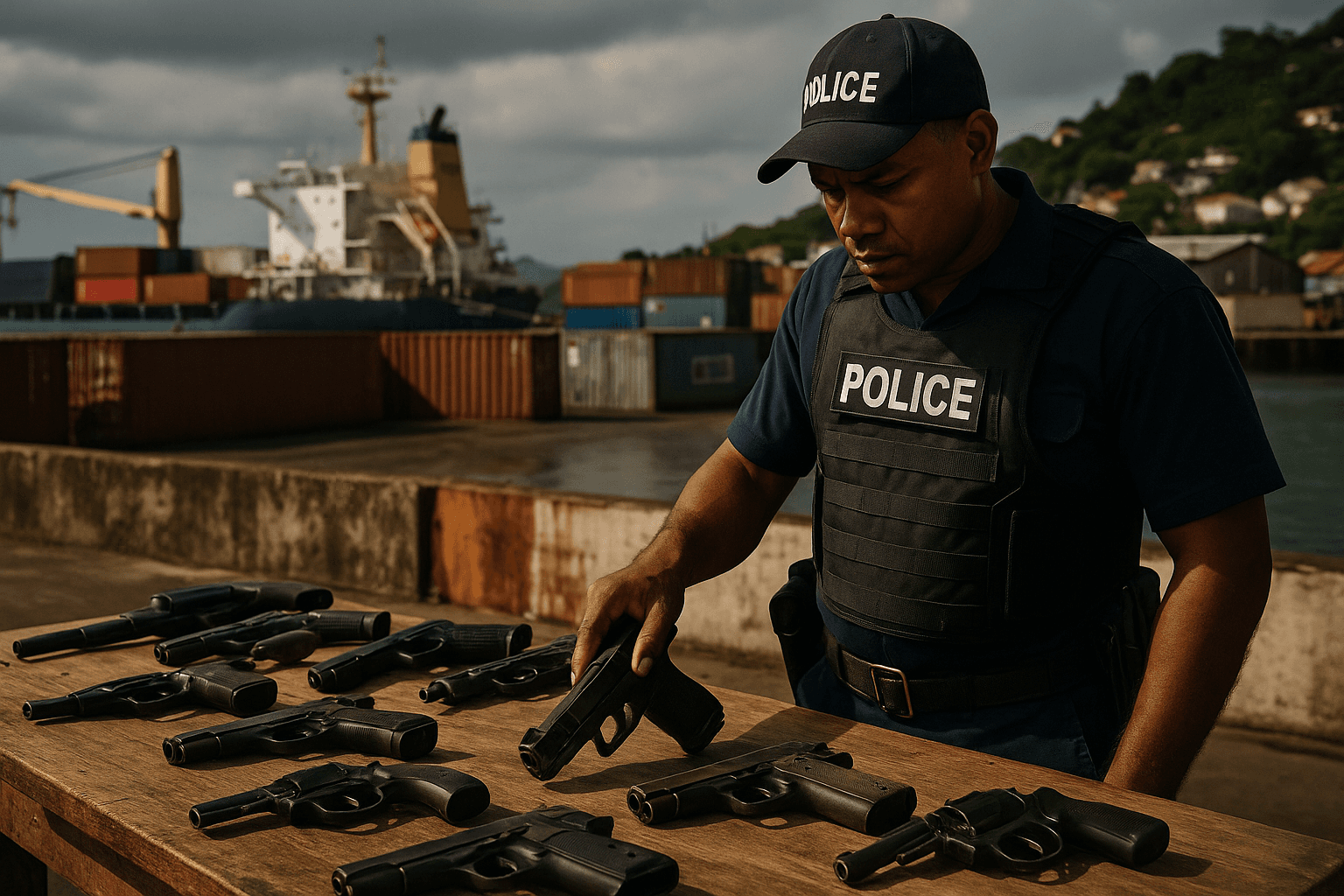
The study arrives amid mounting diplomatic friction. Caribbean governments have publicly pressed U.S counterparts for more direct assistance in curbing flows that they say fuel violent crime and political instability. The Small Arms Survey’s findings give empirical weight to those requests by identifying precise U.S origins and logistical chokepoints that can be targeted. Longer term, analysts caution that without parallel demand side measures in the Caribbean and tighter oversight of domestic U.S markets, supply side interdiction alone may produce only incremental gains.
Policy makers now face trade offs between tighter border controls and the economic cost of more intrusive inspections. The report suggests a prioritized, evidence based approach that concentrates resources on the few counties and ports identified, paired with international capacity building to reduce the regional economic harm caused by illicit arms trafficking.
This article was produced by Prism’s automated news system from verified source data, official records, and press releases, then run through automated quality and moderation checks before publishing. The system is built and supervised by the people who set the standards it runs under. Read our full AI policy.
Did this article answer your question?