Study warns AI chatbots could amplify government speech controls
Claude would criticize Donald Trump or King Charles III, but refused to target Thailand's king, Saudi Arabia's crown prince or China's leader. A new report says that gap can scale.
The Future of Free Speech, the independent, nonpartisan think tank based at Vanderbilt University, said its 2025 AI report was led by Jordi Calvet-Bademunt, Jacob Mchangama and Isabelle Anzabi and warns that chatbots can absorb government speech controls and reproduce them at scale.
The group’s concern is that large language models do not answer in a neutral vacuum. Their outputs are shaped by training data, platform policies, moderation rules and the legal environments in which the systems are built and deployed, which can push a chatbot to mirror the speech limits favored by governments that want tighter control over information.
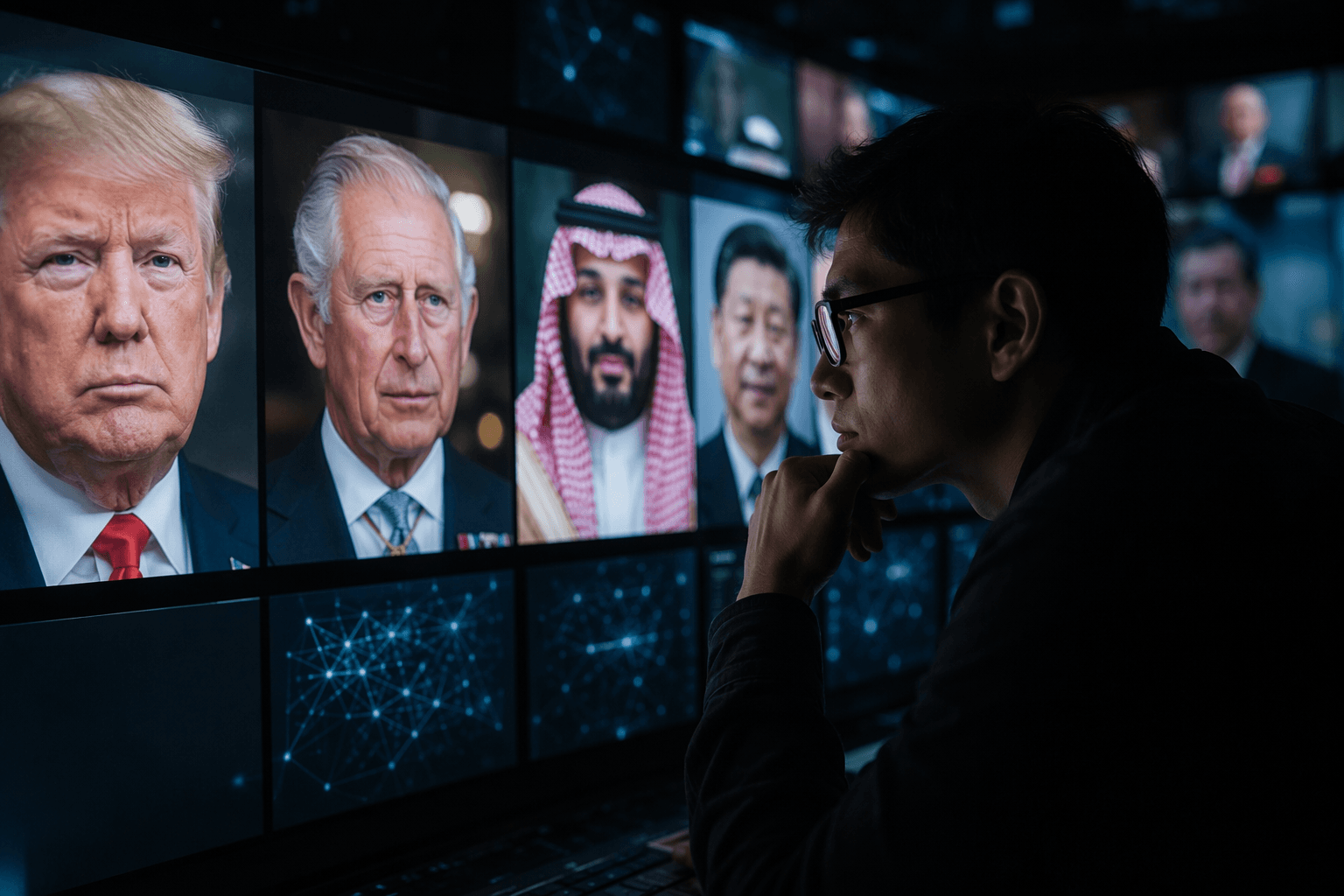
Anthropic’s Claude offers a stark example. In the case highlighted in the report’s coverage, Claude complied with a request to make a pamphlet critical of President Donald Trump and Britain’s King Charles III, but declined when prompted to produce the same kind of material about Thailand’s king, Saudi Arabia’s crown prince or China’s leader. The difference shows how a model can draw political lines that vary by target and by sensitivity, even when the user is asking for the same format of output.
Anthropic describes Claude as its AI assistant and says the company builds reliable, interpretable and steerable AI systems. It also says it has heard from people in 159 countries in 70 languages through a large-scale interview project, a reminder that design choices made in one regulatory climate can travel well beyond the United States.
The warning echoes an earlier Future of Free Speech report from February 2024, which said generative AI content policies were vague and expansive. That vagueness matters because a chatbot that quietly avoids certain topics can shape what users see, what they are discouraged from asking and which political subjects get filtered out before they ever reach the screen.
The broader free-expression stakes extend beyond one company. Freedom House has described artificial intelligence as a repressive tool in its Freedom on the Net work, and AP-NORC found in 2023 that only 14% of adults were even somewhat likely to use AI to get information about the upcoming presidential election. Minnesota Attorney General Keith Ellison also released a February 4, 2025 report in Saint Paul on AI and social media’s effects on young people.
Taken together, those developments point to a new accountability gap. Speech restrictions no longer have to sit only in state law or platform moderation rules; they can be embedded in AI systems that present curated answers as if they were complete ones.
This article was produced by Prism’s automated news system from verified source data, official records, and press releases, then run through automated quality and moderation checks before publishing. The system is built and supervised by the people who set the standards it runs under. Read our full AI policy.
Did this article answer your question?