Virtual reality helps driving instructors train learners for risky roads
Driving schools are using VR to rehearse cyclists, e-scooters and other hazards before students reach busy streets. The AA says the training speeds instructor qualification without sacrificing quality.
Virtual reality is moving into driver training because the road has become a harder place to learn. Trainee driving instructors are now using immersive headsets to rehearse dense traffic, poor visibility, abrupt lane changes and other hazards before they meet them in live traffic, with the aim of reducing risk during the earliest lessons.
Why VR is entering driver education
The appeal is practical, not flashy. Roads now carry more vulnerable users, more congestion and more unpredictable interactions than many older training models were built to cover, especially in urban settings where cyclists, e-scooters and shared pedestrian spaces are part of the daily mix. VR offers a controlled way to show those situations repeatedly, which gives instructors a method to standardize lessons and teach defensive habits before a learner is behind the wheel of a real car.
That matters because a conventional lesson can only expose a student to what happens by chance on that route at that moment. A virtual lesson can force the same hazard to appear again and again until the learner recognizes it, reacts properly and understands what went wrong if the first response was slow.
How the AA Driving School Academy is using it
Reuters’ video coverage shows the AA Driving School Academy using Meta Quest 3 headsets for this training. The program is built to simulate modern road hazards in a safe, controlled environment, including cyclists, e-scooters and shared pedestrian spaces, all of which are difficult to stage reliably in a standard lesson.
The academy’s approach is to use VR as a bridge between classroom theory and real driving. Rather than replacing time on the road, it gives trainees a place to make mistakes without putting themselves, their pupils or other road users at immediate risk. That structure also helps anxious or young drivers because it introduces complex conditions gradually instead of all at once.
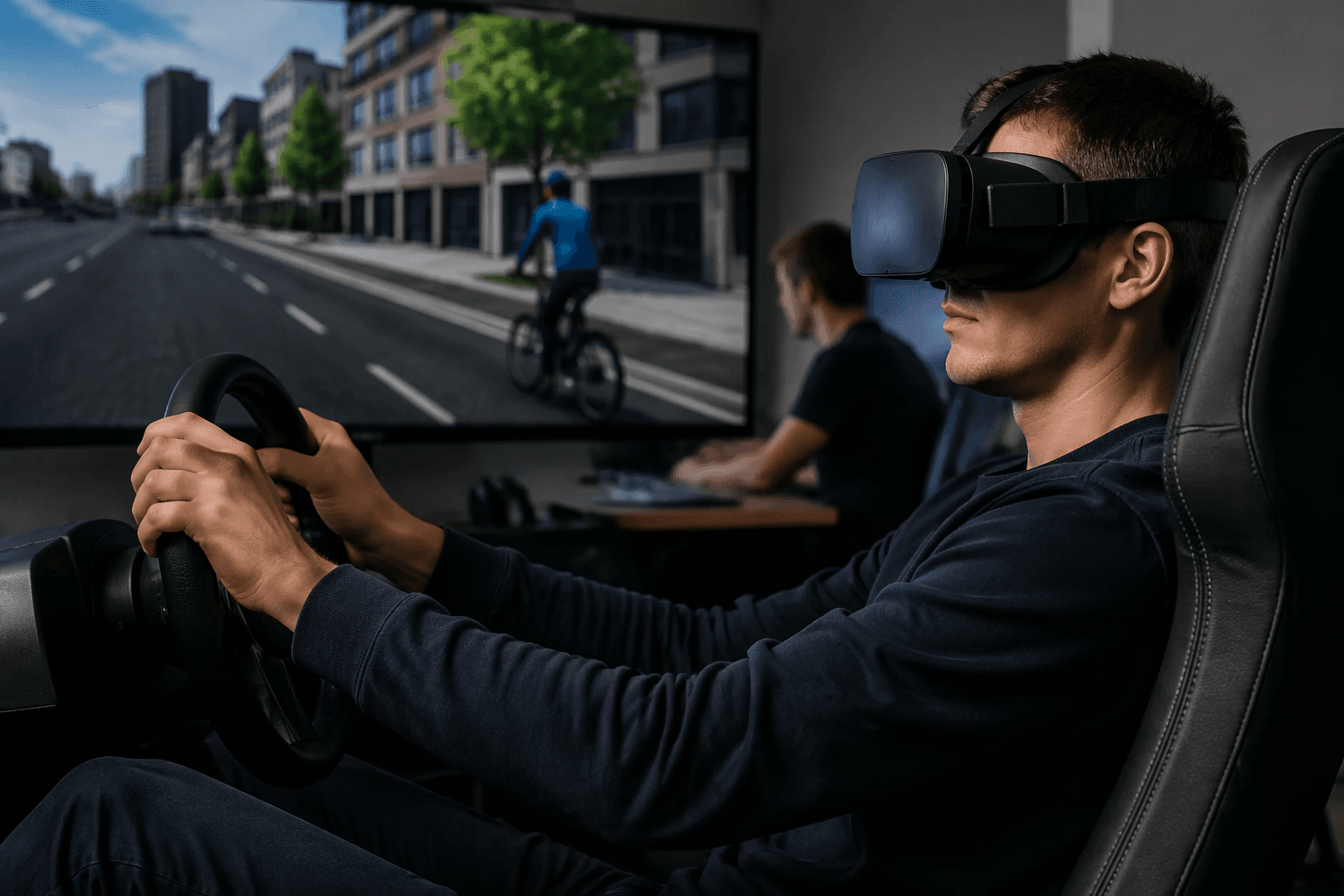
Mark Born, head of the academy, put the advantage this way: "students are in a classroom and can be guaranteed to see certain scenes". That repeatability is central to the model, because it turns rare or unpredictable hazards into teachable moments that every trainee can experience.
What the course was designed to do
The AA Driving School announced the VR-supported instructor training course on 7 June 2022. Its stated goal was to speed up the time it takes driving instructors to qualify and set up their own businesses without compromising quality.
That aim links training efficiency with instruction standards. In a profession where instructors need both technical skill and confidence teaching others, the ability to rehearse difficult scenarios in advance can shorten the period between initial qualification and independent work. It can also make the transition more consistent, since every trainee can be exposed to the same risk scenarios rather than depending on whatever traffic happens to appear during a road session.
What makes the scenarios different now
The hazards highlighted in the Reuters material are not abstract. Cyclists, e-scooters and shared pedestrian spaces create a more crowded decision-making environment than a simple lane-and-junction lesson. Add poor visibility, aggressive drivers, abrupt lane changes and dense traffic, and the challenge for a new instructor becomes not just controlling the car but teaching a student how to scan, anticipate and react.
That is why the story is framed inside Reuters’ Disrupted and innovation video coverage. The technology is being used because the training problem has changed: roads are more variable, and the consequences of a first mistake can be more serious than in a slower-moving training environment. VR does not make those hazards disappear, but it can make them familiar before the student faces them for real.
What VR can and cannot replace
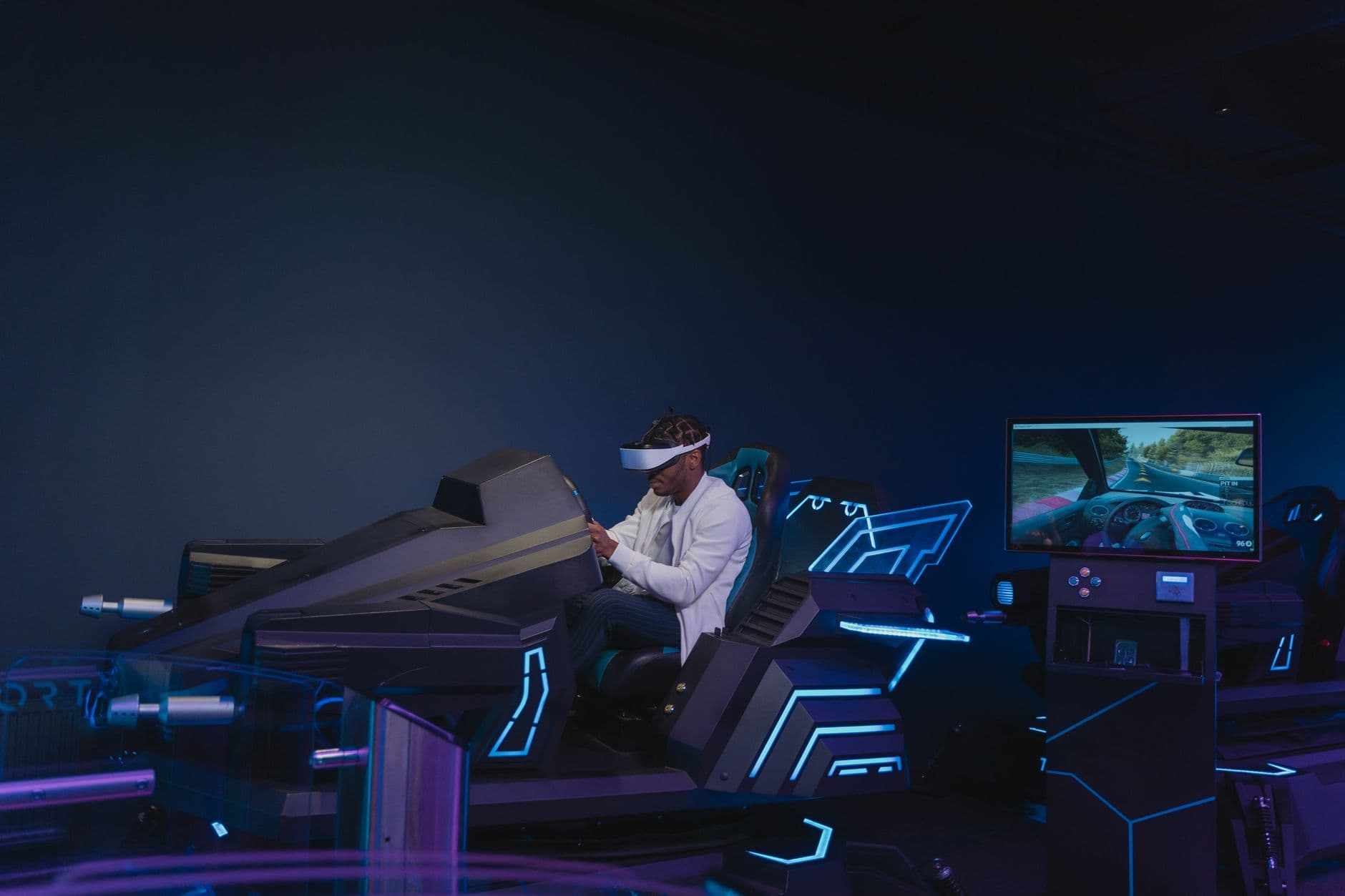
The strongest case for VR is as a supplement. It can prepare learners for the structure of a hazard, but it cannot recreate every sensation of live driving, from real traffic flow to the pressure of sharing space with unpredictable road users. Real-world practice still matters because pupils have to transfer classroom learning into actual steering, braking and judgment on public roads.
That distinction is important for anyone evaluating whether immersive training changes outcomes. VR can improve readiness, lower early-stage risk and give instructors a more repeatable teaching tool. It can also make the first encounter with a cyclist cutting across a lane, or an e-scooter moving through a shared space, less surprising. But the final test of competence remains the road itself.
What this means for the future of instruction
The broader significance reaches beyond one academy or one headset model. Driver education is adapting to a road environment that is changing faster than many traditional lesson plans. As congestion rises, urban layouts shift and vulnerable road users become a bigger part of the daily traffic mix, instructors need ways to teach hazard recognition before students are exposed to the full complexity of real streets.
That makes VR attractive to licensing schools and trainers who want more control over what pupils see and when they see it. It also suggests a future in which readiness is judged not only by time spent behind the wheel, but by whether a learner can show sound judgment in simulated high-risk situations first.
This article was produced by Prism’s automated news system from verified source data, official records, and press releases, then run through automated quality and moderation checks before publishing. The system is built and supervised by the people who set the standards it runs under. Read our full AI policy.
Did this article answer your question?