Supreme Court curbs Trump’s tariff authority, invalidating IEEPA orders
The court ruled 6-3 that the 1977 IEEPA did not authorize sweeping tariffs, upending duties on more than 100 countries and raising the prospect of large refunds.

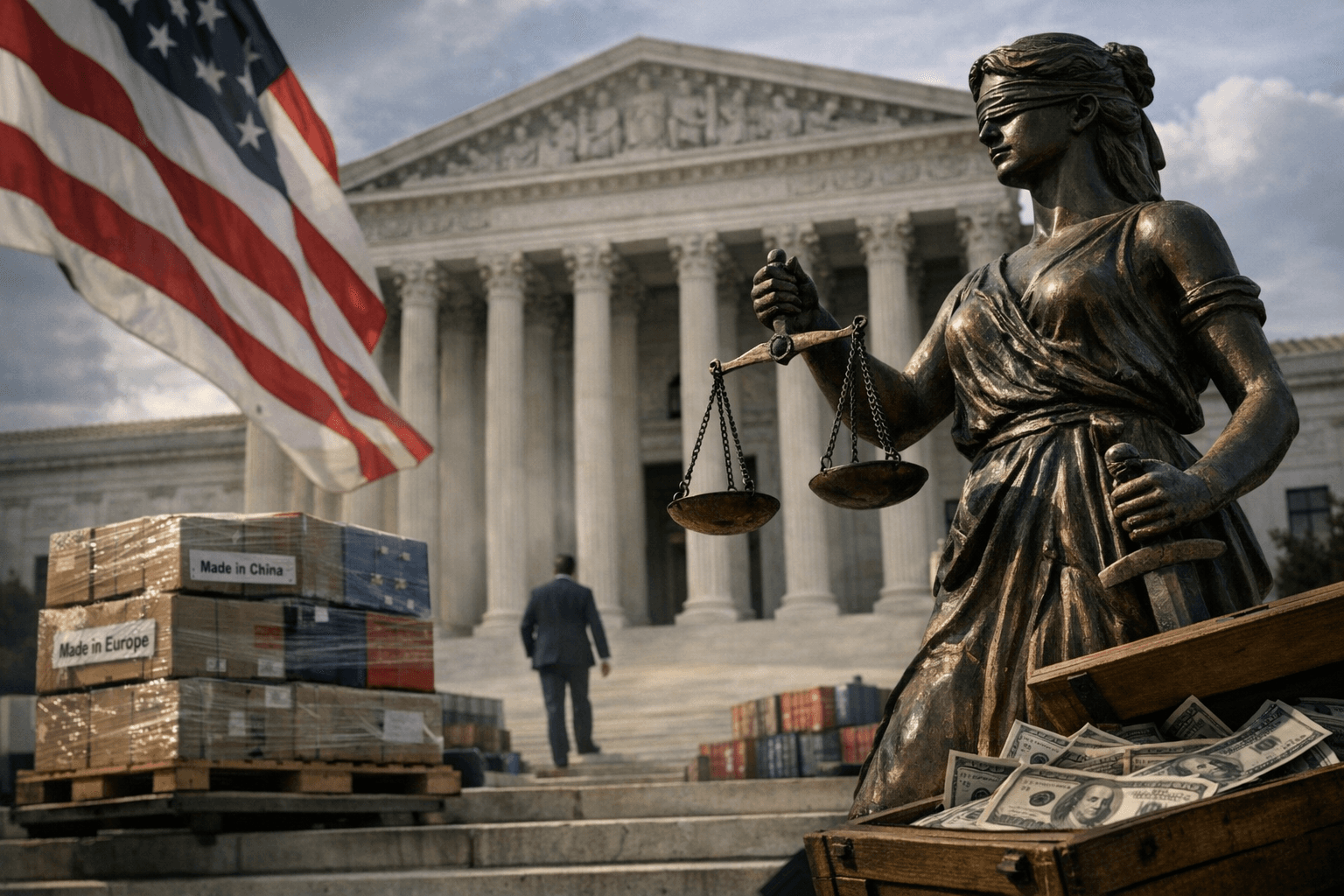
The Supreme Court ruled 6-3 Friday that President Donald Trump exceeded his authority when he used the International Emergency Economic Powers Act of 1977 to impose sweeping global tariffs, invalidating duties applied to more than 100 countries and limiting the executive branch’s reach over trade policy. Chief Justice John G. Roberts Jr. wrote the majority opinion, concluding the statute did not authorize unilateral tariff-setting and underscoring that taxing power rests with Congress.
“The president asserts the extraordinary power to unilaterally impose tariffs of unlimited amount, duration, and scope. In light of the breadth, history, and constitutional context of that asserted authority, he must identify clear congressional authorization to exercise it,” Roberts wrote. Roberts added that the Framers assigned taxing power to the legislature, noting that “The Framers did not vest any part of the taxing power in the Executive Branch.” Reuters reported Roberts saying the president must “point to clear congressional authorization” to justify such an extraordinary assertion of power and that “He cannot.”
The decision, issued Feb. 20, 2026, came in litigation brought by affected businesses and 12 states, most of them Democratic-governed, that challenged tariffs the administration implemented under IEEPA. Those measures included broad, reciprocal levies on nearly every trading partner and specific duties on major economies such as Canada, China and Mexico. NBC News and other outlets have said the ruling does not invalidate tariffs imposed under other statutory authorities, meaning some duties could remain in place while those invoked under IEEPA are struck down.
The practical consequences are immediate and potentially massive. BBC reporting said the ruling “opens the door to potentially hundreds of billions of dollars in tariff refunds,” a calculation that, if borne out, would reshape Treasury liabilities and market expectations. Reuters noted that the tariffs had been forecast to generate trillions of dollars in revenue over the next decade, underscoring the scale of the policy at stake and the fiscal and trade dislocations that could follow the court’s decision.
Justice Brett M. Kavanaugh, joined by Clarence Thomas and Samuel A. Alito Jr., dissented. “The tariffs at issue here may or may not be wise policy. But as a matter of text, history, and precedent, they are clearly lawful,” Kavanaugh wrote. The split highlights an ideological fracture on the Court about the limits of executive emergency authority even after three conservative justices appointed by Trump reshaped the bench in his first term.
Beyond immediate refunds and revenue questions, the ruling reasserts a constitutional principle central to the separation of powers: major fiscal and trade decisions require clear congressional authorization. The administration had argued that the measures were aimed at reducing the trade deficit, spurring manufacturing, raising revenue and pressuring trading partners; some officials also pointed to efforts to curb the flow of illegal drugs. Observers and plaintiffs now face a complex unwind. The New York Times and others reported that the administration has warned a loss could force the government to unwind trade arrangements and potentially pay hefty refunds, while administration officials have said they may pursue other legal authorities to preserve aspects of the tariff framework.
The decision will reverberate through trade policy, domestic industries, and ongoing litigation over executive power. Key follow-ups include a detailed accounting from Treasury of revenues collected under the IEEPA orders, the identification of the 12 state plaintiffs, and whether the government will seek rehearing or pivot to alternative statutory routes to impose duties.
This article was produced by Prism’s automated news system from verified source data, official records, and press releases, then run through automated quality and moderation checks before publishing. The system is built and supervised by the people who set the standards it runs under. Read our full AI policy.
Did this article answer your question?

