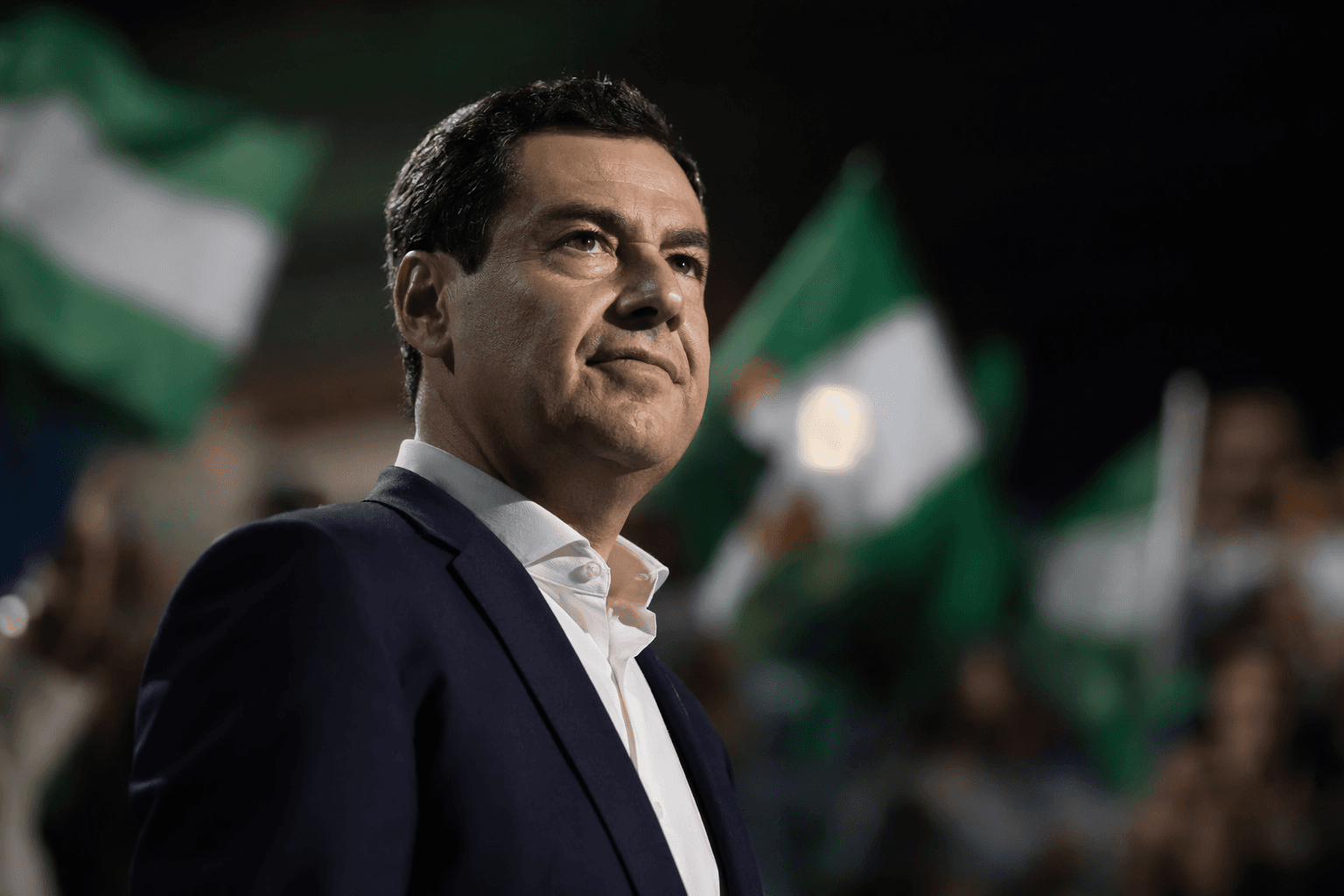
Supreme Court Hears Birthright Citizenship Case, Justices Signal Skepticism of Ban
Trump became the first sitting president to attend a Supreme Court argument as justices from both wings of the court signaled deep skepticism of his bid to end birthright citizenship.

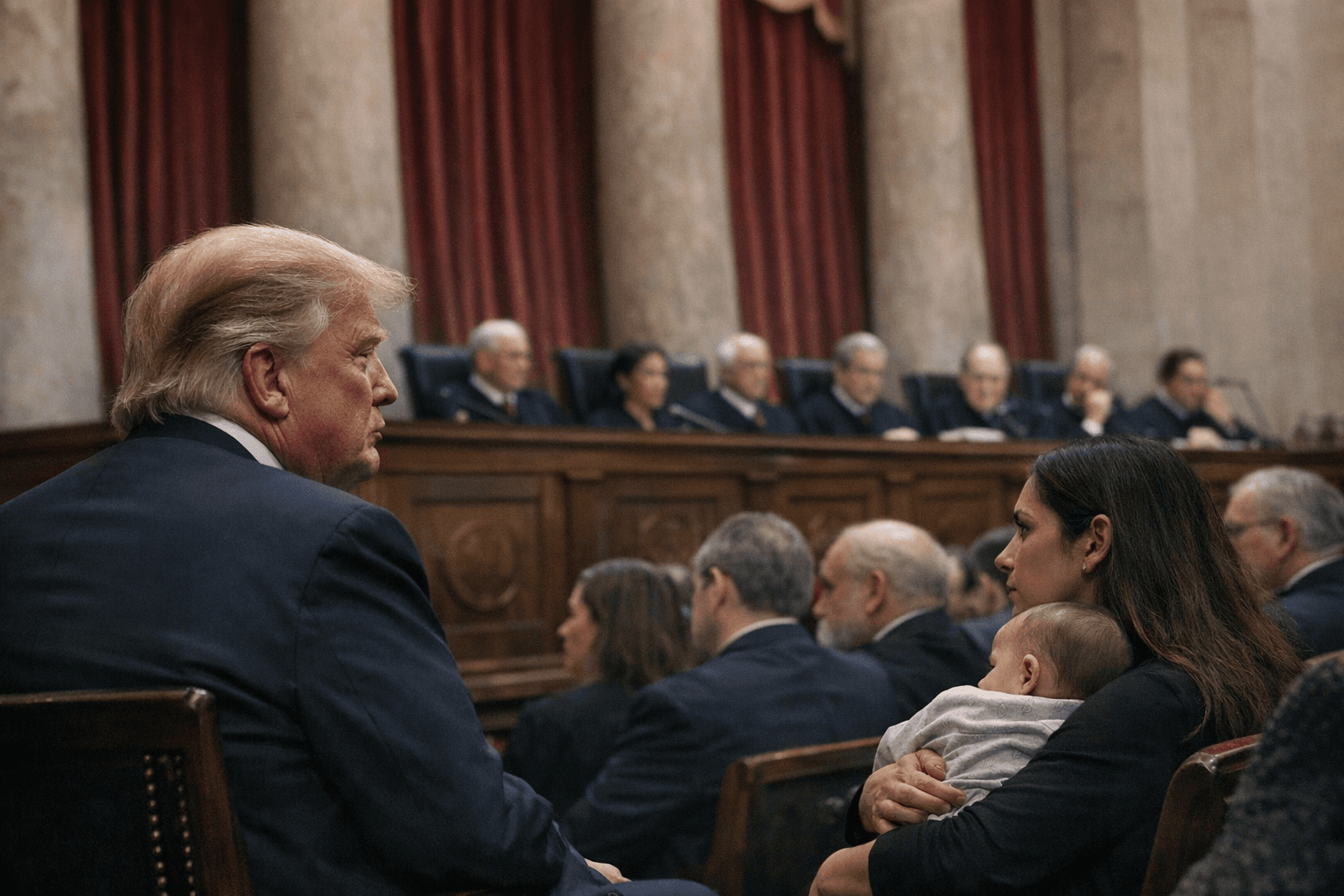
President Donald Trump sat inside the Supreme Court chamber on Wednesday as a bipartisan majority of justices spent more than two hours methodically dismantling his administration's argument that the 14th Amendment does not guarantee citizenship to children born on U.S. soil to noncitizen parents. The high court heard oral arguments on whether Trump's executive order could upend the constitutional guarantee of citizenship for people born in the U.S. regardless of their parents' immigration status.
Trump attended the session in the case known as Trump v. Barbara, the first time a sitting president had attended such a session. He stayed for more than an hour, listening to Solicitor General D. John Sauer's defense of the executive order, then left less than 15 minutes after ACLU attorney Cecillia Wang began arguing against it. Minutes later, Trump posted on Truth Social: "We are the only Country in the World STUPID enough to allow 'Birthright' Citizenship!"
Inside the courtroom, the administration's legal position faced skepticism from across the ideological spectrum. Less than an hour into oral arguments, members of the court's conservative majority, including Chief Justice John Roberts and Justices Neil Gorsuch, Brett Kavanaugh, and Amy Coney Barrett, were openly questioning the historical, textual, and practical foundations of the administration's position.
Justice Sonia Sotomayor told Sauer directly: "You're asking us to overrule Wong Kim Ark. You're asking us to overrule that case." That 1898 precedent, which affirmed birthright citizenship for a man born in San Francisco to Chinese parents, anchored both sides' arguments, though the administration's heavy reliance on it drew pointed pushback. Gorsuch told Sauer: "I don't know how much you want to rely on Wong Kim Ark."
Gorsuch also raised practical questions, asking who would decide whether a person in the U.S. has established "domicile" and whether that determination would use contemporary sources or definitions from 1868. Barrett pressed on the historical record: "If they were going to invent an entirely new kind of citizenship, like an American brand, why wouldn't we have seen more discussion of that in the debates?" Justice Ketanji Brown Jackson asked whether enforcing the order would mean "bringing pregnant women in for depositions."
Wang, who is herself a beneficiary of birthright citizenship, argued that American courts' reliance on English common law settles the matter. "When the government tried to strip Mr. Wong Kim Ark's citizenship on largely the same grounds they raised today, this court said no," she said.
Kavanaugh later asked Wang why the court needed to decide the constitutional question at all if it could resolve the case based solely on the Immigration and Nationality Act. Wang said she was "happy to win on either" ground but urged the court to "reaffirm" Wong Kim Ark as "a landmark decision about the definition of national citizenship in this country."
The court's most sympathetic questioning toward the administration came from Justice Samuel Alito, who suggested the amendment's text could be applied to circumstances, including large-scale illegal immigration, "that was basically unknown at the time when the 14th Amendment was adopted." Sauer reinforced the point, arguing that "the United States' rule of nearly unrestricted birthright citizenship is an outlier among modern nations" and that "every nation in Europe has a different rule." Kavanaugh was unmoved: "Why should we be thinking about the fact European countries don't have this? I'm not seeing the relevance as a legal, constitutional, interpretive matter."
Even while courts have repeatedly blocked the order from taking effect since February 2025, the threat alone has already altered behavior on the ground. Pregnant women have reported anxiety about going to hospitals to give birth if the order were to take effect. Some have asked whether immigration authorities could target newborns. Immigrant parents and pregnant people have also reported avoiding medical care, staying confined to their homes, and concealing aspects of their cultural identity because of fear of immigration enforcement. Advocacy organizations have documented a broader chill: some teachers reported that half their students stopped showing up because families were scared of what might happen at schools.
More than 3 million babies born in the United States each year receive the right to citizenship, documented by a single line on their birth certificates. The executive order, signed on January 20, 2025, would have denied that status to children born to mothers unlawfully present in the country and whose fathers were not U.S. citizens or lawful permanent residents, and also to children whose parents hold only temporary legal status, including Temporary Protected Status, DACA, H-1B visas, student visas, and agricultural work visas.
A decision in the case is expected by late June or early July. If the court rules against the administration on constitutional grounds, it would foreclose any future executive attempt to redefine the citizenship clause. A narrower ruling limited to the Immigration and Nationality Act would leave open the possibility of a legislative challenge, a distinction several justices appeared acutely aware of as the arguments concluded.
Know something we missed? Have a correction or additional information?
Submit a Tip