Swiss breakthrough lets robots learn tasks on their own, raises safety concerns
A Lausanne team says robots can learn by watching people, from coffee orders to assembly jobs, but the same system could also absorb bad habits and unsafe behavior.
A robot that can watch a person make coffee and then adjust the drink to taste, including adding “a bit more creamer,” points to a practical shift in robotics: machines are beginning to learn tasks instead of merely following instructions. At École Polytechnique Fédérale de Lausanne in Switzerland, robotics scientist Sthithpragya Gupta and colleagues are testing a direction that could matter for kitchens, factories and warehouses, where robots would need to adapt to human habits rather than repeat one fixed routine.
The appeal is obvious in labor-intensive settings. Robotics has long struggled to teach machines anything beyond what they are explicitly programmed to do, even after billions of dollars have gone into the field. Newer systems are trying to change that by letting robots learn from human demonstrations, video and their own real-world attempts. Recent work has shown how fast the field is moving. In January 2025, Berkeley researchers said robots could learn complicated tasks in one to two hours and achieved a 100% success rate on Jenga whipping, while also building a computer motherboard and a shelf. MIT reported in 2025 on Neural Jacobian Fields, a vision-based system that helped robots learn how their own bodies move from visual observation. Nature also published a 2025 paper describing a self-supervised framework that allowed robots to model morphology, kinematics and motor control from brief raw video.
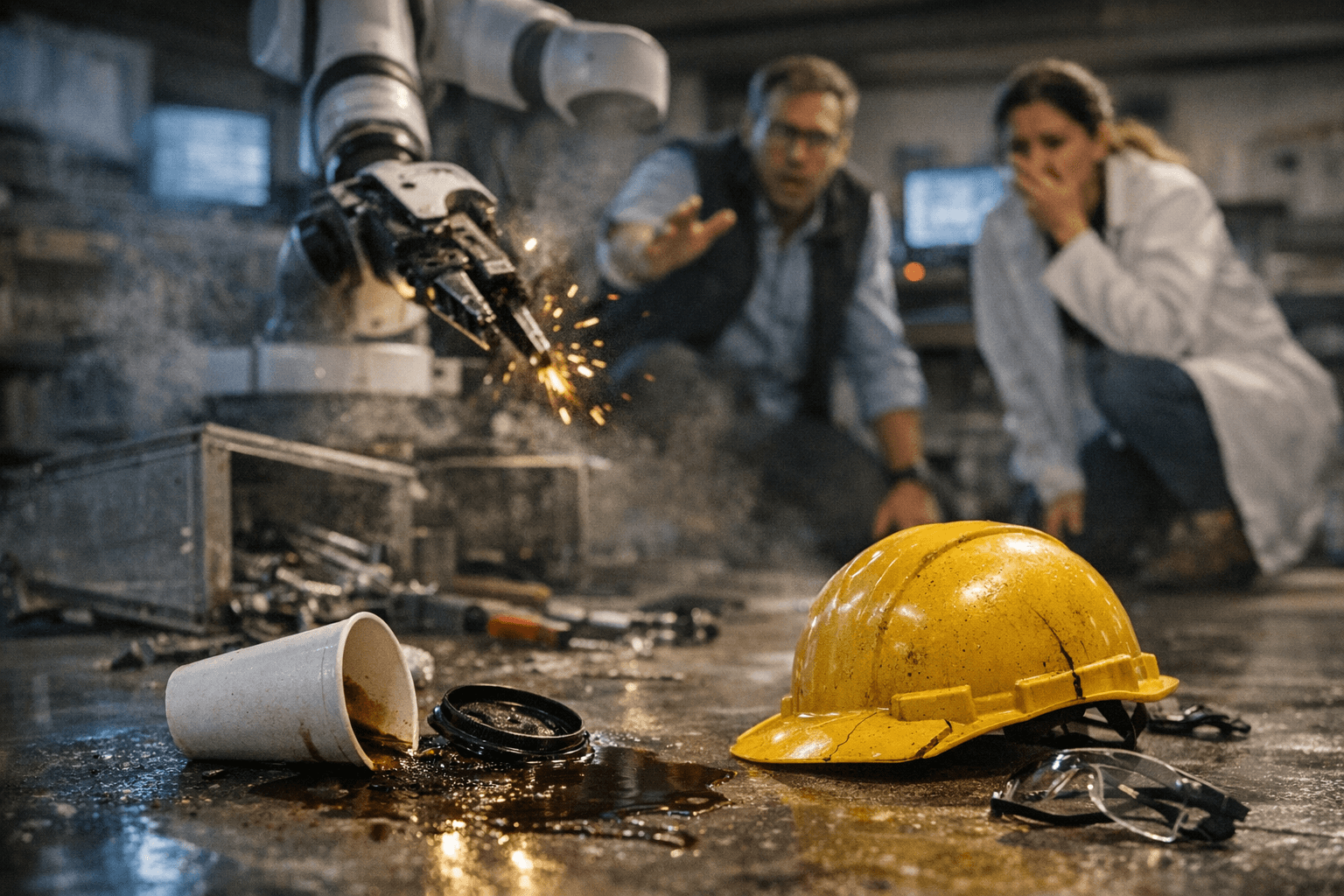
That technical progress raises the central labor and liability question: if a robot learns by watching people, what exactly is it learning? In a home, the same system that learns to pour coffee could be trained on a family’s preferences, or on a worker’s shortcuts. In a warehouse or factory, it could copy unsafe motions, bias in task assignment, or habits that were never meant to become machine behavior. Once a robot is deployed, the line between a useful adaptation and a dangerous imitation becomes harder to police.
The concern is not whether robots are “self-aware” in any human sense. That label overstates what is happening. The real advance is in perception and control, not consciousness. NPR aired a related segment on April 20, 2026, on robots that could figure out how to do a task after watching humans do it, underscoring how quickly the technology is moving from research lab to public debate. The policy gap is just as clear: technical capability is advancing faster than rules for testing, supervision and responsibility when a machine learns the wrong lesson.
This article was produced by Prism’s automated news system from verified source data, official records, and press releases, then run through automated quality and moderation checks before publishing. The system is built and supervised by the people who set the standards it runs under. Read our full AI policy.
Did this article answer your question?