Swiss Central Banker Warns Prolonged Energy Shock Could Lift Inflation
Swiss inflation was still only 0.3% in March, but Martin Schlegel warned a prolonged energy shock could push prices higher and slow growth.

Swiss National Bank Chairman Martin Schlegel warned that a conflict-driven surge in energy prices could do more than jolt markets for a few weeks. If the shock lasts, he said, it could feed inflation and weaken growth, even though Switzerland entered the period with low inflation and a relatively solid economy.
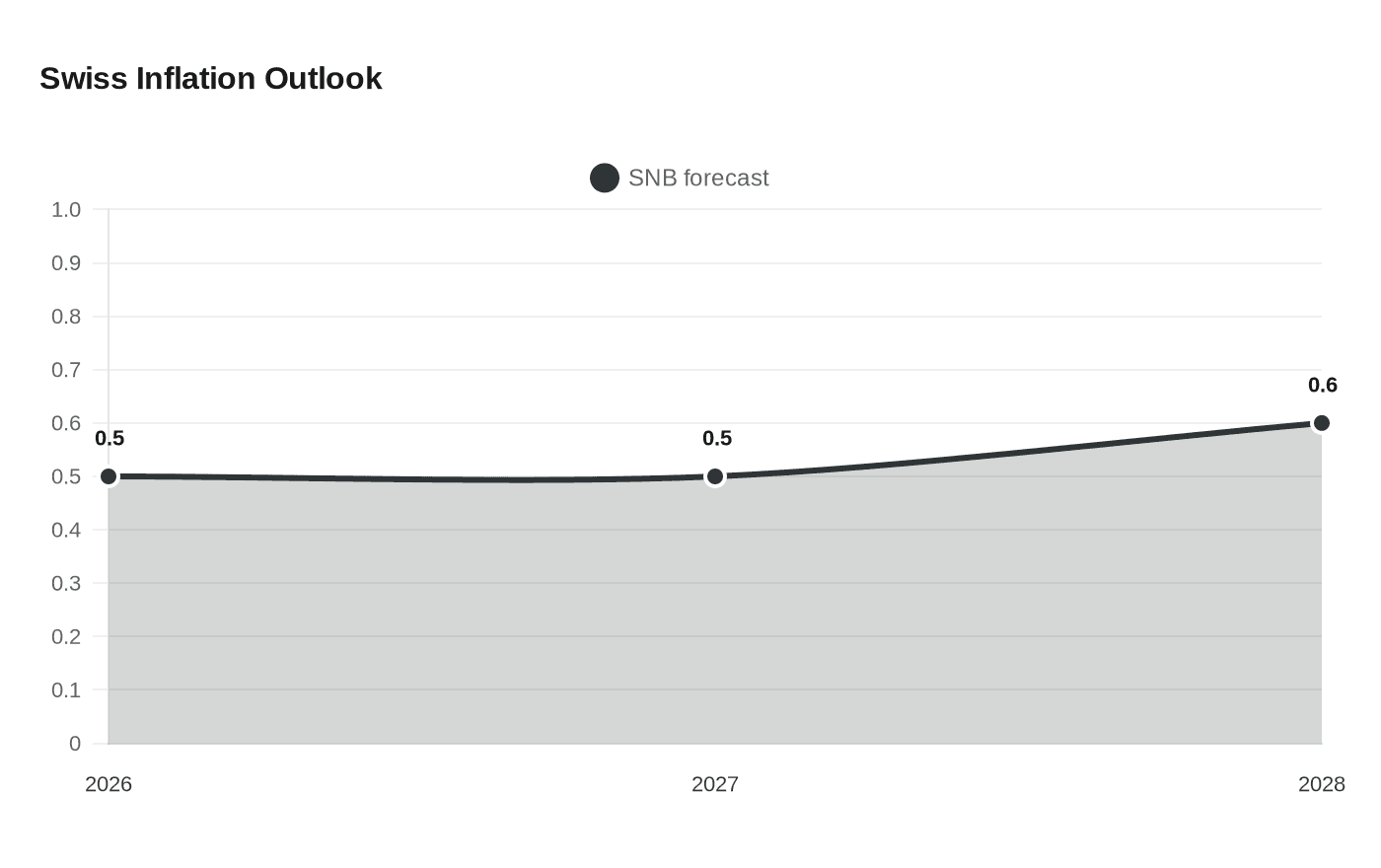
Schlegel told Neue Zürcher Zeitung that "the key question is how long the conflict will last and whether energy prices remain high." His warning landed after the Swiss National Bank kept its policy rate at 0% on March 19 and lifted its short-term inflation outlook because of higher energy prices tied to the Middle East escalation. The central bank still projected average annual inflation of 0.5% in 2026, 0.5% in 2027 and 0.6% in 2028, but only on the assumption that rates stay unchanged and the energy shock does not intensify.
That assumption is now under pressure. Switzerland’s Consumer Price Index rose 0.3% year on year in March 2026 after a 0.2% monthly increase, a sign that inflation remained modest but was moving away from near-zero readings. SECO has already trimmed its 2026 growth forecast to 1.0% from 1.1% and said the Middle East war is driving up energy prices and uncertainty. It also noted that Swiss GDP grew 0.2% in the fourth quarter of 2025 after a 0.4% contraction in the third quarter, leaving the economy steadier but still vulnerable to imported shocks.
Schlegel’s concern is not only about fuel and heating bills. He said higher energy costs ripple through the economy via food production, transport and packaging, which is how a supply shock can become a broader inflation problem. The SNB has said energy carries a smaller weight in Switzerland’s consumer basket than in many other countries, but it has also warned that inflation expectations can become harder to anchor if price pressures spread beyond a narrow set of goods.
That is why the central bank has signaled it is willing to act on multiple fronts. The SNB said its readiness to intervene in foreign-exchange markets had increased because a rapid and excessive appreciation of the Swiss franc could threaten price stability. For central banks from Bern to Washington, the lesson is the same: if conflict keeps energy prices elevated long enough, policymakers may have to choose between supporting growth and keeping inflation contained.
This article was produced by Prism’s automated news system from verified source data, official records, and press releases, then run through automated quality and moderation checks before publishing. The system is built and supervised by the people who set the standards it runs under. Read our full AI policy.
Did this article answer your question?
%3Amax_bytes(150000)%3Astrip_icc()%2FCertificate-of-deposit-2301f2164ceb4e91b100cb92aa6f868a.jpg&w=1920&q=75)
