Switzerland referendum could cap population, alarm businesses and EU ties
A Swiss vote to cap the resident population at 10 million has split voters, with businesses warning it could choke off skilled labor and unsettle EU trade ties.

Switzerland is heading into a referendum that turns population pressure into a direct economic test. The popular initiative “No to a Switzerland with 10 million! (Sustainability Initiative)” would keep the permanent resident population below 10 million until 2050, and it has alarmed employers who say the real damage would be felt first in hiring, exports and investment.
Supporters, led by the Swiss People’s Party, argue that rapid growth is already straining roads, trains, housing and public services while pushing up rents and crime. Businesses counter that the proposal would hit the parts of the economy that rely most heavily on foreign labor and cross-border mobility, especially as the European Union remains Switzerland’s biggest export market. With voting set for 14 June 2026, the clash is not just about headcount. It is about whether Switzerland can preserve a high-skill growth model while closing the valve on migration.
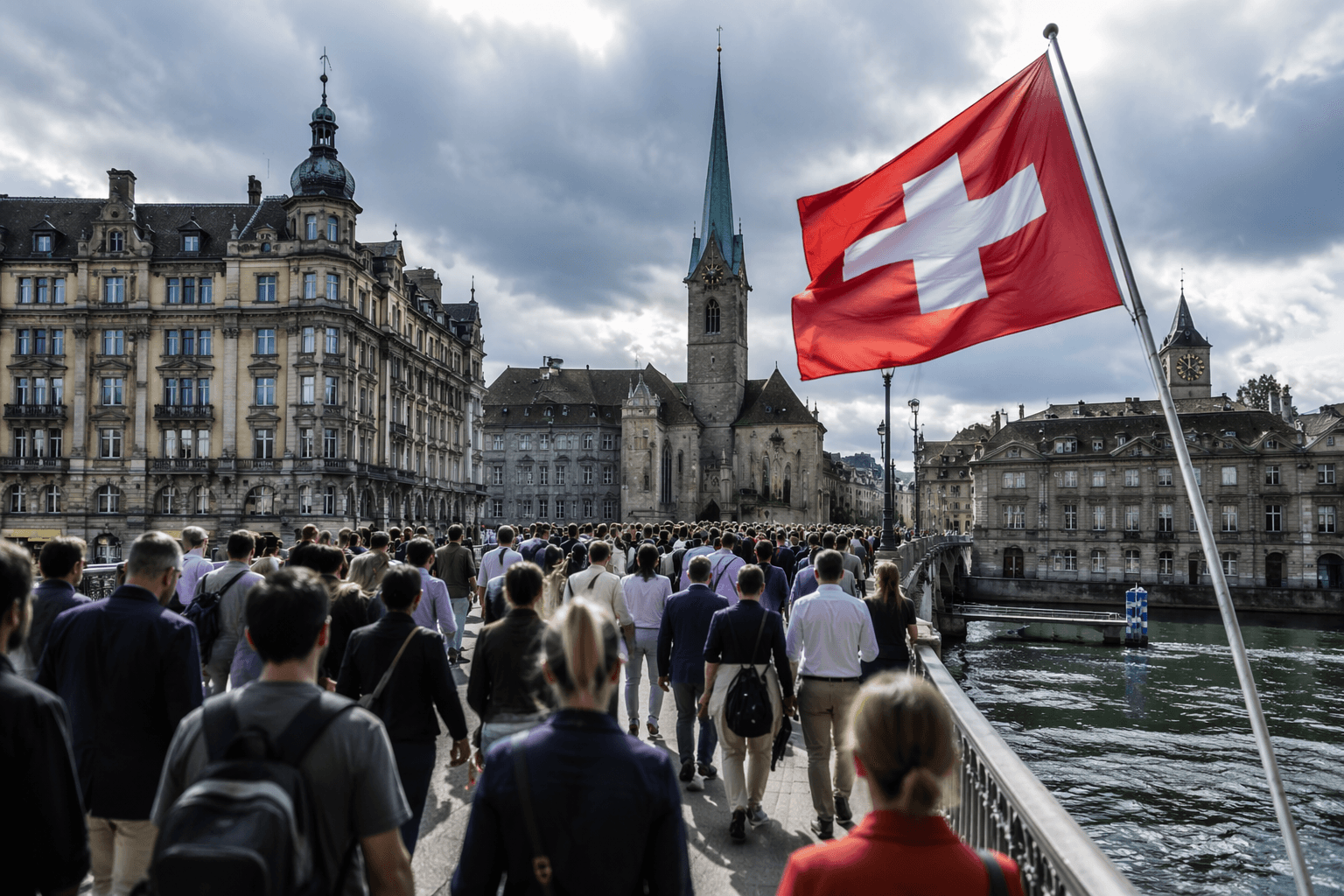
The numbers explain why the debate is so sharp. Switzerland’s population reached about 9.1 million at the end of 2025, up from 7.3 million when free movement with the European Union began in 2002. Foreigners now make up nearly 28% of residents, a share that underlines how deeply businesses depend on imported skills. Under the initiative, if the permanent resident population crosses 9.5 million before 2050, the Federal Council and parliament would have to act, especially on asylum and family reunification. Federal materials also say the country could ultimately be forced to terminate the free-movement agreement with the EU if the cap cannot otherwise be met.
That prospect has put employers on the front line of the campaign. Martin von Moos, a hotel chief executive, said his business would not function if it lost all of its foreign staff. Daniel Steiner of Molecular Partners said limiting recruitment to the Swiss talent pool would be a showstopper and could even push some operations abroad. Those warnings go beyond rhetoric: in a small, wealthy economy with tight labor markets, the first squeeze would likely fall on hospitality, life sciences and other sectors that cannot quickly replace specialist workers from within Switzerland alone.
The political establishment has largely lined up against the initiative. The National Council commission recommended rejecting it without a counterproposal in June 2025, and the Federal Council urged parliament to oppose it, saying it threatens prosperity, sustainable economic development and security. Beat Jans, a federal councillor, said the initiative “solves no problems and creates new ones.”
Polling suggests the final outcome is still open. A late-May Tamedia and 20 Minuten survey showed 52% in favor, while an earlier November poll found 48% yes and 41% no. That volatility reflects a broader European pattern, as populist parties from Britain to France and Germany use immigration and housing pressure to drive support. Switzerland’s result will be watched closely because it will show how far voters in a high-income export economy are willing to trade labor mobility for demographic control.
This article was produced by Prism’s automated news system from verified source data, official records, and press releases, then run through automated quality and moderation checks before publishing. The system is built and supervised by the people who set the standards it runs under. Read our full AI policy.
Know something we missed? Have a correction or additional information?
Submit a Tip