Syria arrests officer linked to 2013 Tadamon mass killing
A 13-year manhunt ended with the arrest of Amjad Youssef, the officer tied to Tadamon’s blindfolded civilian killings and a hidden mass grave.
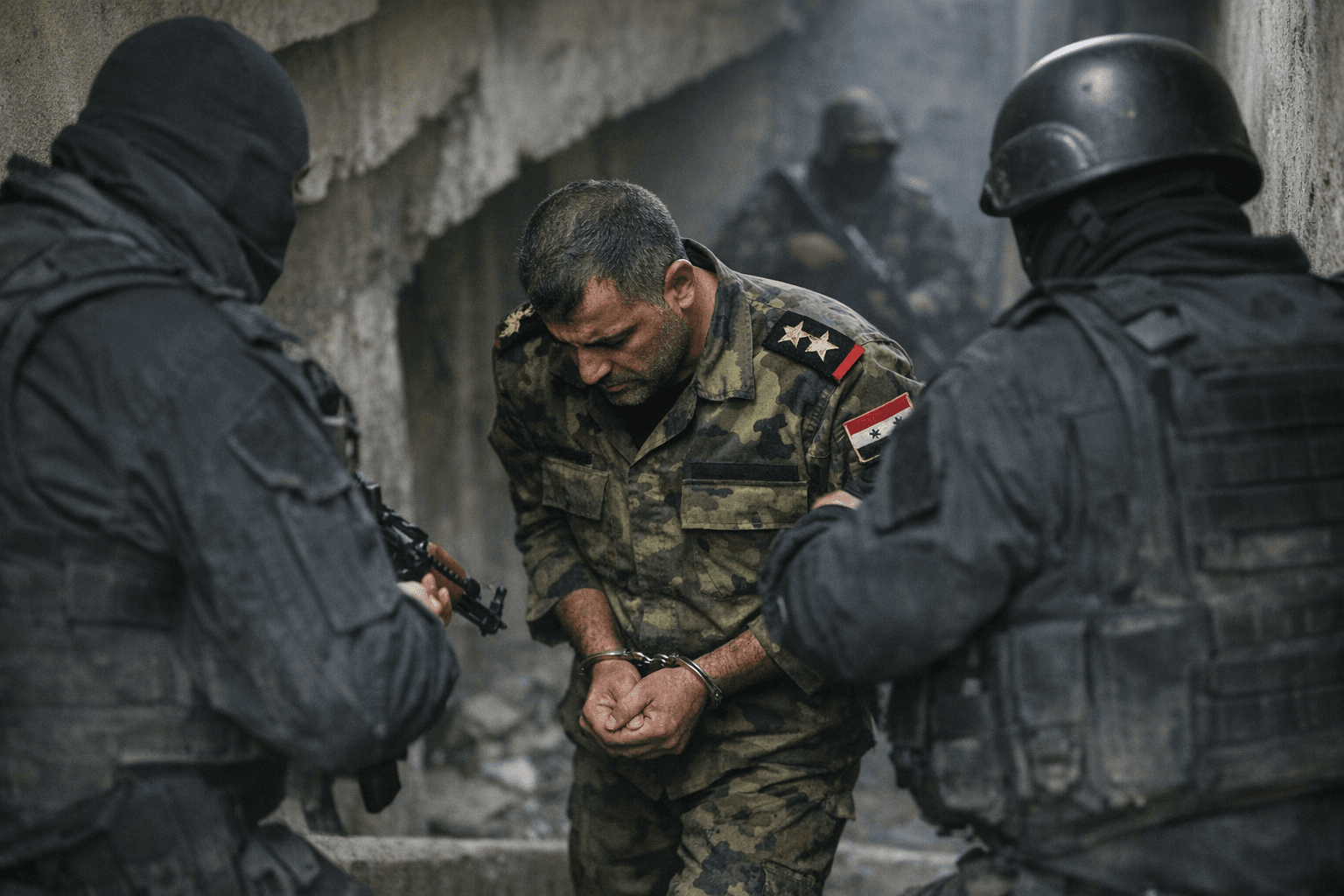
Syrian authorities have arrested Amjad Youssef, the officer accused of helping carry out the Tadamon massacre, in a security operation in the Hama countryside. Interior Minister Anas Khattab said on Friday that “the criminal Amjad Youssef is now in our hands,” a line that marked the first major custody breakthrough in a case that has come to symbolize the long delay, and the narrow reach, of accountability for Assad-era crimes.
The killings took place on April 16, 2013, in Tadamon, a neighborhood in southern Damascus, during the Syrian civil war. Leaked footage later showed blindfolded and handcuffed civilians being forced to run before being shot and dumped into a pre-dug mass grave. Investigators said at least 41 people were shown killed in the video, while later research estimated the broader massacre may have claimed 288 civilians, including seven women and 12 children.
The perpetrators were identified as members of Syrian military intelligence linked to Branch 227, the Damascus branch of the Military Intelligence Directorate. Youssef emerged as a central suspect after the footage was publicly analyzed in 2022, turning a hidden atrocity into one of the most visible war-crimes cases tied to Syria’s conflict. His arrest now places a named suspect in custody, but it does not erase the long gap between the crime, its exposure, and the first serious enforcement action.
That delay matters because the Tadamon site has remained both a crime scene and a warning. Human Rights Watch said in December 2024 that its researchers found human remains at and around the site and warned that evidence could be lost if authorities did not secure the area. The group urged Syrian authorities and the international community to protect possible mass-grave sites for forensic investigation and accountability, underscoring how quickly physical proof can disappear after years of neglect, looting, or development.
For families and residents from the area, the arrest revives hopes that more victims may still be identified and that the dead may finally be counted with precision. It also highlights the limits of war-crimes enforcement after more than a decade of conflict: evidence was preserved only partially, suspects scattered, and justice depended on a leaked video surviving long enough to be examined. The Interior Ministry said it would continue pursuing other perpetrators, a reminder that one arrest is only a first step in a far larger reckoning over Syria’s war.
This article was produced by Prism’s automated news system from verified source data, official records, and press releases, then run through automated quality and moderation checks before publishing. The system is built and supervised by the people who set the standards it runs under. Read our full AI policy.
Did this article answer your question?