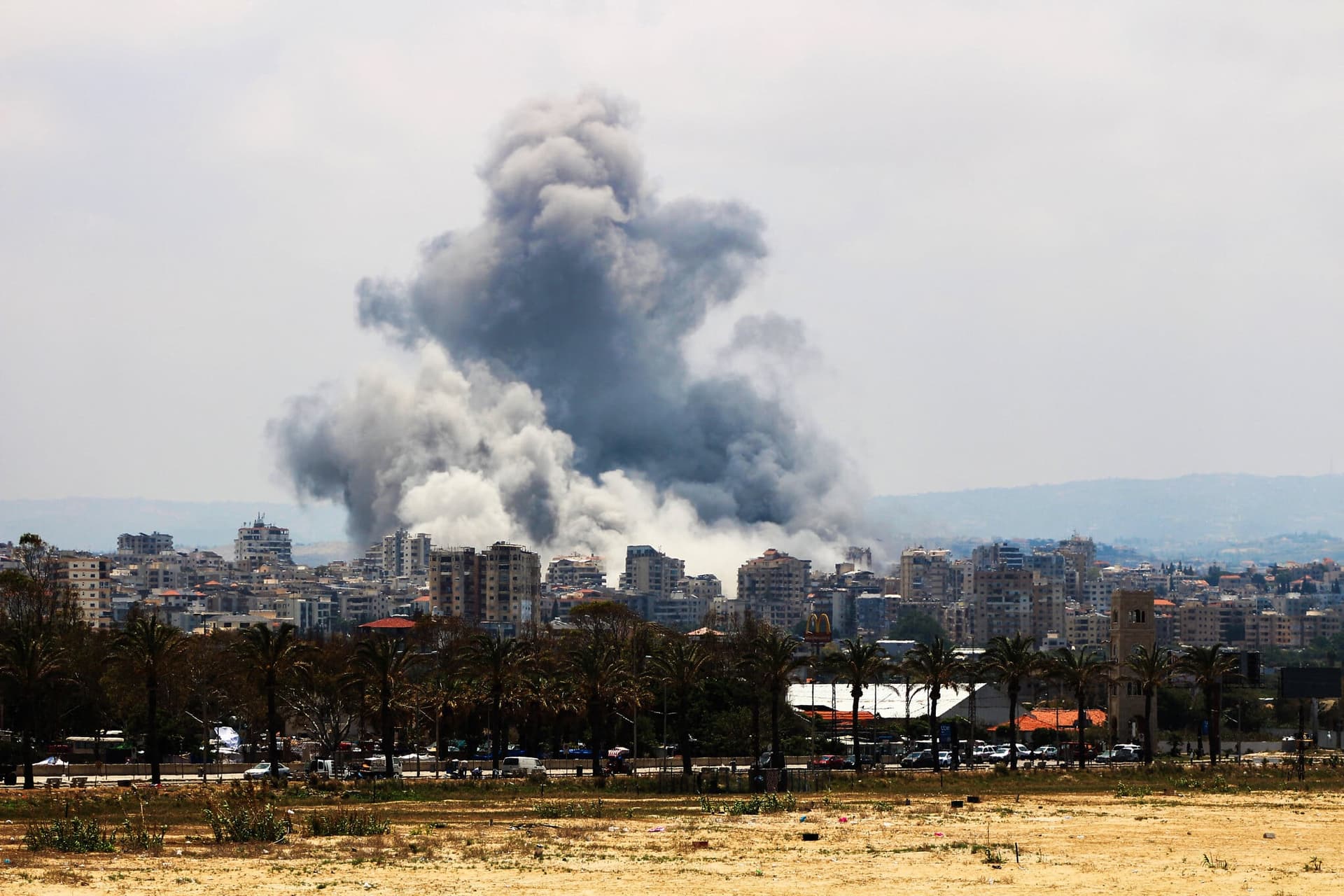
Syria’s skies see flight surge as airlines reroute around conflict
Nearly 12,000 flights crossed Syria’s skies in May, a jump that could have brought $5.9 million in fees as airlines fled more dangerous Middle East corridors.

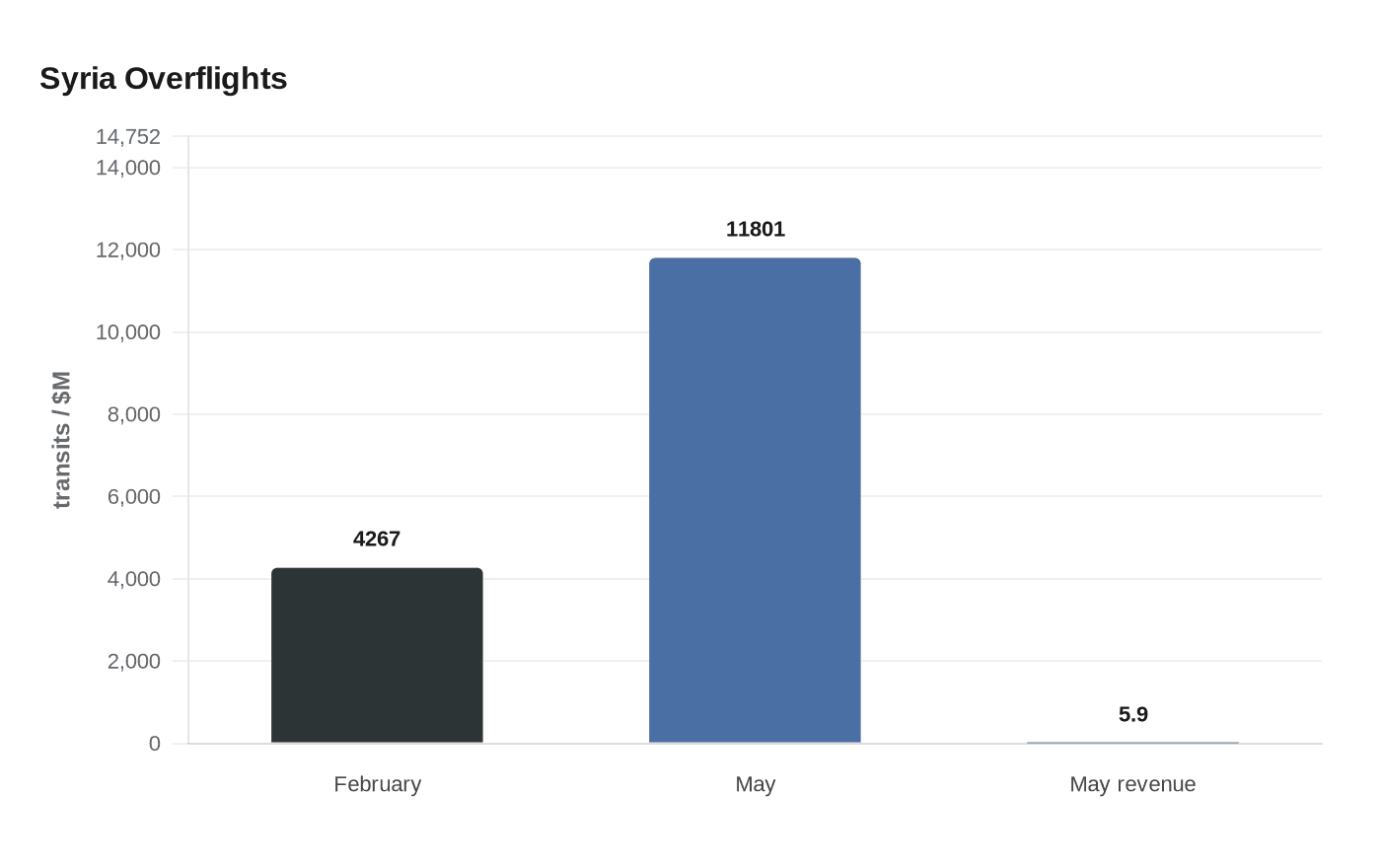
Syria’s airspace, long treated as a no-go zone, handled 11,801 aircraft transits in May, more than double the 4,267 recorded in February and about 375% above the same month a year earlier. The surge turned a country that spent years isolated by war into a temporary beneficiary of regional instability, as airlines looked for safer routes while conflict elsewhere in the Middle East reshaped the map of commercial aviation.
The reversal is especially striking because Syria’s skies were effectively closed to normal traffic throughout the 14-year civil war that ended with the ousting of Bashar al-Assad in late 2024. What had been a blank spot on many flight paths is now drawing traffic again, not because the country has fully recovered, but because carriers are recalculating risk, cost and geopolitics in real time. European and U.S. carriers continued to avoid Syrian routes, while Asian and North American carriers were largely steering clear of Middle Eastern airspace more broadly.
For Damascus, the shift has a clear financial upside. Syria raised the fees it charges airlines early this year, and Reuters calculations based on a flat fee of $499 per flight suggested that May’s traffic could have generated as much as $5.9 million in overflight revenue. Syria’s General Authority for Civil Aviation declined to comment on the revenue potential and the new fees.
Omar al-Hosari, head of the General Authority for Civil Aviation, said the rise in overflight traffic reflects “the beginning of a real shift” in how airlines view Syrian airspace. That change speaks to Syria’s location at the crossroads of Gulf, Europe and eastern Mediterranean routes, where each fresh disruption in neighboring air corridors can send traffic back over a country that was shut out of regional aviation for years.
The numbers also underscore how quickly conflict can redistribute economic benefit. In February, before the Iran war disrupted regional aviation, Syria counted 4,267 transits. By May, the count had climbed to nearly 12,000, according to the figures cited, with Syria’s state news agency SANA reporting 11,801 overflights and a 378% increase from May 2025.
That makes Syria’s brief aviation rebound look less like a normal recovery than a wartime windfall. The country’s return to flight-path relevance is real, but it is tied to instability, not peace, and its longer-term value will depend on whether airlines keep choosing Syria once the region’s airspace settles again.
This article was produced by Prism’s automated news system from verified source data, official records, and press releases, then run through automated quality and moderation checks before publishing. The system is built and supervised by the people who set the standards it runs under. Read our full AI policy.
Know something we missed? Have a correction or additional information?
Submit a Tip