Taiwan detects 16 Chinese warplanes as Xi meets opposition leader
Taiwan counted 16 Chinese warplanes near the island as Xi Jinping hosted a Taiwan opposition leader in Beijing, pairing talks with a fresh show of force.
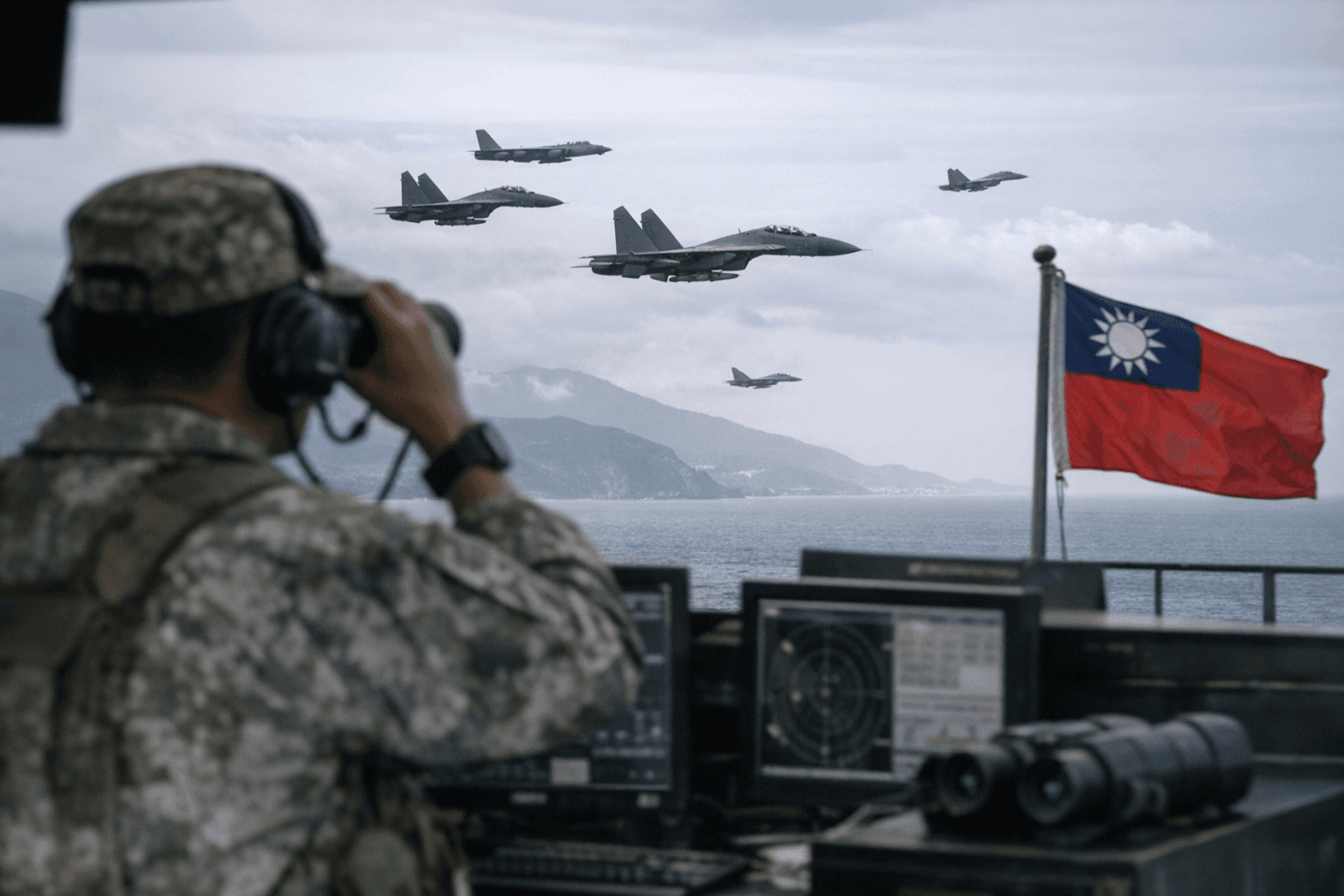
Taiwan’s defense ministry said it detected 16 Chinese warplanes operating near the island on April 10, the same period Chinese President Xi Jinping met Cheng Li-wun, chairwoman of Taiwan’s Kuomintang opposition party, in Beijing. The overlap sharpened a familiar pattern in cross-strait politics: Beijing speaks of reconciliation while keeping military pressure in the background.
Xi told Cheng that China would “absolutely” not tolerate independence for Taiwan. Cheng, who traveled to Beijing to press the case for dialogue, framed her visit as an effort to reduce hostility and promote a kind of peace she said could be institutionalized across the Taiwan Strait. The meeting gave Beijing a political opening with one of Taiwan’s main opposition figures even as Chinese military activity kept the threat of coercion in view.
Taiwan’s Mainland Affairs Council has long argued that Beijing uses military pressure as a political instrument. Deputy minister Shen Yu-chung said China’s pattern is to project peace at the same time it applies force, a description that has become central to Taiwan’s security debate. The 16-warplane count appeared in Taiwan’s daily military summary for the previous 24 hours, suggesting the activity fit a routine pattern even if the timing carried clear political weight.
The government in Taipei has repeatedly warned that Chinese aircraft and ships are not isolated signals but part of a broader campaign aimed at shaping Taiwan’s domestic politics and discouraging any move toward formal independence. By pairing outreach to Cheng with air activity near the island, Beijing reinforced that message on both fronts at once.
President Lai Ching-te’s office rejected the opposition’s framing of the trip, saying the meeting suggested Taiwan was part of the People’s Republic of China and amounted to advancing annexation. That response underscored how quickly cross-strait dialogue collides with Taiwan’s internal political fault lines, especially when the Kuomintang argues for engagement and the ruling camp sees political cover for Beijing.
For Beijing, the sequence offered a dual-track pressure campaign: court Taiwan’s opposition while normalizing military coercion. The result was a stark reminder that every gesture toward dialogue now unfolds under the shadow of warplanes.
This article was produced by Prism’s automated news system from verified source data, official records, and press releases, then run through automated quality and moderation checks before publishing. The system is built and supervised by the people who set the standards it runs under. Read our full AI policy.
Did this article answer your question?