Taiwan Firm Converts Small Planes, Markets Low Cost Sea Surveillance
A Taiwanese charter operator, Apex, is marketing converted light aircraft fitted with U.S. made synthetic aperture radar and infrared sensors to provide persistent maritime surveillance around Taiwan. The initiative highlights how civilian firms are being folded into a whole of society defence posture as Beijing increases naval and air activity, and it may broaden regional access to inexpensive reconnaissance.
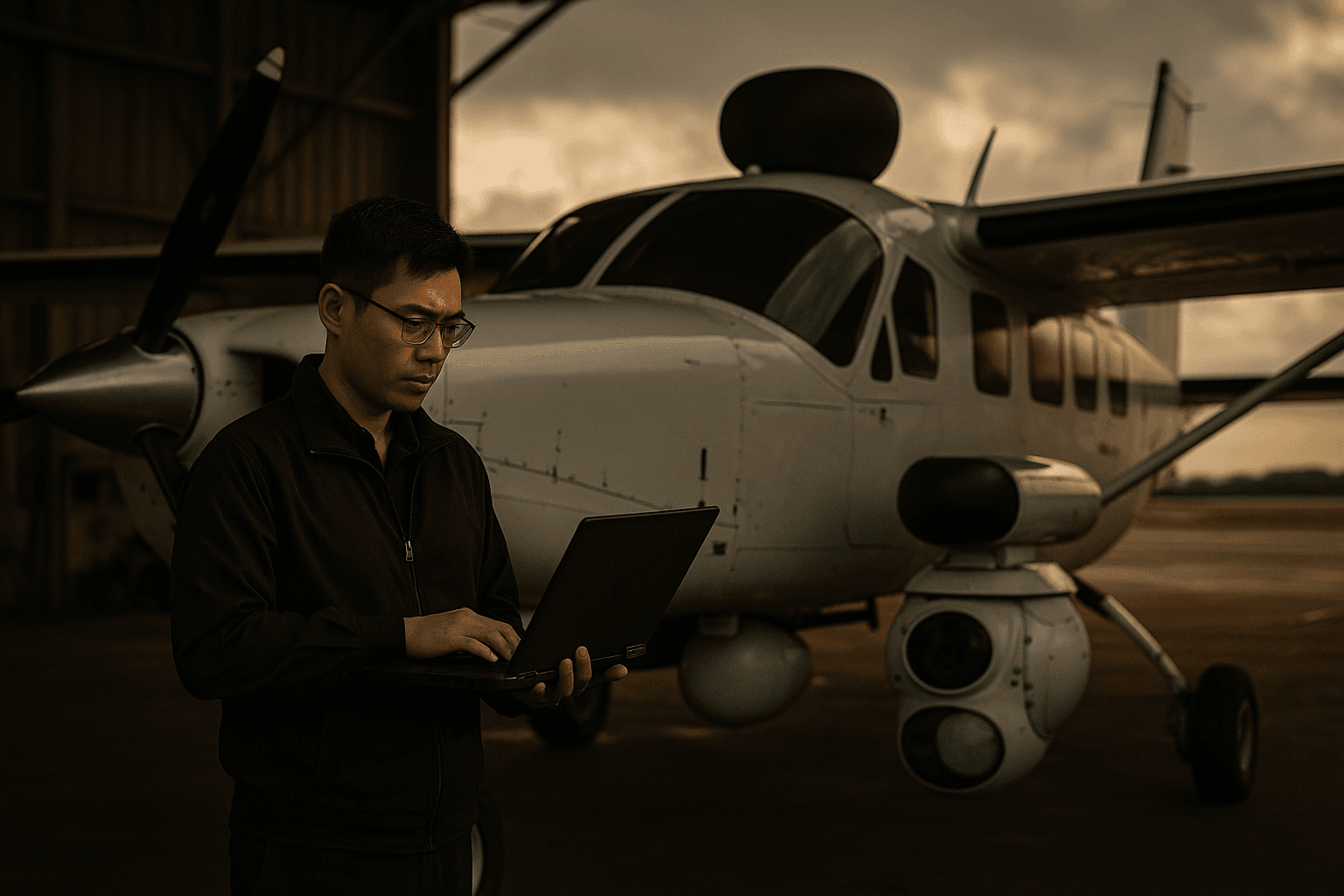
A Taipei charter airline is seeking to turn small passenger planes into an affordable layer of maritime surveillance for Taiwan and its partners, a move that underscores the island’s shift toward civilian integration in national defence. Apex has converted an 11 seat Tecnam P2012 Traveller at a cost of about T$400 million, equipping it with U.S. made synthetic aperture radar and infrared sensors to track shipping and aerial movements across surrounding waters, Reuters reported on December 1.
The aircraft, a light twin portable platform, is being marketed for persistent, routine missions that would complement coast guard patrols and military reconnaissance. Apex hopes to sell inexpensive reconnaissance services to Taiwan’s coast guard, the military and friendly regional governments. The company frames the conversion as a cost effective alternative to deploying larger maritime patrol aircraft or maintaining additional surface assets for continuous monitoring.
The emergence of private actors offering surveillance capabilities intersects with Taipei’s broader strategic concept that calls for civilian contributions to national defence. In recent years Taipei has encouraged local industries to support resilience through logistics, cyber capabilities and civil defence. Turning charter aircraft into sensor platforms expands that concept into the skies and maritime domain, and creates commercial avenues for allied or like minded governments in the region that lack dedicated airborne surveillance fleets.
Technologically, the pairing of synthetic aperture radar and infrared sensors is significant because it allows detection of vessels and activity in poor weather and at night, capabilities that are especially valuable in the often foggy seas around Taiwan. The use of U.S. supplied sensors also highlights the dependence of Taiwan on foreign advanced electronics and raises questions for Washington about export controls and oversight when military grade technologies flow into civilian hands.
The development comes against a backdrop of intensified Chinese naval and air operations near Taiwan. Taipei has repeatedly warned that Beijing’s expanded military activity increases the risk of miscalculation and has spurred investment in asymmetric measures intended to deter or slow any coercive action. Civilian operated surveillance planes add a layer of monitoring that could improve maritime domain awareness, though they also complicate the distinction between civilian and military assets.
International law provides general protections for overflight and navigation in international airspace and exclusive economic zones, but the growth of commercial surveillance services raises normative and diplomatic issues. Beijing is likely to view such activity as further militarisation of the Taiwan Strait even when flights remain in international airspace, which could prompt diplomatic protests or operational responses at sea and in the air.
For smaller governments in Southeast Asia and the Pacific, affordable airborne surveillance offered by private firms could fill gaps in maritime monitoring and search and rescue. For Taipei, relying on commercial suppliers creates cheaper surge capacity while dispersing capability across society. That strategy may strengthen resilience, but it also introduces new layers of legal, operational and political complexity into an already fraught regional security environment.
This article was produced by Prism’s automated news system from verified source data, official records, and press releases, then run through automated quality and moderation checks before publishing. The system is built and supervised by the people who set the standards it runs under. Read our full AI policy.
Did this article answer your question?


