Taiwan Opposition Leader Visits China for First Time in a Decade
KMT chair Cheng Li-wun traveled to mainland China for the first time in a decade, arriving as Taiwan debates a $40 billion defense expansion and a Trump-Xi summit looms.

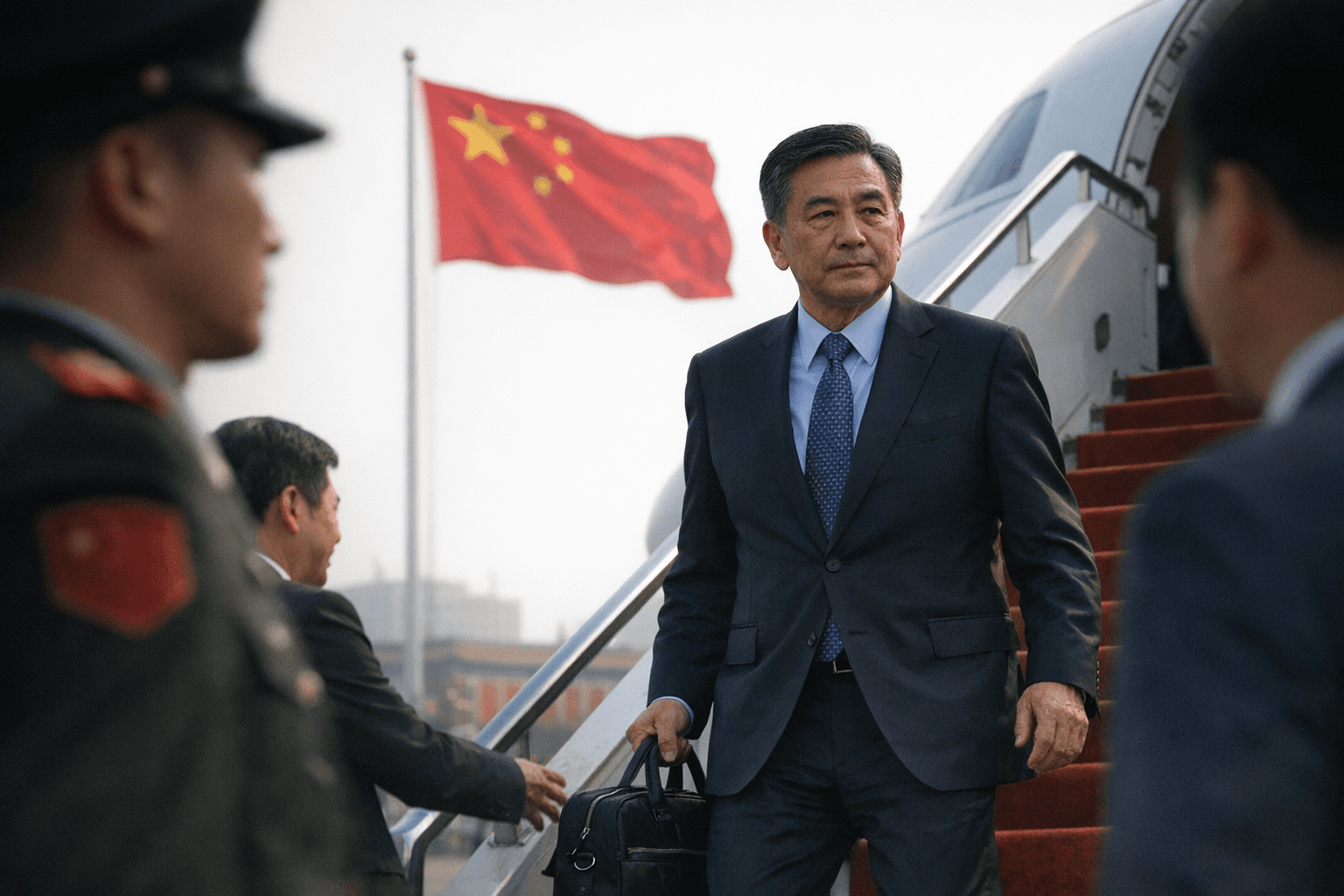
Cheng Li-wun, chair of Taiwan's largest opposition party, the Kuomintang, arrived in mainland China for a six-day visit that marks the first such trip by a sitting KMT leader in ten years. Her itinerary spans Nanjing, Shanghai, and Beijing, and observers widely expect at least one high-level meeting in the capital, possibly with Chinese leader Xi Jinping.
At a briefing in Taipei before her departure, Cheng framed the trip in deliberately conciliatory terms. "We hope this trip can lay a successful first step toward lasting and enduring peace across the Taiwan Strait," she said, adding that "a conflict with Beijing is not inevitable." The KMT leader has promoted the concept of "deterrence with dialogue," an argument that diplomacy and defense preparedness can coexist rather than contradict each other.
The timing carries significant weight. Cheng's visit precedes a planned summit between U.S. President Donald Trump and Xi Jinping, and analysts warn Beijing could use her presence on the mainland to shape international messaging ahead of those talks. Chang Chun-hao, a political science professor, said Beijing may leverage the meeting to demonstrate that voices within Taiwan support the One China principle, a signal with clear implications for Taiwan's posture in Washington.
Domestically, the visit lands in already turbulent political terrain. The KMT has at times blocked or slowed President Lai Ching-te's defense spending proposals in the legislature, and Taiwan's Mainland Affairs Council along with lawmakers from Lai's Democratic Progressive Party have expressed unease about the trip. Officials cautioned against conceding policy positions or undermining Taiwan's arms procurement from the United States, particularly with a proposed $40 billion defense expansion under active debate.
Cheng has also pointed to Taiwan's semiconductor industry as a central concern in any cross-Strait dialogue, framing the island's economic crown jewel as something both sides have a shared interest in protecting from the disruption a military conflict would cause.
The KMT enters this moment from a weakened position: the party lost national elections and holds a fragile footing in the legislature. For Cheng, the China trip is both a diplomatic gambit and a domestic political statement, an attempt to define the KMT as the party capable of managing Beijing relations without abandoning Taiwan's interests. Whether Beijing allows that framing to survive the visit intact is a separate question.
This article was produced by Prism’s automated news system from verified source data, official records, and press releases, then run through automated quality and moderation checks before publishing. The system is built and supervised by the people who set the standards it runs under. Read our full AI policy.
Did this article answer your question?