Taiwan security chief says government must lead China trade talks
Taipei warned Beijing's 10 new trade and tourism incentives could sway politics unless the government, not party channels, controls the talks.
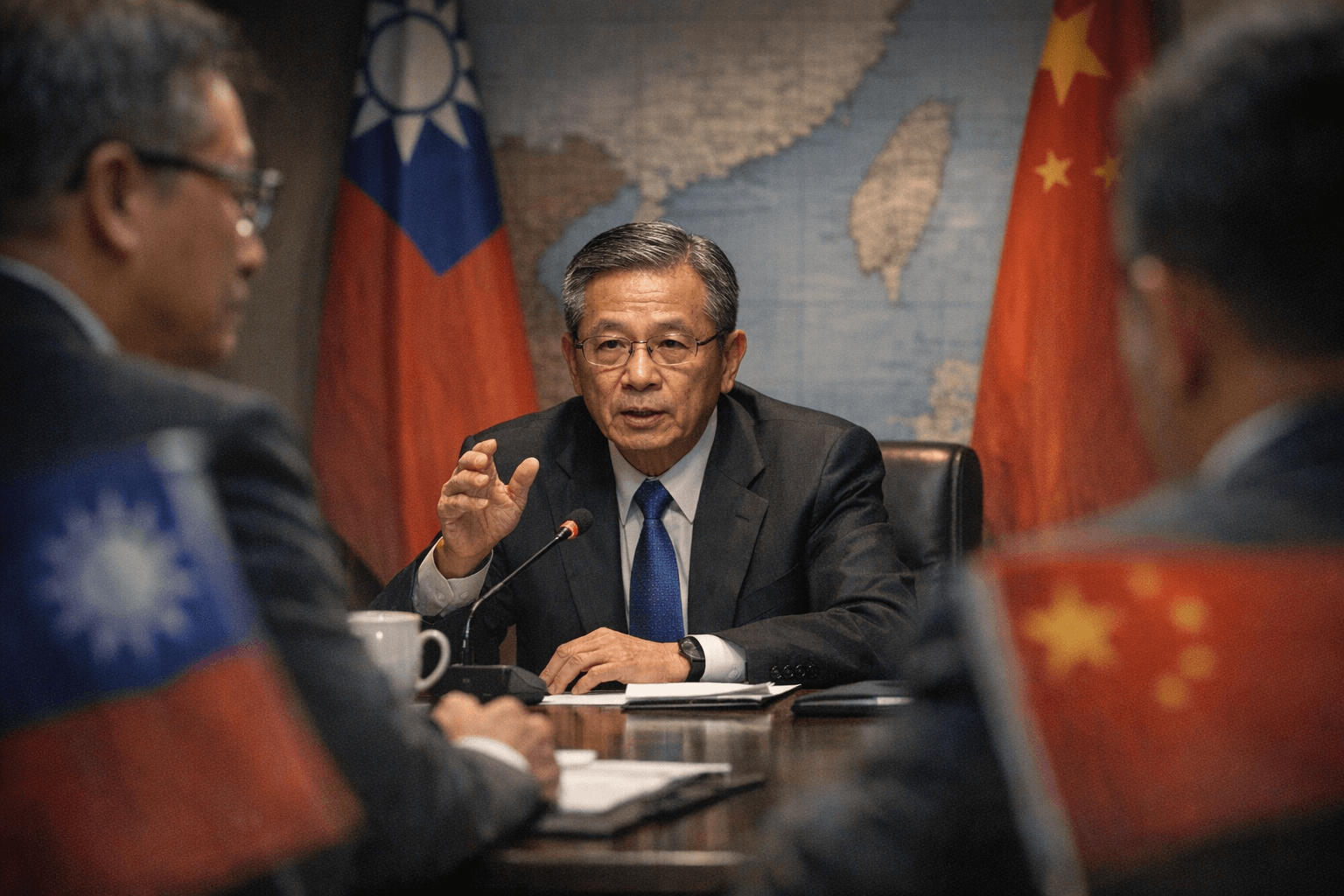
Taiwan should not let private party-to-party contacts set the terms of its cross-strait engagement, the island’s top security official said, after Beijing rolled out 10 new incentive measures aimed at Taiwan. Tsai Ming-yen, who heads Taiwan’s National Security Bureau, said the government must lead any response so officials can judge the economic, strategic and political consequences before any trade or tourism opening takes hold.
The warning landed after China unveiled measures that included easing tourist restrictions and facilitating food sales, part of a package Beijing presented as goodwill toward Taiwan. The moves followed Cheng Li-wun’s April 10 meeting with Xi Jinping in Beijing, a rare encounter between the Chinese president and the chairwoman of Taiwan’s largest opposition party, the Kuomintang. The sequence underscored how quickly Beijing can turn opposition-level engagement into policy signaling.
Tsai’s argument was not simply procedural. He said direct government-to-government handling is the only way Taiwan can assess what the measures mean, plan for exchanges and avoid long-term consequences that may not be obvious when deals are struck outside official channels. He warned that such Chinese “goodwill measures” have historically surfaced before elections and have often been tailored to specific counties, industries or individuals, making them as much a political instrument as an economic one.
That concern is amplified by Taiwan’s calendar. Local elections are due in November, and Taipei has already accused China of using both trade concessions and trade pressure to influence voters ahead of the January 2024 presidential race. Beijing also continues to reject talks with President Lai Ching-te’s administration, which it calls separatist, leaving Taiwan’s government to manage a relationship in which the other side refuses direct political dialogue while still trying to shape conditions on the ground.
The broader backdrop is coercive as well as commercial. Taiwanese officials have been watching a rise in Chinese naval and air activity and military pressure even as Beijing has spoken of peace with opposition figures. Tsai himself said China’s infiltration of Taiwan is systematic and increasingly aimed at lower-ranking personnel, reinforcing the case for tighter official oversight of cross-strait contacts.
Taipei’s message is that trade and tourism cannot be separated from security or elections when Beijing sets the agenda. By insisting that the government hold the lead, Tsai is trying to pull cross-strait engagement back under democratic control and reduce Beijing’s ability to use economic openings to define Taiwan’s politics.
This article was produced by Prism’s automated news system from verified source data, official records, and press releases, then run through automated quality and moderation checks before publishing. The system is built and supervised by the people who set the standards it runs under. Read our full AI policy.
Did this article answer your question?


