Taiwan status looms over Trump’s meeting with China’s leader
Taiwan is more than a bargaining chip for Beijing. It is a test of Communist Party legitimacy, military reach, and China’s claim to great-power status.
Why Taiwan matters to Beijing
Taiwan is not just a territorial dispute for Beijing. It is a measure of whether the Chinese Communist Party can enforce its own definition of sovereignty, project military power into the western Pacific, and keep alive the promise that China will eventually control what it calls one country. That is why the island looms so large when President Trump sits down with China’s leader.
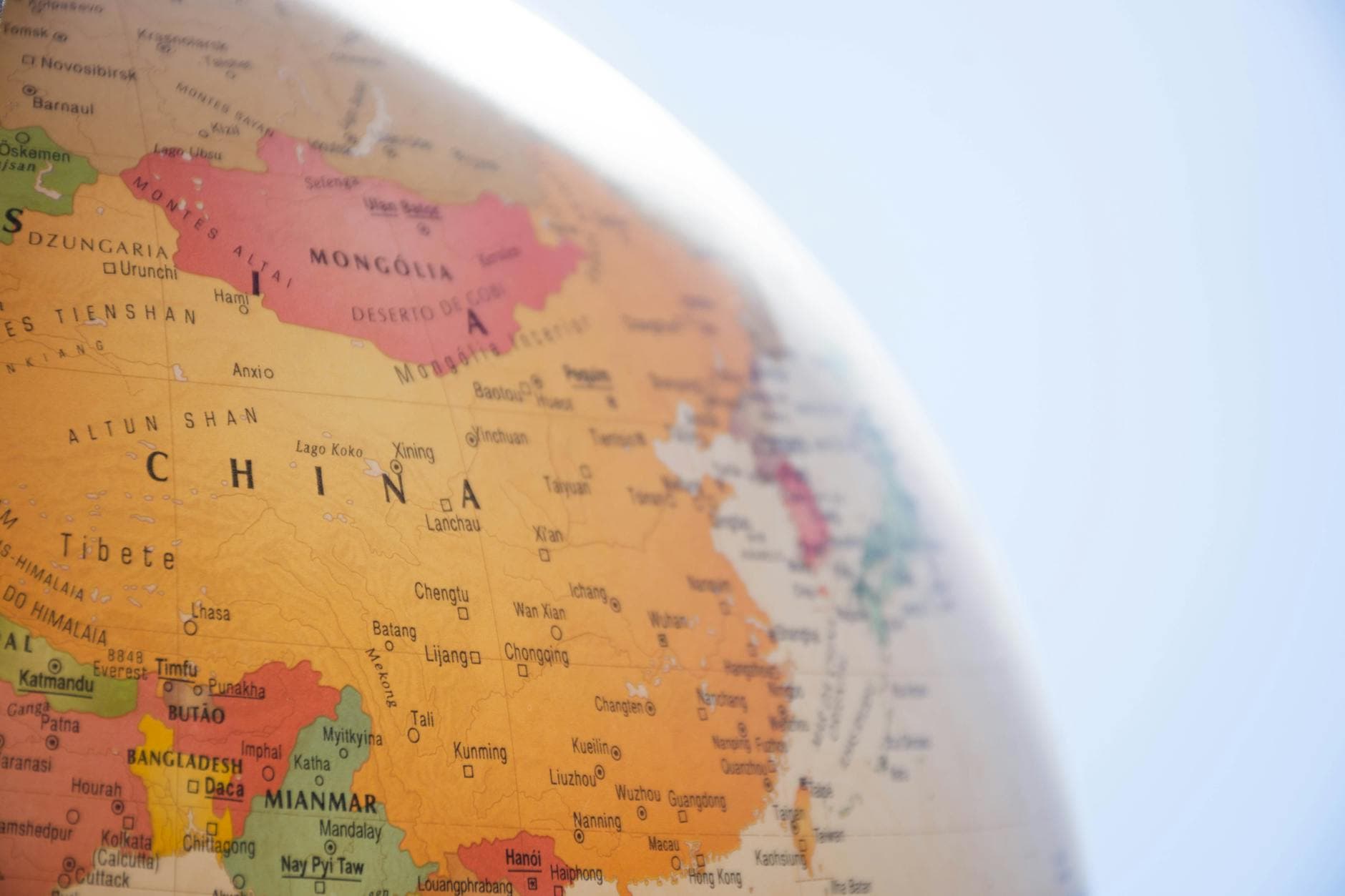
Beijing says Taiwan is an inalienable part of China and insists on “reunification” with the mainland. That claim is rooted in the Chinese Civil War, when the defeated Kuomintang government fled to Taiwan in 1949 and built a rival government there. China has never ruled the island, but it has treated that historical break as an unfinished national wound, one that carries political, military, and symbolic weight far beyond the island’s size.
A conflict that never stayed in the past
The modern Taiwan question has haunted U.S.-China relations since at least the Taiwan Strait crises of the 1950s. The U.S. Office of the Historian traces those tensions to the island’s proximity to China and to the legacy of the civil war, when both sides saw control of the strait as a strategic matter, not a distant diplomatic quarrel. That history still matters because the issue is not frozen in the 20th century. It remains one of the most volatile flash points in Asian security.
For Beijing, Taiwan also carries a domestic political meaning that goes well beyond a slogan about reunification. The Communist Party has tied its legitimacy to restoring Chinese national strength after a century of humiliation and division. Failing to resolve Taiwan’s status, or appearing weak on it, would undercut that narrative. A government that claims to speak for a unified China cannot afford to look unable to shape the fate of an island it calls part of its own territory.
The strategic map behind the rhetoric
Taiwan sits at a geographic crossroads that gives the dispute real military importance. The island lies near critical sea lanes and along the arc of the western Pacific where Chinese and U.S. interests collide. Control or influence over Taiwan would strengthen Beijing’s ability to project power outward and complicate U.S. military planning across the region.
That is why Taiwan is tied to more than a debate over flags or constitutional theory. For Chinese leaders, it is bound up with regional prestige and the precedent it would set if a sovereignty dispute of this scale remained unresolved. If Beijing can force or shape an outcome on Taiwan, it strengthens the message that China is the central power in Asia and that historical grievances can be settled on Beijing’s terms.
The island’s location also explains why Washington has long treated its defense as strategically important. The Taiwan Strait crises made clear that the issue was never only about Taiwan itself. It was about whether the balance of power in the western Pacific would tilt toward a rising China or remain anchored by U.S. military presence and alliances.
Why Washington is in the middle
The United States recognized the People’s Republic of China as the sole legal government of China in 1979, after the diplomatic shift that moved recognition from Taipei to Beijing. But that did not end U.S. involvement with Taiwan. The same year, Congress enacted the Taiwan Relations Act, which provides the legal basis for unofficial U.S.-Taiwan ties and says the United States will make defensive articles and services available to help Taiwan maintain sufficient self-defense capability.
That law reflects a careful balance. Washington does not support Taiwan independence, and it opposes unilateral changes to the status quo. At the same time, the Taiwan Relations Act was designed to help maintain peace, security, and stability in the western Pacific. The result is a policy of deliberate ambiguity, meant to deter Beijing from using force while also discouraging Taipei from moving toward formal independence.
This is why Taiwan becomes such a sensitive issue in any Trump-Xi meeting. It sits at the intersection of great-power rivalry and crisis management. One side wants recognition of its sovereign claim; the other wants to preserve deterrence without triggering war. That gap is too large to ignore and too dangerous to resolve casually.
The island’s people and economy raise the stakes
Taiwan is home to about 23.3 million people, and any discussion of its future must begin with the reality that this is not an abstraction. It is a self-governing society with its own politics, institutions, and public anxieties about security and democracy. Cross-strait tension is not experienced as a theoretical dispute; it shapes daily life, defense planning, and the island’s sense of vulnerability.
Taiwan’s economic role makes the issue even more consequential. Taiwan Semiconductor Manufacturing Company, founded in 1987, is the world’s dedicated semiconductor foundry and a critical node in global chip supply chains. That means the Taiwan question is not only a matter of military signaling or diplomatic wording. It also touches the technology that powers everything from consumer electronics to advanced computing and defense systems.
The economic dimension gives both Washington and Beijing another reason to treat Taiwan as central. Disruption in the Taiwan Strait would ripple far beyond the island, affecting global markets and industrial production. For China, control over Taiwan would not just be symbolic. It would also mean greater leverage over a supply chain that the entire world depends on.
Why tensions are still rising
Cross-strait politics remain sharply contested. In March 2025, Taiwan President Lai Ching-te described China as a foreign hostile force, a statement that underscored how little trust exists between the two sides. That language matters because it shows how far apart Taipei and Beijing are on basic questions of security and identity.
For Beijing, such statements reinforce the argument that Taiwan must be brought back under tighter control. For Taiwan, they reflect the daily pressure of living under military and diplomatic coercion from a much larger neighbor. The dispute is not simply about maps. It is about whether a democratic society of 23.3 million can maintain its autonomy under constant threat.
That is what makes Taiwan such a consequential issue for Trump’s meeting with China’s leader. It is a test of military deterrence, a proxy for political legitimacy, and a fault line in the global economy. The language may be about reunification, but the real contest is over power, prestige, and who gets to define the future of the western Pacific.
This article was produced by Prism’s automated news system from verified source data, official records, and press releases, then run through automated quality and moderation checks before publishing. The system is built and supervised by the people who set the standards it runs under. Read our full AI policy.
Did this article answer your question?