Taiwan’s Buddhist revival reshaped daily life and public faith
Taiwan turned Buddhist practice into civic life, preserving a Chinese religious tradition that was pushed aside on the mainland while projecting a distinctly Taiwanese form of soft power.
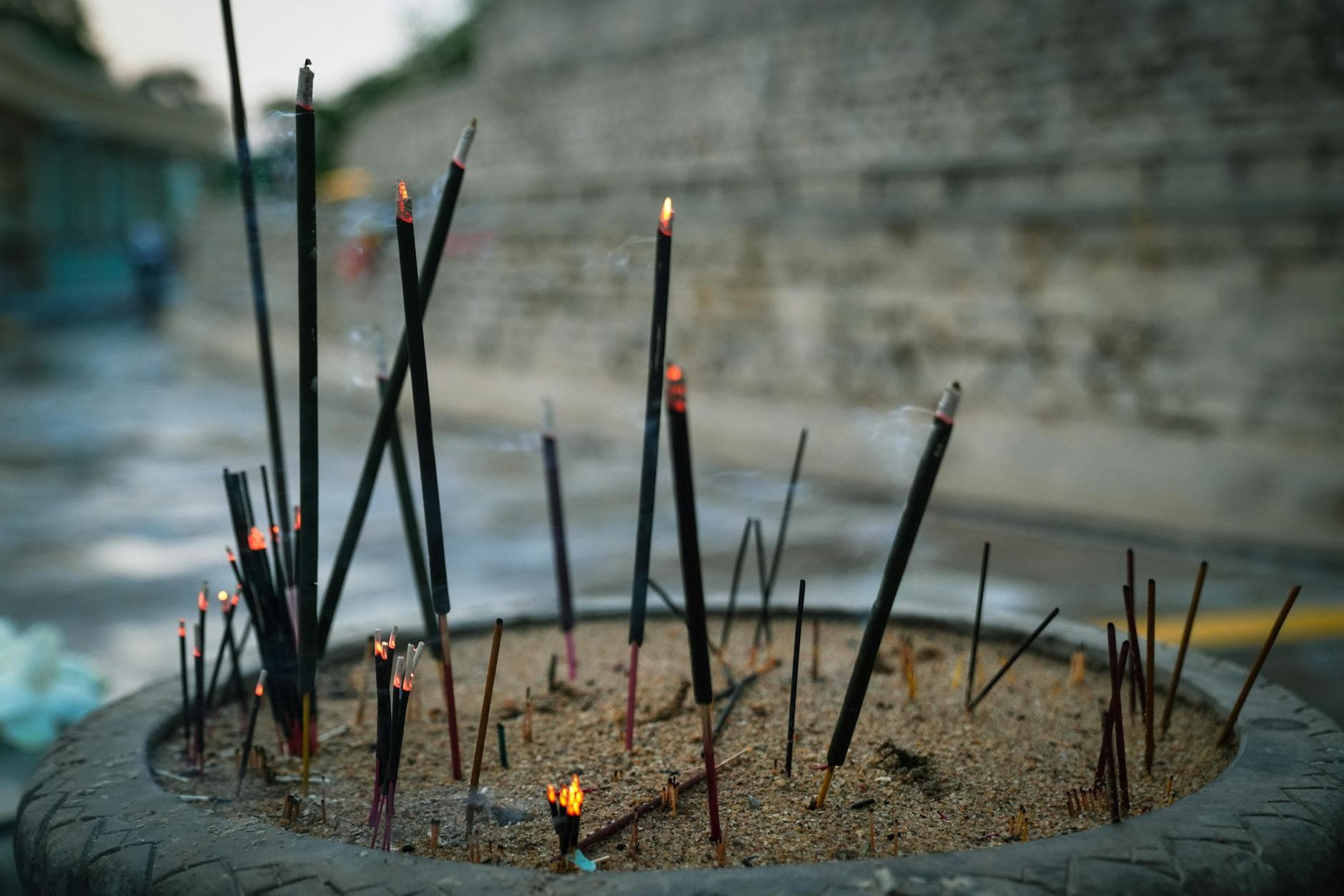
How Taiwan preserved a displaced tradition
Taiwan’s Buddhist revival is not just a story of temples and incense. It is a story of continuity after rupture, when the Nationalist government and many monastics fled to Taiwan in 1949 and the island became the main refuge of the Republic of China after the Communist victory on the mainland. From that break came a distinctly Taiwanese version of Chinese religious life, one that kept older traditions alive while remaking them for a modern society.
That reinvention made Buddhism visible far beyond monastery walls. In Taiwan, daily life itself can feel shaped by Buddhist practice, not through withdrawal from the world but through service in it. The island’s leaders helped define this shift through Humanistic Buddhism, a modern style that emphasizes ordinary life, social engagement, and practical compassion instead of retreat from public affairs.
The movement that remade public religion
The post-1949 decades produced four institutions that now anchor Taiwanese Buddhism. Tzu Chi was founded in Hualien in 1966 by the nun Cheng Yen. Fo Guang Shan followed in 1967, founded by Hsing Yun, who had come to Taiwan in 1949. Chung Tai Shan was founded by Wei Chueh in 1987, and Dharma Drum Mountain was founded by Sheng Yen in 1989 and later inaugurated on October 21, 2005.
Together, these figures are widely described as the “Four Heavenly Kings” or “Four Great Mountains” of Taiwanese Buddhism. That language reflects more than institutional prestige. It signals how a once-disrupted religious culture was reorganized into durable organizations that could teach, publish, volunteer, fundraise, and shape public morality at scale.
Hsing Yun and Sheng Yen also became emblematic public thinkers in their own right. Hsing Yun, born in 1927 and died in 2023, emerged as one of the most important proponents of Humanistic Buddhism. Sheng Yen, born in 1931 and died in 2009, helped turn Dharma Drum Mountain into a major center of contemporary Buddhist teaching. Their legacies still shape how Taiwan presents Buddhism to itself and to the world.
Tzu Chi, Fo Guang Shan, Chung Tai Shan, and Dharma Drum Mountain
Tzu Chi began in Hualien and grew into a global humanitarian network. The organization says it now operates in more than 50 countries, and in 2024 it reported 16.86 million volunteer participations, NT$8.6 billion in charitable spending, and 25.82 million beneficiaries. Those numbers show how Taiwanese Buddhism has become not only a spiritual force but also a social welfare institution with real reach in disaster relief, medical aid, education, and environmental conservation.
Fo Guang Shan has become especially influential in projecting Taiwanese Buddhism outward. Based in Kaohsiung, it describes itself as Taiwan’s largest Buddhist monastery, and its scale has made it one of the clearest symbols of how a religious movement can become part of national identity. Chung Tai Shan, founded in Puli, Nantou County, and Dharma Drum Mountain, based in Jinshan District, New Taipei City, extend that geography, showing how Buddhist institutions now shape both urban and regional Taiwan.
A religion measured in public life
Taiwan’s religious profile helps explain why Buddhism is so visible in everyday public life. A 2021 Academia Sinica survey cited by the U.S. Department of State found that 19.8 percent of the population practiced Buddhism, while 27.9 percent practiced traditional folk religions, 18.7 percent practiced Taoism, and 23.9 percent identified as nonbelievers. That mix points to a society where belief is often layered rather than exclusive, and where temple culture remains woven into family ritual, festivals, and community identity.
The island’s dense temple landscape reinforces that pattern. Taiwan’s Ministry of the Interior maintains a national religious information system and a temple-registration database, a reminder that religion is not only private devotion but also a tracked, organized part of civic life. In practice, this infrastructure helps explain why Buddhist monasteries, local temples, and folk-religious spaces coexist so visibly in neighborhoods, towns, and cities.
What this means for Taiwanese identity
Taiwan’s Buddhist revival matters because it preserved something the mainland’s political upheaval had disrupted: a living strand of Chinese cultural and religious life. Yet the preservation was never merely conservative. Humanistic Buddhism turned that inheritance into a modern public ethic, one that could speak to hospitals, schools, disaster zones, and volunteer networks as much as to meditation halls.
That is where the movement’s deeper significance lies. Taiwanese Buddhism has become a marker of continuity under pressure, a way for the island to assert its own cultural confidence while still carrying forward a Chinese tradition that might otherwise have been weakened or displaced. Its monasteries and charities function as soft power, but also as a social language of care, discipline, and public purpose.
Seen this way, Taiwan’s Buddhist revival is one of the island’s clearest cultural achievements. It preserves memory without freezing it, and it turns faith into an everyday civic presence that continues to shape Taiwanese identity, community life, and the island’s place in the wider Chinese-speaking world.
This article was produced by Prism’s automated news system from verified source data, official records, and press releases, then run through automated quality and moderation checks before publishing. The system is built and supervised by the people who set the standards it runs under. Read our full AI policy.
Did this article answer your question?