Taiwan's Opposition KMT Leader Visits China, Urging Reconciliation and Peace
Cheng Li-wun's six-day "peace journey" to Beijing, timed as Taiwan's legislature blocks a $40 billion defense budget, is as much a domestic weapon as a diplomatic overture.
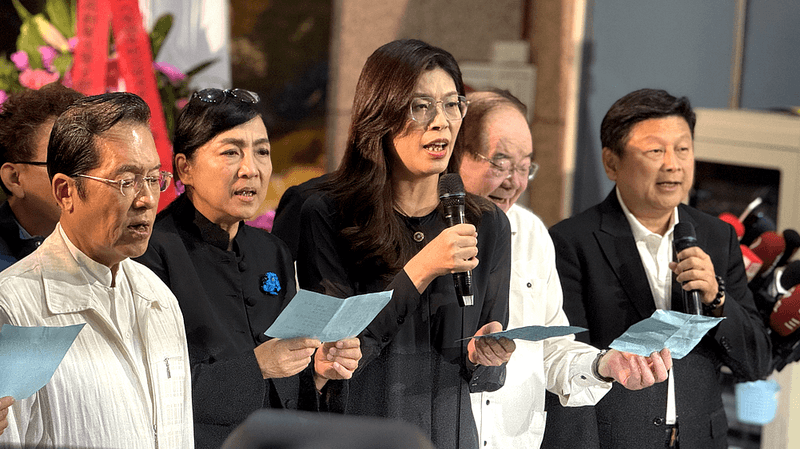
When Kuomintang chairwoman Cheng Li-wun laid a wreath at Sun Yat-sen's Nanjing mausoleum Wednesday, the gesture was far more than a bow to history. It was the opening move in a choreographed political campaign that will reverberate in Taipei long after her six-day visit ends April 12.
Cheng arrived in Shanghai on April 7 at the personal invitation of Chinese President Xi Jinping, making her the first KMT leader to visit mainland China in roughly a decade. She cast the trip in the language of shared civilization from the start, invoking Sun's republican ideals. "The core values of Sun Yat-sen's ideal that 'all under heaven are equal' have always been equality, inclusiveness, and unity," she said in remarks broadcast on Taiwanese television. "We should work together to promote reconciliation and unity across the [Taiwan] Strait and create regional prosperity and peace."
The domestic political calculus is direct. The KMT controls Taiwan's legislature but lost the presidency to William Lai Ching-te's Democratic Progressive Party, and has spent recent months blocking Lai's NT$1.25 trillion (roughly $40 billion) special defense budget that would fund additional U.S. weapons purchases. A cordial meeting with Xi in Beijing gives the KMT its central argument heading into November 2026 local elections and beyond: dialogue, not deterrence spending, produces security. As Wen-ti Sung, a nonresident fellow at the Atlantic Council's Global China Hub, noted, "If Chairperson Cheng can have cordial photo ops with Xi Jinping, the KMT can use that to argue dialogue is more effective than deterrence."
Beijing's objectives overlap with, but are not identical to, the KMT's. China's state media and the Taiwan Affairs Office framed the visit as a "family matter" between Chinese on both sides of the strait, deliberately keeping Washington out of the frame. The strategy is transparent: with Trump scheduled to meet Xi in May, Beijing wants to demonstrate to the U.S. president that Lai and the DPP do not speak for all of Taiwan. Taiwan's Mainland Affairs Council deputy minister Liang Wen-chieh said plainly that one of Xi's goals was to "cut off Taiwan's military procurement from the United States," while Beijing continues to refuse all engagement with Lai, labeling him a "separatist." Sung reinforced the projection: "Beijing will use [the visit] to project this image of how there are still a lot of Beijing-friendly voices in Taiwan."
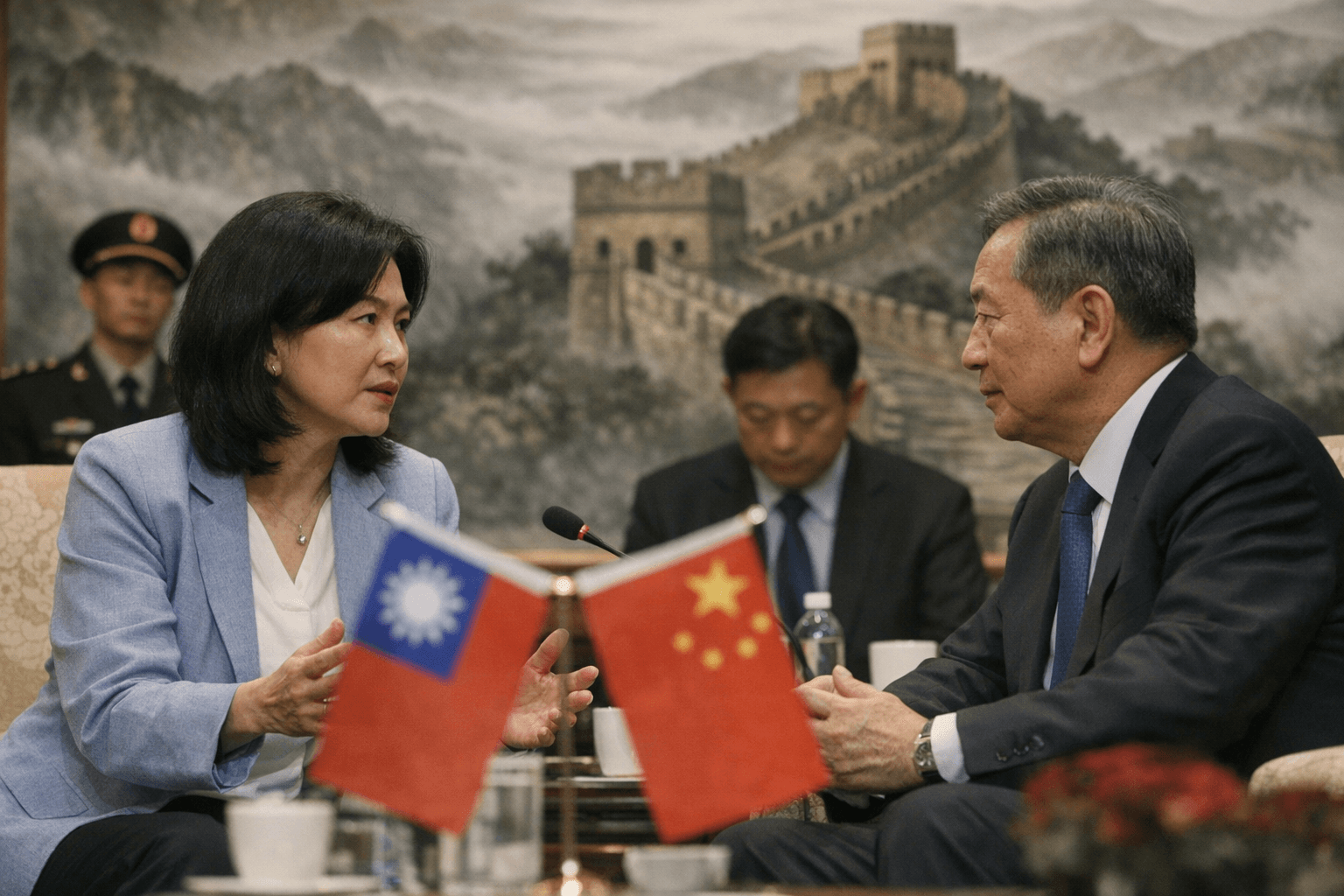
The DPP branded the trip a public relations gift to Beijing timed to coincide with the defense budget standoff. The asymmetry is stark: Beijing conducts routine air and naval patrols around the island while simultaneously rolling out a state-level invitation for the opposition leader.
Risk also runs internally for the KMT. Cheng was elected party chairperson with support from its most conservative factions, but moderates fear images of her alongside Xi could alienate mainstream voters. Taipei Mayor Chiang Wan-an and Taichung Mayor Lu Shiow-yen, both positioning for the 2028 presidential ticket, are watching closely for any moment that hands the DPP a lasting attack line.
What Beijing has already secured is the image it most wanted: a viable, Beijing-accessible alternative to the Lai government, on camera, on the mainland. Whether Cheng returns to Taipei with political leverage or political liability depends on what happens when those cameras stop rolling.
This article was produced by Prism’s automated news system from verified source data, official records, and press releases, then run through automated quality and moderation checks before publishing. The system is built and supervised by the people who set the standards it runs under. Read our full AI policy.
Did this article answer your question?