Takaichi and Lee meet in Nara to deepen security and economic ties
Japan’s prime minister and South Korea’s president held a second summit in Nara to strengthen cooperation on denuclearization, supply chains and AI amid regional tensions.
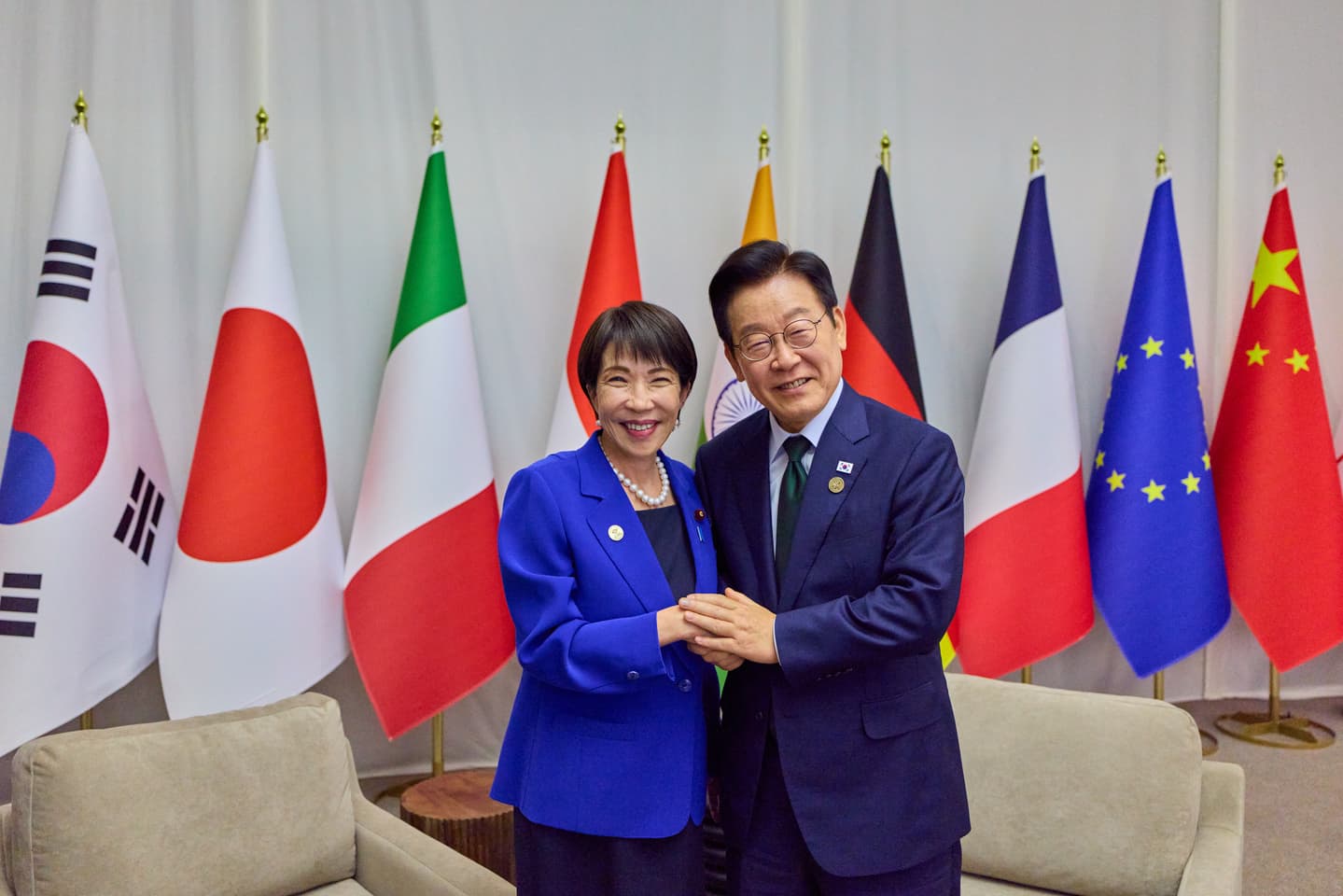
In a carefully staged bilateral summit in Nara, Japanese Prime Minister Sanae Takaichi and South Korean President Lee Jae‑myung pledged to deepen security and economic cooperation as both capitals confront a more contested regional order. The meeting, held at a hotel in Takaichi’s home prefecture on Jan. 13, 2026, was the second between the leaders and followed a proposal by Lee during their first encounter in Gyeongju last October.
The talks came days after Lee’s trip to Beijing, where he met Chinese President Xi Jinping and led a reported 400‑member business delegation. Japanese security officials enforced visible checkpoints around the venue, underscoring the summit’s political sensitivity as Tokyo navigates strained ties with Beijing and seeks firmer coordination with Seoul and Washington.
Agenda items discussed were wide ranging: denuclearization of the Korean Peninsula, the fate of abducted Japanese nationals, strengthening industrial supply chains, cooperation on artificial intelligence, closer trilateral work with the United States on regional security, and practical measures to counter cross‑border online scams that have victimized citizens in both countries. Public statements after the meeting emphasized intent rather than detailed binding accords.
Takaichi framed the conversations as substantive, saying the two leaders “were able to have a meaningful exchange of opinions on a wide range of topics” and expressing personal commitment: “Under the leadership of the president and myself, I want to significantly develop Japan‑South Korea relations.” In a joint announcement, she added, “The importance of Japan–South Korea relations, as well as cooperation among Japan, South Korea and the United States, continues to grow.”
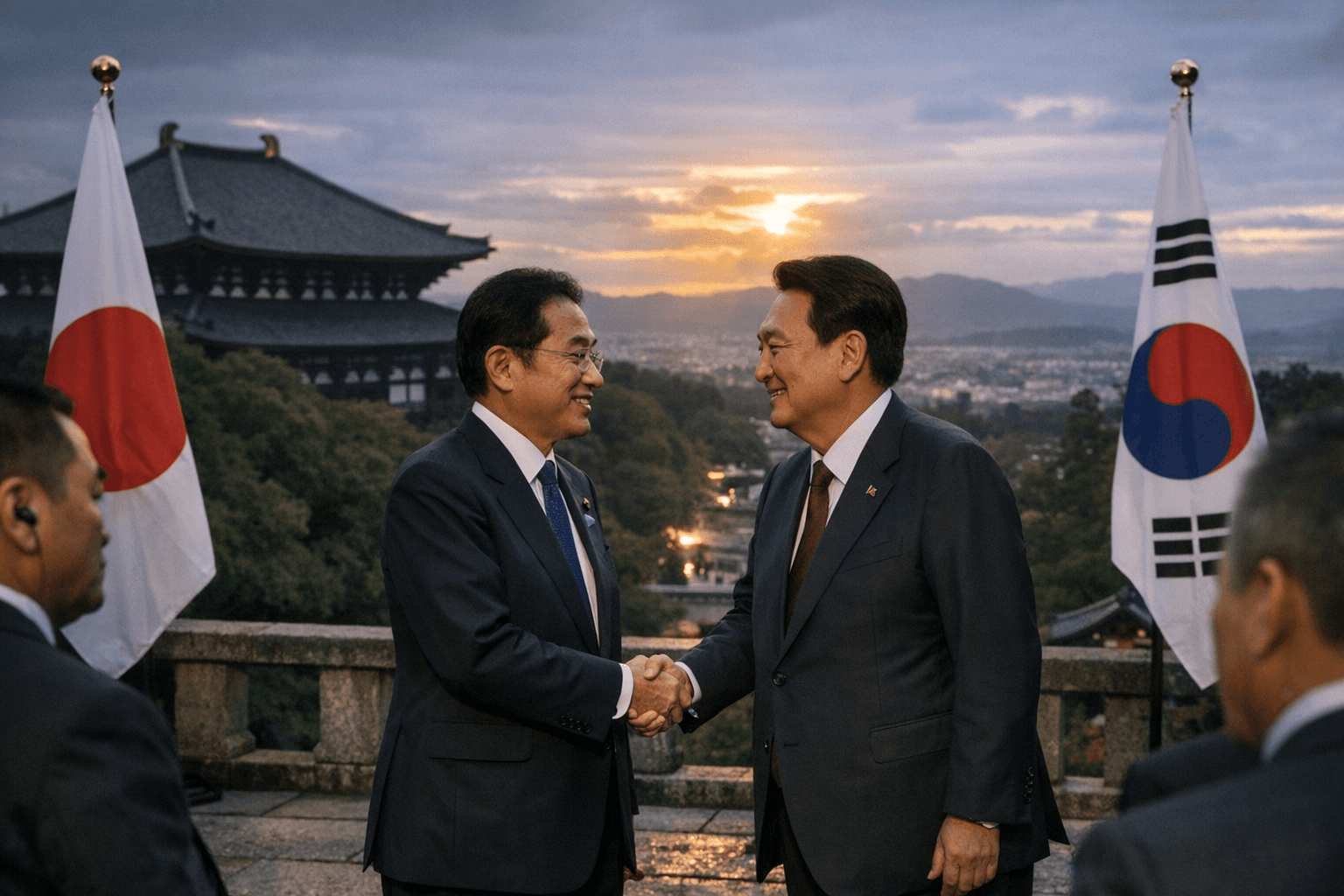
Lee highlighted the symbolic weight of the encounter on the 60th anniversary of diplomatic normalization, saying the meeting “holds a very special meaning.” He cast the summit as a forward-looking reconciliation, telling reporters, “If the prime minister and I can firmly join hands, and the people of Japan and South Korea can firmly combine their strengths, we can walk together toward a new future.” Reflecting on the anniversary, he acknowledged painful history and said, “Although we have painful past experiences, it has been 60 years since the normalization of diplomatic relations between Korea and Japan, and we are starting a new 60 years.” Takaichi said she was “delighted that we were able to continuously demonstrate the resilience of Korea‑Japan relations last year” and hoped to “make this year, starting with President Lee’s visit to Japan, a year that elevates Korea‑Japan relations to a higher level.”
Observers viewed the Nara meeting as part of Tokyo’s broader strategy of shuttle diplomacy to cement personal ties between leaders and reduce bilateral friction as China’s posture in the region hardens. Japanese media noted the visit was the first time in about 14 years that a South Korean leader traveled to a Japanese regional city outside Tokyo for talks, an indication of the symbolic care both sides brought to the encounter.
Beyond symbolism, practical cooperation on supply chains and AI could have tangible economic implications, while joint efforts on denuclearization and information security carry strategic weight for U.S. allies in East Asia. For now, the summit produced vows rather than signed accords, setting expectations for follow-up working groups and closer coordination with Washington. In a region where history and geopolitics remain deeply entangled, the Nara talks signaled a deliberate attempt by Seoul and Tokyo to convert diplomatic goodwill into resilient, rules‑based cooperation.
This article was produced by Prism’s automated news system from verified source data, official records, and press releases, then run through automated quality and moderation checks before publishing. The system is built and supervised by the people who set the standards it runs under. Read our full AI policy.
Did this article answer your question?


