Takeda to cut 4,500 jobs in major restructuring push
Takeda plans to cut about 4,500 jobs while chasing more than 200 billion yen in savings, with the pain centered on corporate functions and management layers.
Takeda said it would cut about 4,500 jobs in fiscal 2026 as it pushed deeper into a restructuring aimed at centralizing corporate functions, reducing management layers and simplifying processes. The company also said about 2,200 open roles would be prioritized for internal candidates, a sign that the overhaul is reshaping where staff sit inside the organization as much as it is shrinking headcount.
The move shows how sharply cost pressure is hitting one of Japan’s biggest drugmakers after years of expansion and integration work. Takeda’s 2019 acquisition of Shire for $62 billion widened its global footprint, but it also left the company with more debt and a more complex structure to manage. Takeda now expects more than 200 billion yen in annual savings by fiscal 2028, including about 100 billion yen in fiscal 2026 alone, but it also projected restructuring costs of around 170 billion yen in fiscal 2026, with smaller costs in the following two years.
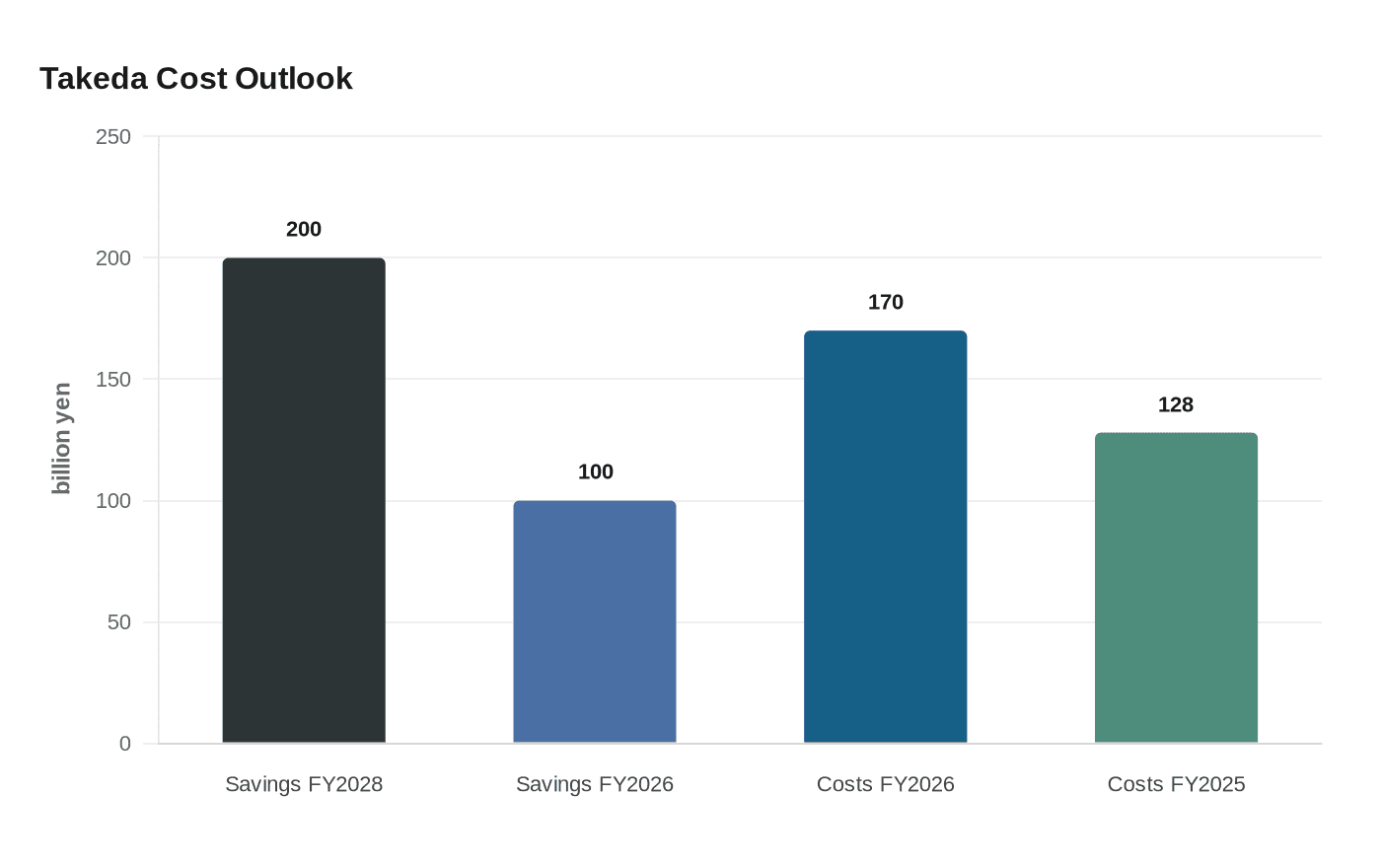
The company has already been paying for earlier cleanup. Takeda recorded 128 billion yen in restructuring costs in fiscal 2025 for a prior overhaul, underscoring that the latest cuts are part of a longer effort to pull costs out of a sprawling global operation. In fiscal 2025, revenue came to 4.51 trillion yen, down 1.7% from a year earlier, adding urgency to the push for leaner operations.
Takeda’s recent results also showed that operating discipline is already affecting the bottom line. In its fiscal 2025 third-quarter update, the company said year-to-date revenue was down 3.3% at actual exchange rates, while operating profit rose 1.2% as restructuring expenses eased and management tightened spending. That combination of softer sales and improving efficiency suggests the company is trying to make cost control a permanent feature of its model, not just a short-term response.
Even as it trims jobs, Takeda is still betting on new products to drive growth. Three late-stage programs were advancing, with oveporexton and rusfertide already at the NDA stage by January 2026 and zasocitinib expected to follow, with launches anticipated within the next 18 months. Julie Kim, who was appointed to succeed Christophe Weber as president and chief executive in June 2026, is set to inherit a company trying to balance restructuring pain against the need to fund its pipeline. The message from Takeda is clear: the company wants to be smaller, simpler and cheaper to run, but it still has to spend to compete.
This article was produced by Prism’s automated news system from verified source data, official records, and press releases, then run through automated quality and moderation checks before publishing. The system is built and supervised by the people who set the standards it runs under. Read our full AI policy.
Did this article answer your question?
%3Amax_bytes(150000)%3Astrip_icc()%2FCertificate-of-deposit-2301f2164ceb4e91b100cb92aa6f868a.jpg&w=1920&q=75)