Targeted 28-Day Mindfulness Program Sustains Stress Reduction in University Students
A 28-day web mindfulness program centered on self-compassion and gratitude cut perceived stress and maintained lower stress at three months, showing compact practice can stick.
A randomized controlled trial published 14 January 2026 found a short, theory-driven 28-day web mindfulness program produced lasting reductions in perceived stress among distance-learning university students. Both the targeted program, which emphasized two core practices—self-compassion and gratitude—and a broader comprehensive mindfulness program improved mindfulness and reduced stress immediately after the intervention. Only the targeted program, however, sustained lower perceived stress at the three-month follow-up.
Researchers randomized an initial sample and reported results from a final analytic sample after exclusions. Participants completed measures of mindfulness, self-compassion, and perceived stress at baseline, immediately post-intervention, and at three months. Statistical analyses included follow-up maintenance tests and reported effect sizes and confidence estimates across time points. Short-term gains were evident for both arms, but maintenance analyses showed a clear advantage for the compact, focused curriculum in preventing stress rebound.
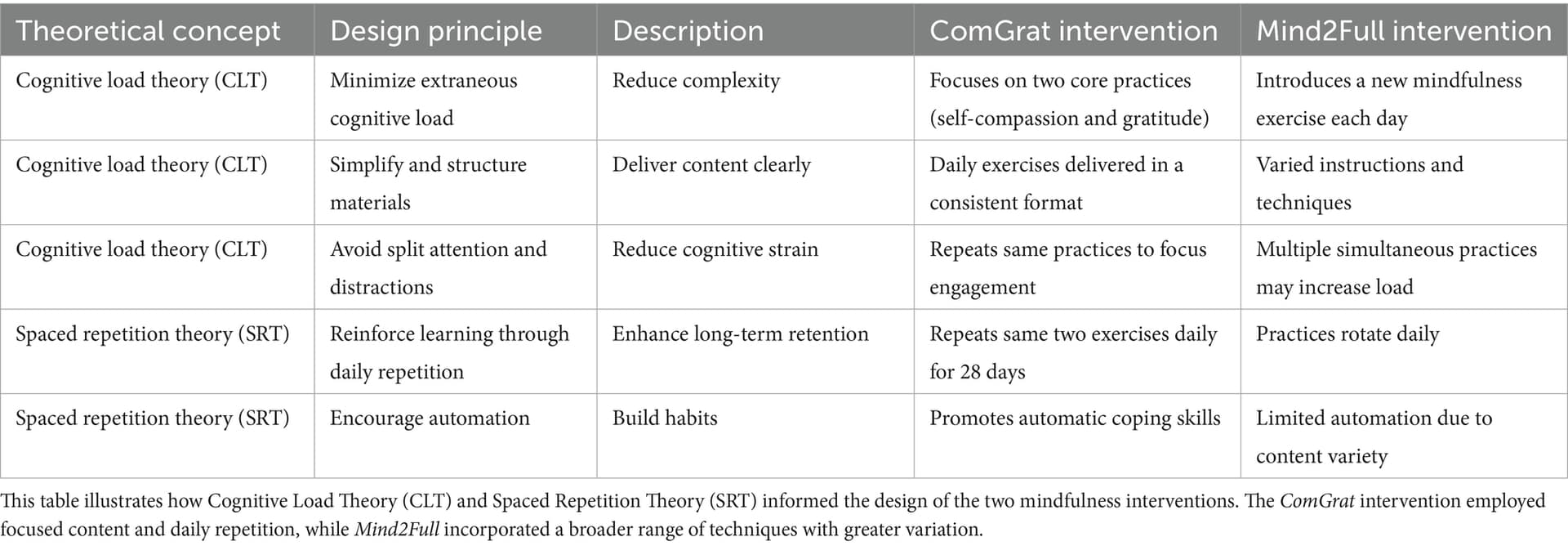
The team links the sustained effect to specific instructional design features rather than content breadth. The targeted program reduced extraneous cognitive load by limiting practices and guidance, and used spaced repetition to reinforce core skills over the 28 days. Those educational psychology mechanisms—Cognitive Load Theory and spaced repetition—are highlighted as active ingredients that support learning and habit formation in busy learners who juggle coursework, work, and life obligations.
For the mindfulness meditation community, the findings carry practical implications. Short, focused digital courses that prioritize a small number of high-impact practices can be more sustainable for learners than longer, comprehensive curricula. Designers and teachers should consider trimming extraneous material, sequencing practices so learners revisit core techniques, and embedding reminders or short practice prompts that encourage spacing. Students and practitioners with limited time can get meaningful, durable benefit from compact, repeatable practices centered on self-compassion and gratitude.
The trial also provides a template for institutions and community groups offering remote mindfulness: adopt concise modules, measure outcomes at follow-ups, and iterate on spacing and scaffolding to support habit formation. While the study focused on distance-learning students, the instructional principles translate to workplaces, community classes, and self-directed apps.
This research shifts the conversation from "more content" to "better learning design" for mindfulness. Expect more developers and teachers to test compact, spaced programs and to prioritize instructional clarity so practice survives the semester and the stressors that follow.
Sources:
Know something we missed? Have a correction or additional information?
Submit a Tip