Tata, ASML back $11 billion Gujarat chip plant as India builds supply chain
Tata and ASML’s $11 billion pact pushes India’s first 300 mm fab toward production, but the real test is whether it can move beyond assembly.

Tata Electronics and ASML have tied the future of India’s chip ambitions to a single site in Dholera, Gujarat: a planned 300-millimetre fab backed by about $11 billion in investment and some of the most critical equipment in semiconductor manufacturing. The agreement, announced on May 16, gave Tata’s project fresh momentum and put one of the world’s most important chip-tool suppliers at the center of India’s attempt to build a domestic supply chain instead of relying so heavily on imports.
The deal is more than a ceremonial endorsement. ASML said it will help Tata Electronics establish and ramp up the Dholera plant through lithography tools and related solutions, while the two companies also plan to cooperate on local talent, supply-chain development and research. Christophe Fouquet, ASML’s chief executive, said India’s semiconductor sector offers “many compelling opportunities,” language that reflects both the commercial upside and the strategic value of planting deeper roots in a market that could become far larger over the next decade.
For India, the real question is what this fab will actually produce and how quickly it can matter. Tata’s earlier plan for the site, first announced on February 29, 2024 with Taiwan’s Powerchip Semiconductor Manufacturing Corporation, called for chips used in power management ICs, display drivers, microcontrollers and high-performance computing logic. The company said the plant could reach up to 50,000 wafers a month and create more than 20,000 direct and indirect skilled jobs. Those are meaningful numbers, but they also show how much execution still stands between an announcement and a functioning factory.
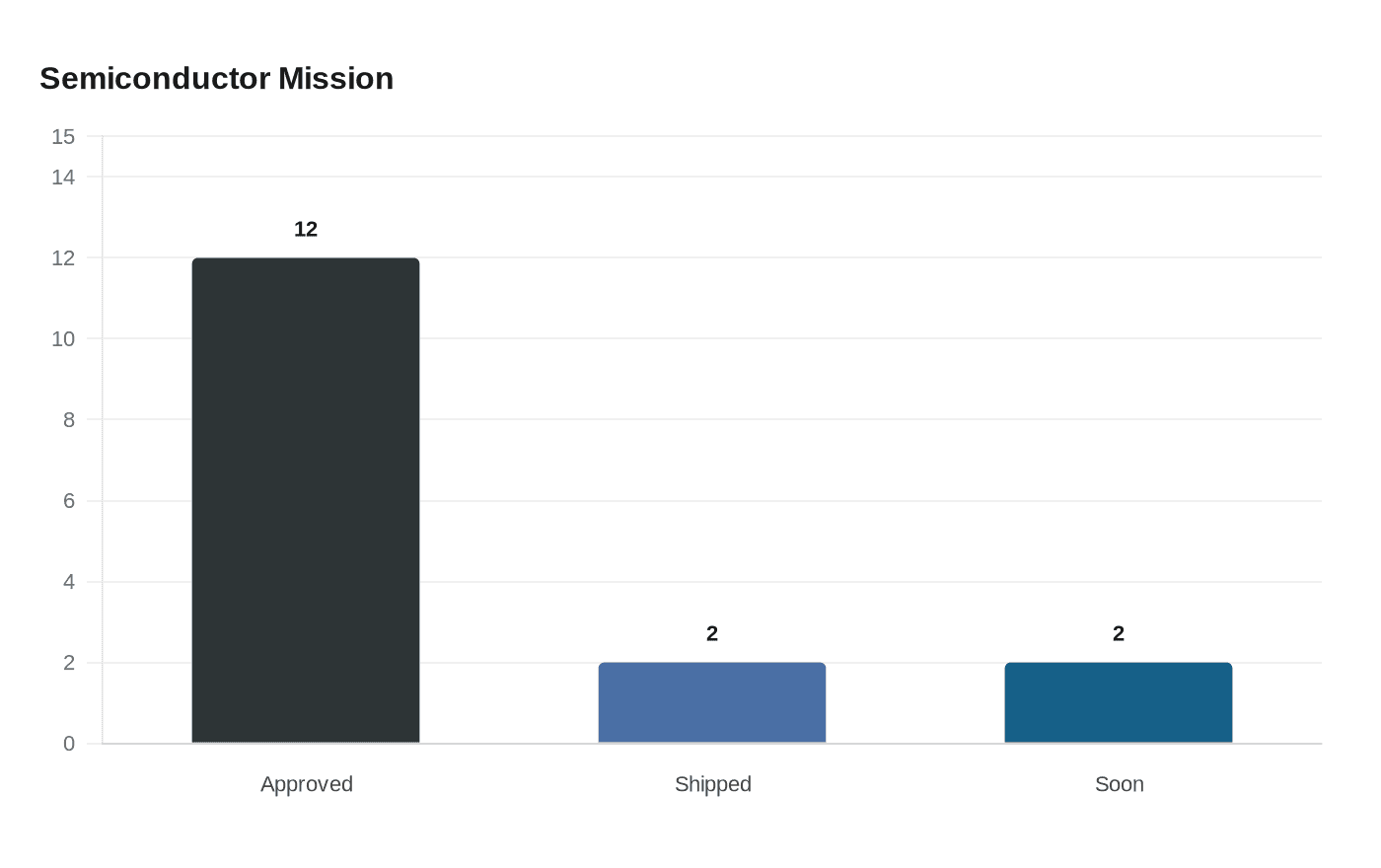
That execution challenge sits at the heart of India’s broader semiconductor push. The Prime Minister’s Office said on May 5 that approved projects under the India Semiconductor Mission had reached 12, with cumulative investment of around Rs.1.64 lakh crore. Two projects have already started commercial shipments, and two more are expected soon. The mission itself was established in 2020 as the central agency for semiconductor and display manufacturing schemes, but the country is still trying to convert policy support into a durable industrial base.
The ASML-Tata partnership matters because it adds a crucial missing piece: advanced lithography capability, local training and the know-how needed for a front-end fab to become viable. India has long excelled in design and assembly, but a front-end facility is a far more demanding test of power reliability, process control, supplier depth and yield. If Dholera reaches scale and produces consistently, it could reduce dependence on imported chips in selected categories. If it stumbles, it will still serve as a reminder that in semiconductors, capital is only the beginning, and the real competition is won over years of engineering discipline.
This article was produced by Prism’s automated news system from verified source data, official records, and press releases, then run through automated quality and moderation checks before publishing. The system is built and supervised by the people who set the standards it runs under. Read our full AI policy.
Did this article answer your question?