Teen summer jobs set for worst year since 1948, report says
Teen summer hiring is headed for a 77-year low at 790,000 jobs, squeezing family paychecks now and shrinking the first rung into work for young people.

Teenagers are heading into the weakest summer job market in 77 years, a drop that could strip families of seasonal paychecks and leave a smaller generation of first-time workers getting a foothold in the labor market.
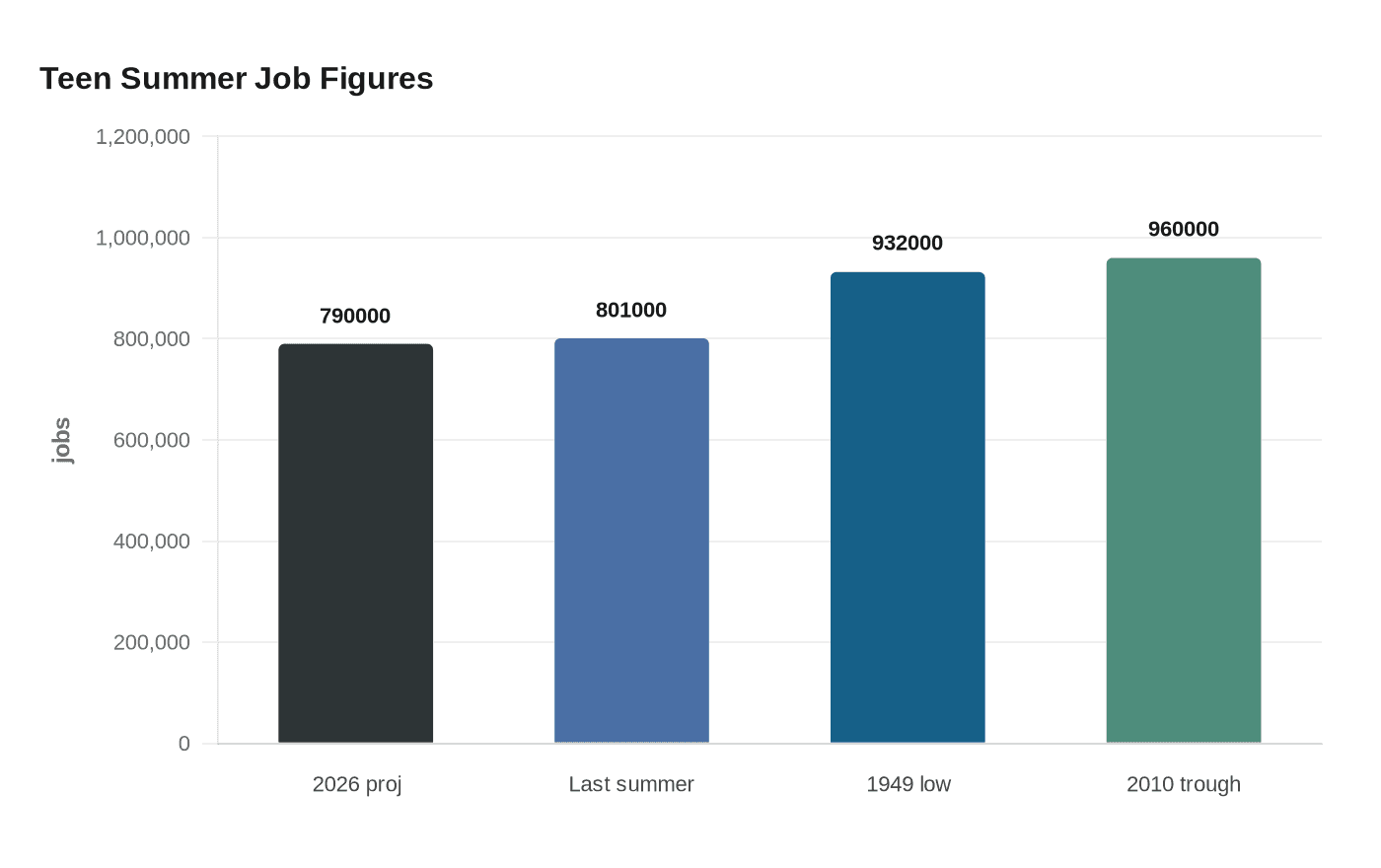
Challenger, Gray & Christmas projects 790,000 teen jobs in May, June and July 2026. If that total holds, it would be the lowest summer hiring figure since the Bureau of Labor Statistics began tracking the data in 1948, slipping below last summer’s 801,000, which was already the weakest on record. The prior low was 932,000 in 1949, and the previous post-1948 trough was 960,000 in 2010, during the recovery from the Great Recession.

The decline is hitting the jobs that have long served as teenagers’ entry point into work. Andy Challenger, the firm’s chief revenue officer and labor and workplace expert, points to inflation, rising oil prices, cost pressures, automation and cautious employers. Amusement parks, restaurants, retailers and summer camps are among the sectors most exposed, as managers wait to see how consumer demand holds up before committing to seasonal hiring.
The slowdown is already visible in the federal labor numbers. In April 2026, 5,193,000 workers ages 16 to 19 were employed, down from 5,487,000 a year earlier. The teen labor force participation rate stood at 33.8% in April, while the employment-population ratio was 29.5%, underscoring how far teen work remains below its historical highs.
The summer matters because it is the season when many teenagers get their first jobs and their first lesson in payrolls, schedules and customer service. Challenger said June will be the most important month to watch, because fewer teens were already on payrolls heading into the peak hiring stretch. Last summer’s 801,000-job gain from April to July was the smallest such increase since 1948, and this year’s outlook suggests the gap could widen further.
This article was produced by Prism’s automated news system from verified source data, official records, and press releases, then run through automated quality and moderation checks before publishing. The system is built and supervised by the people who set the standards it runs under. Read our full AI policy.
Did this article answer your question?