Tens of thousands protest Japan’s military buildup, defend pacifist constitution
50,000 people filled a Tokyo park to oppose Sanae Takaichi’s defense buildup, warning that rewriting Article 9 would erode Japan’s pacifist identity.
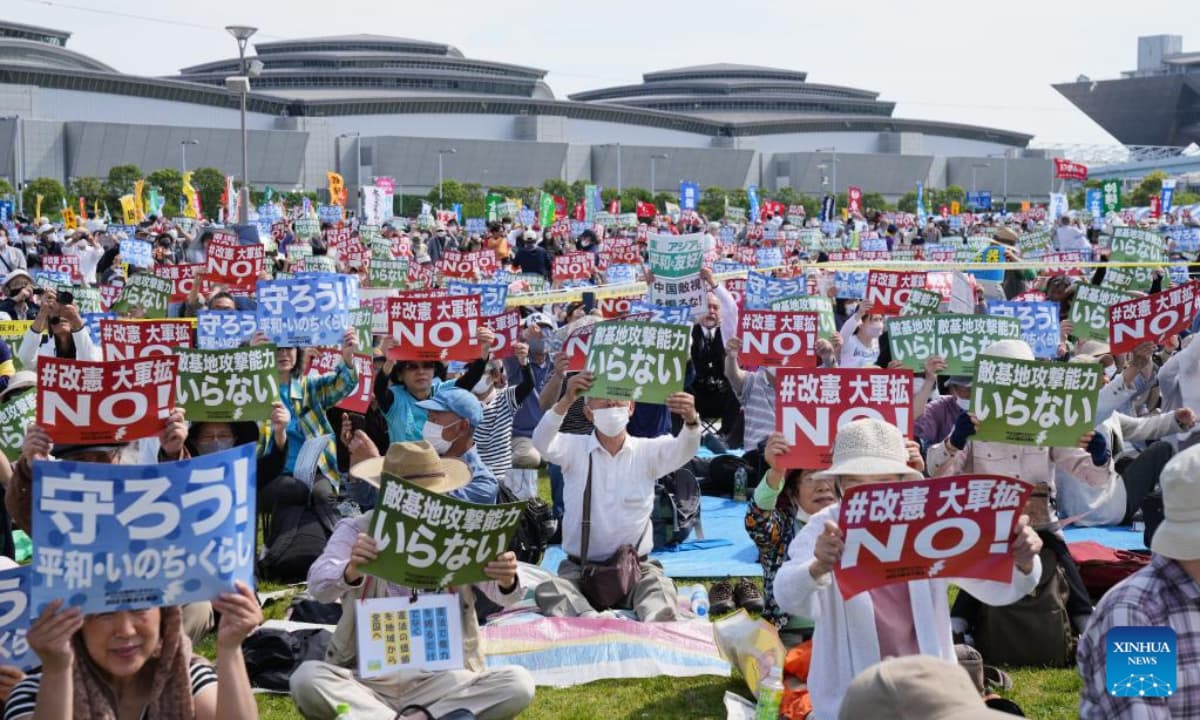
Tens of thousands of people gathered in Tokyo to push back against Japan’s accelerating military buildup and to defend the pacifist Constitution that has defined the country since 1947. At Tokyo Rinkai Disaster Prevention Park, organisers estimated the Constitution Memorial Day rally drew 50,000 participants, a turnout that showed how strongly the debate over Article 9 still resonates nearly eight decades after Japan renounced war.
The protest landed at a moment when the government is pressing harder than ever to recast Japan’s security posture. Prime Minister Sanae Takaichi has become a focal point for critics who say the country is moving away from its postwar identity as a pacifist state. At issue is Article 9, the constitutional clause that renounces war and has long constrained how far Japan could go in maintaining armed forces. Japan’s Self-Defense Forces were established on July 1, 1954, after years of debate over whether defensive military power could coexist with the Constitution’s restrictions.
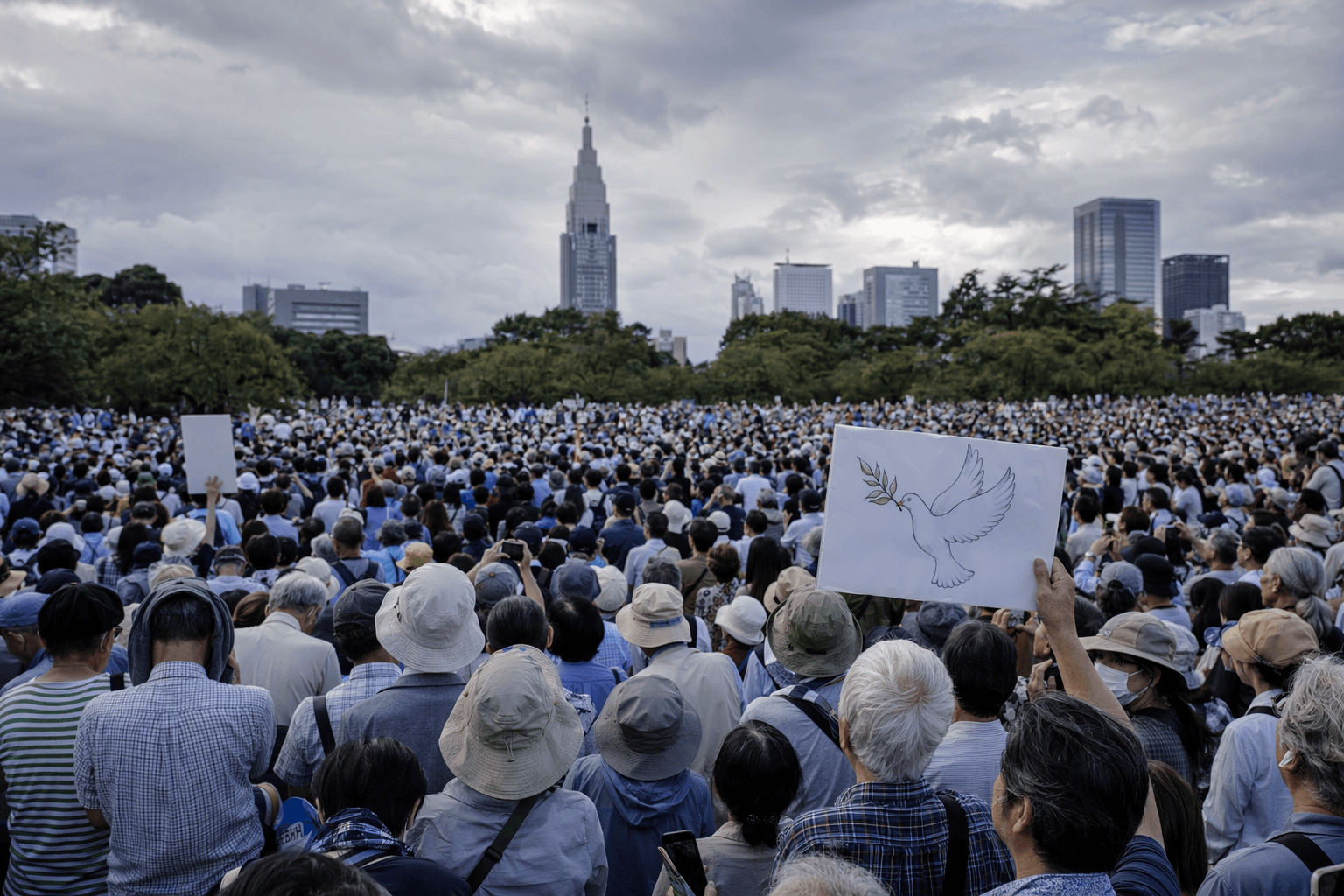
That debate is back at the center of politics because officials argue Japan faces a harsher regional environment. Government supporters of revision point to threats from China and North Korea and say the Constitution should be updated to reflect modern security realities. One proposal under discussion would formally recognize the Self-Defense Forces in Article 9, a change critics say could weaken the charter’s pacifist principles while supporters contend it would simply clarify the military’s legal status.
The stakes are financial as well as constitutional. Japan’s defense budget for fiscal 2025 is projected at 9.9 trillion yen, about $70 billion, according to the Defense Ministry. That equals roughly 1.8 percent of GDP from three years earlier, and the government has set a long-stated goal of reaching 2 percent of GDP by fiscal 2027. The increase marks one of the sharpest shifts in Japanese defense policy in the postwar era and underscores how quickly the country’s security strategy is changing.
The protests suggest that public unease has not kept pace with the government’s strategic ambitions. Even as opinion remains divided on constitutional revision, the scale of the rallies in Tokyo has shown that opposition to remilitarization is substantial. For many demonstrators, the fight over Article 9 is not only about legal wording but about whether Japan’s postwar promise to reject war should still define its national identity.
This article was produced by Prism’s automated news system from verified source data, official records, and press releases, then run through automated quality and moderation checks before publishing. The system is built and supervised by the people who set the standards it runs under. Read our full AI policy.
Did this article answer your question?


