Tesla to use Intel's 14A chips, giving foundry major customer
Tesla’s move to Intel’s 14A process gave Intel its first major external customer for the node and a rare sign of foundry credibility.
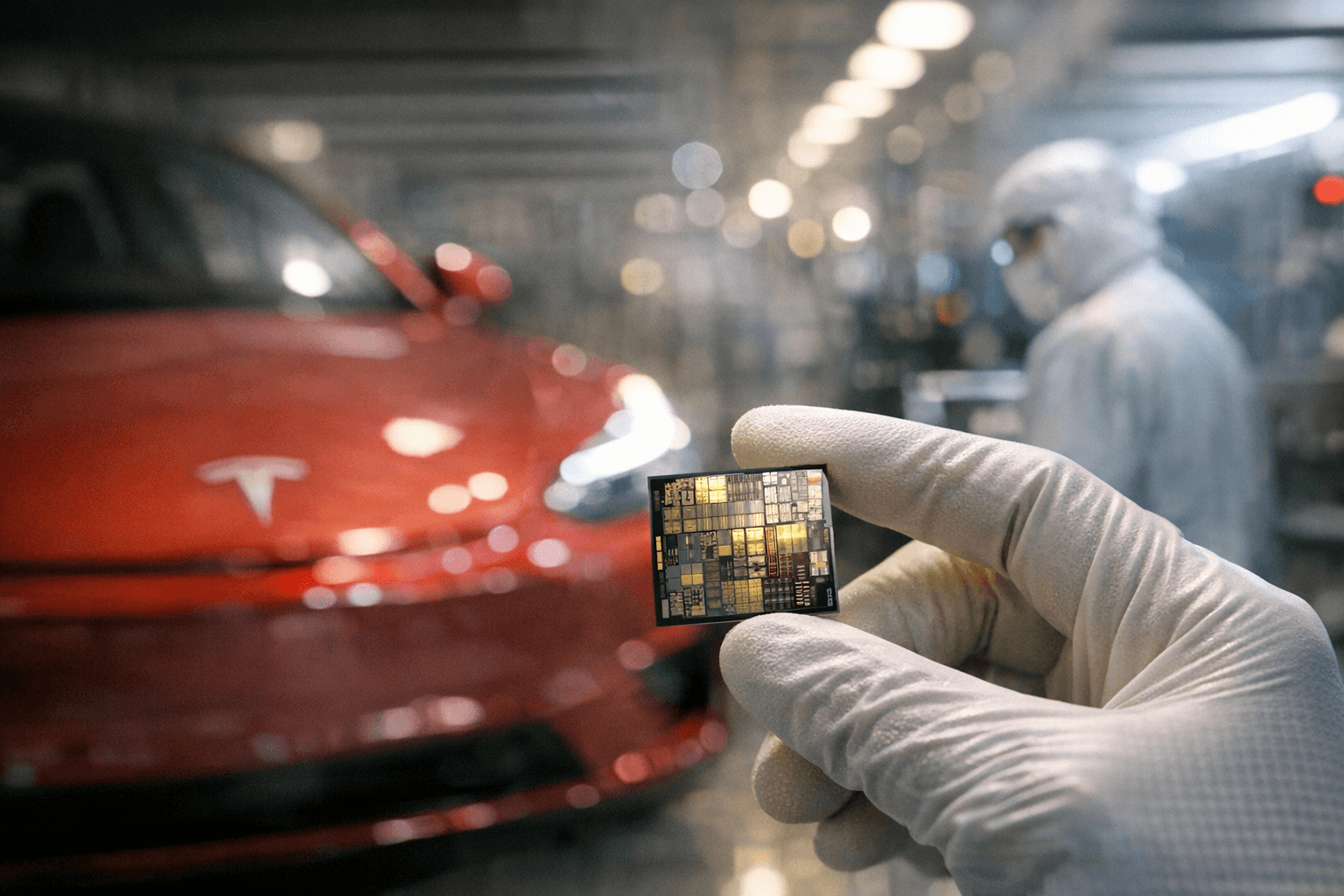
Elon Musk handed Intel something it had been chasing for years: a marquee customer for its next-generation 14A manufacturing process. On Tesla’s April 22 earnings call, Musk said Tesla planned to use Intel’s 14A technology at its Terafab project, tying the automaker’s chip ambitions directly to one of the most important process nodes in the foundry race.
The announcement mattered because Intel had already made 14A a test of faith in its foundry comeback. Intel added 14A to its leading-edge node plan in February 2024 and later said 14A-E was an enhanced version of 14A, previewed with PowerDirect, RibbonFET 2 and Turbo Cells. Intel also warned in July 2025 that it might have to pause or cancel 14A, and later technologies, if it failed to land a meaningful external customer. Tesla’s commitment answered that pressure with a concrete customer and a large strategic signal.
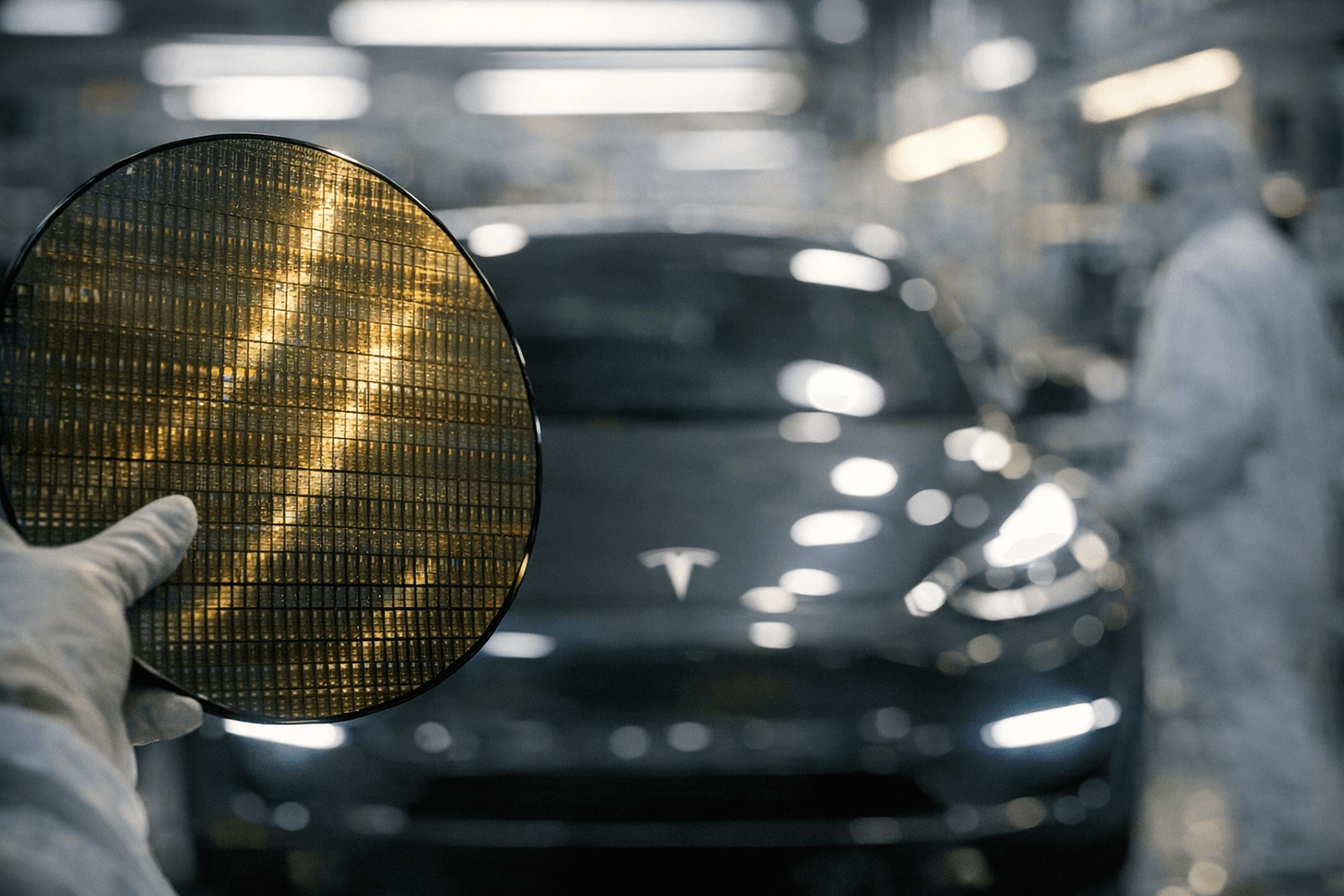
Investors treated it that way. Intel shares rose 3.6% in after-hours trading after Musk’s remarks, suggesting the market saw more than a speculative partnership. The stock reaction reflected how much Intel needs outside validation as it tries to rebuild confidence in its foundry roadmap and compete for the most advanced manufacturing work now dominated by Taiwan Semiconductor Manufacturing Co.
Musk said Tesla expected a "very significant increase in capital expenditures" and said the company was investing in chip design and manufacturing as part of a wider push into AI software, AI training, silicon, batteries and robotics. That broader shift explains why the chip deal matters beyond Tesla. The automaker is no longer just a buyer of semiconductors. It is moving toward becoming a manufacturer and systems designer with direct demand for leading-edge capacity.
The Terafab project has quickly become the place where that strategy meets Intel’s ambitions. Separate reporting said Intel joined the project on April 7 alongside Tesla, SpaceX and xAI, with the effort framed as a roughly $20 billion buildout in Austin, Texas. Musk has also described plans for a $3 billion research and development facility at Tesla’s Gigafactory campus in Austin to support a few thousand wafers per month, while SpaceX would handle high-volume manufacturing later. The project’s stated ambition is 1 terawatt a year of compute, an audacious scale that underscores how closely AI, robotics and chip production are now intertwined.
Intel still faces a long climb. Its 18A process is expected to reach high-volume production later in 2026, and TSMC remains the benchmark in leading-edge contract manufacturing. But Tesla’s move gave Intel more than a headline. It gave the company a credible customer for 14A, and with it a stronger argument that its foundry business can still compete at the front edge of the industry.
This article was produced by Prism’s automated news system from verified source data, official records, and press releases, then run through automated quality and moderation checks before publishing. The system is built and supervised by the people who set the standards it runs under. Read our full AI policy.
Did this article answer your question?