Tethered Shooting Transforms Studio Workflows, Boosts Client Collaboration and Image Quality
Tethered shooting — connecting your camera to a laptop or tablet so every shot appears immediately on a larger screen — shortens client decisions and raises technical accuracy in the studio.
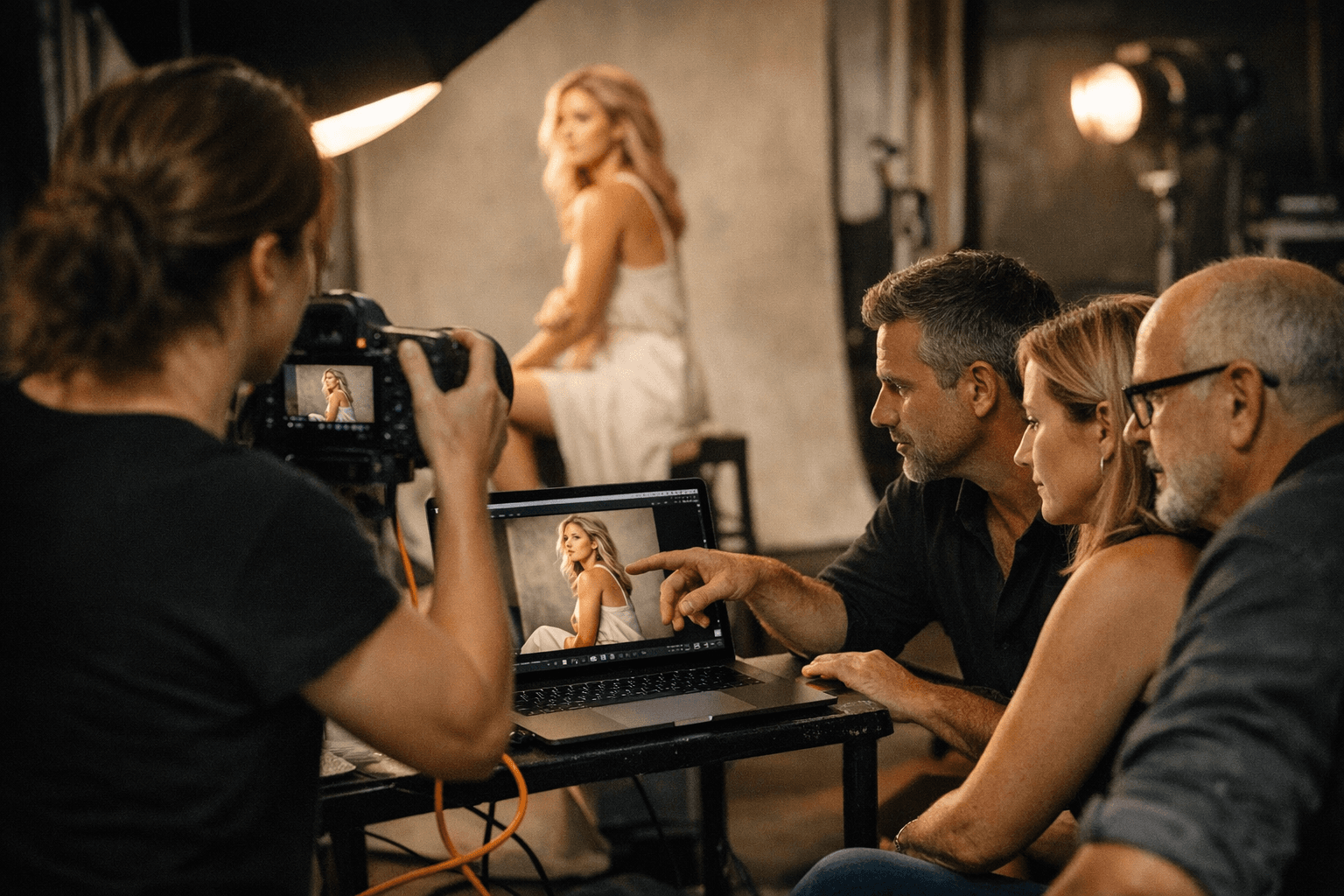
Tethered shooting connects your camera to a laptop or tablet so every shot appears immediately on a larger screen, and that single change reshapes studio workflows. When every frame shows up on a laptop or tablet the moment you press the shutter, client collaboration moves from vague direction to concrete choices, with clients able to see pose, crop and mood in real time.
The immediate preview also solves focus checks that are otherwise guesswork on a camera LCD. With images landing on a laptop or tablet you can zoom to 100 percent and confirm critical sharpness on the spot, which means fewer reshoots and less time lost back at the editing station. In a studio environment where a model, stylist and client are present, that instant verification keeps the session moving.
Lighting decisions benefit the same way. Viewing each exposure on a laptop or tablet makes it possible to evaluate subtle falloff, catch unwanted specular highlights and make modifier or power changes between setups. That faster feedback loop shortens lighting adjustments from multiple test frames to single-shot corrections, improving throughput in tight studio bookings.
Culling and selection become immediate tasks instead of end-of-day chores. When every shot appears on a larger screen you can reject off-target frames, flag selects and set color or exposure notes for the editor while the talent is still available. That reduces the cognitive load of remembering which frames mattered and shifts postproduction work toward refinement rather than triage.
Tethered shooting is a studio workflow tool that has practical hardware requirements but simple benefits: a camera, a tethering cable or connection, and a laptop or tablet on which every shot appears immediately. Implementing that setup tightens client communication, focus checks, lighting decisions and image culling into a continuous, visible process rather than a sequence of separate tasks.
If you run studio days where client direction, critical focus and lighting nuance matter, tethering turns hours of guesswork into minutes of verified decisions. For solo shooters who rarely show work in real time, tethering may feel like overhead, but in any booked studio session where speed and image quality matter the immediate visibility of every shot on a laptop or tablet is the change that pays for itself.
Know something we missed? Have a correction or additional information?
Submit a Tip