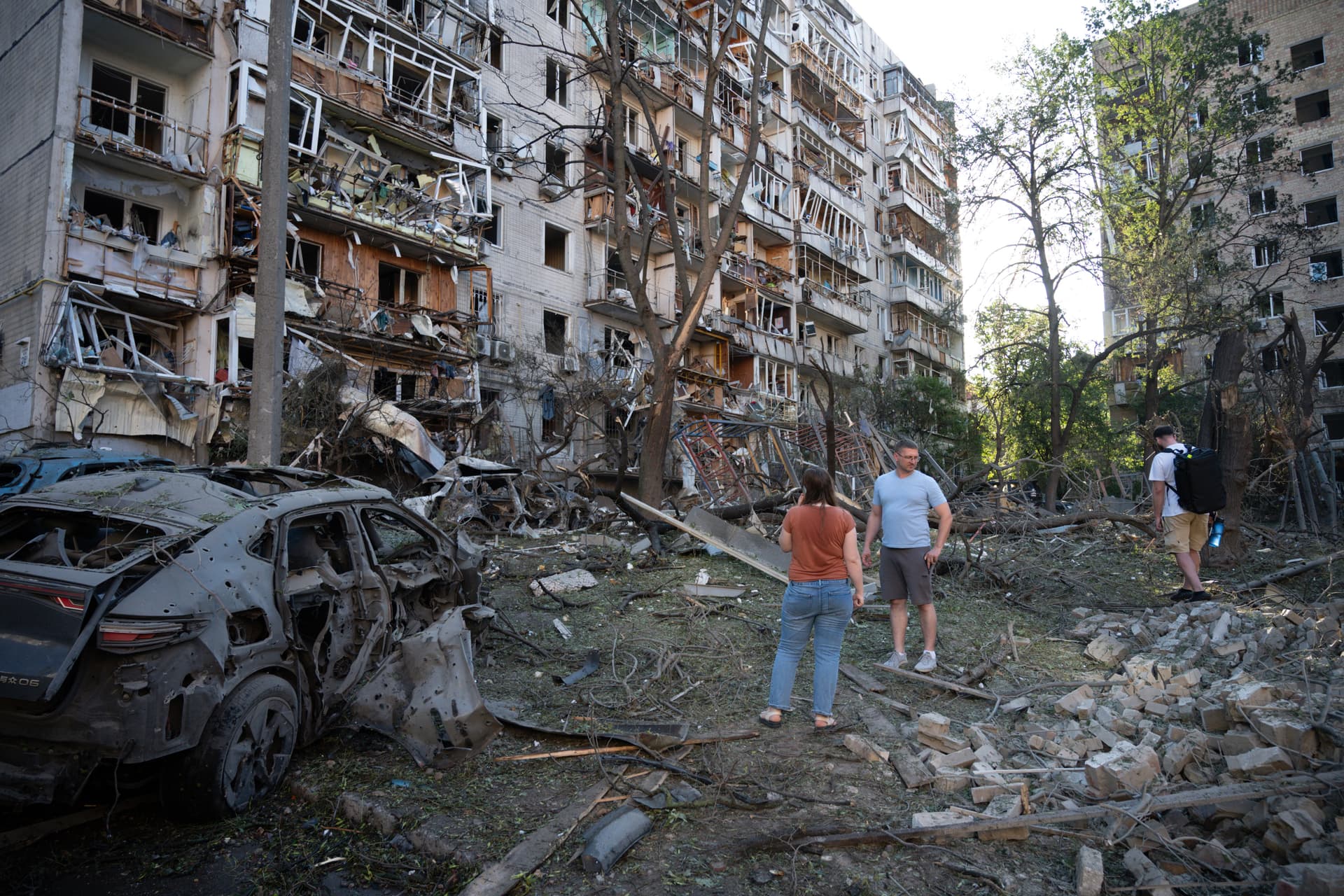
TGV Driver Killed After High-Speed Train Hits Military Lorry in Northern France
The driver of a Dunkirk-Paris TGV died Tuesday after the train struck an army lorry at a level crossing in Pas-de-Calais, derailing with 250 passengers aboard.
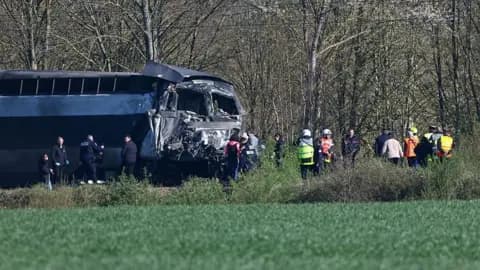
A high-speed TGV carrying approximately 250 passengers from Dunkirk to Paris struck a military lorry at a level crossing in Bully-les-Mines, in the Pas-de-Calais region of northern France, early Tuesday morning, killing the train's driver and injuring at least 13 others.
The collision occurred at around 7:00 AM local time at a crossing between the towns of Béthune and Lens. The lorry was part of a special military convoy belonging to the engineering regiment based in Angers. The impact derailed the TGV. In response, 88 firefighters, six SAMU emergency medical personnel, 10 police officers, and 40 civil protection volunteers were deployed to the site.
Of the 13 people confirmed injured by the Pas-de-Calais prefecture, two were in a critical condition, classified under the French medical designation "urgence absolue." Early reports from the scene had cited as many as 27 injured, a figure revised downward as rescue teams worked through the wreckage.
French Transport Minister Philippe Tabarot was among the first senior officials to respond publicly, announcing on X that he was travelling to the scene. "I am heading to the scene with the chief executive of the SNCF, Jean Castex," Tabarot wrote. A press conference was held at 12:15 at the victim assembly point, chaired by the Prefect of Pas-de-Calais alongside Castex, with a further ministerial briefing scheduled for 13:45. Xavier Bertrand, president of the Hauts-de-France region, described the accident on X as "un terrible drame" and extended his condolences to the family of the killed driver. Fabien Villedieu of the SUD Rail trade union was among the first to publicly confirm the accident.
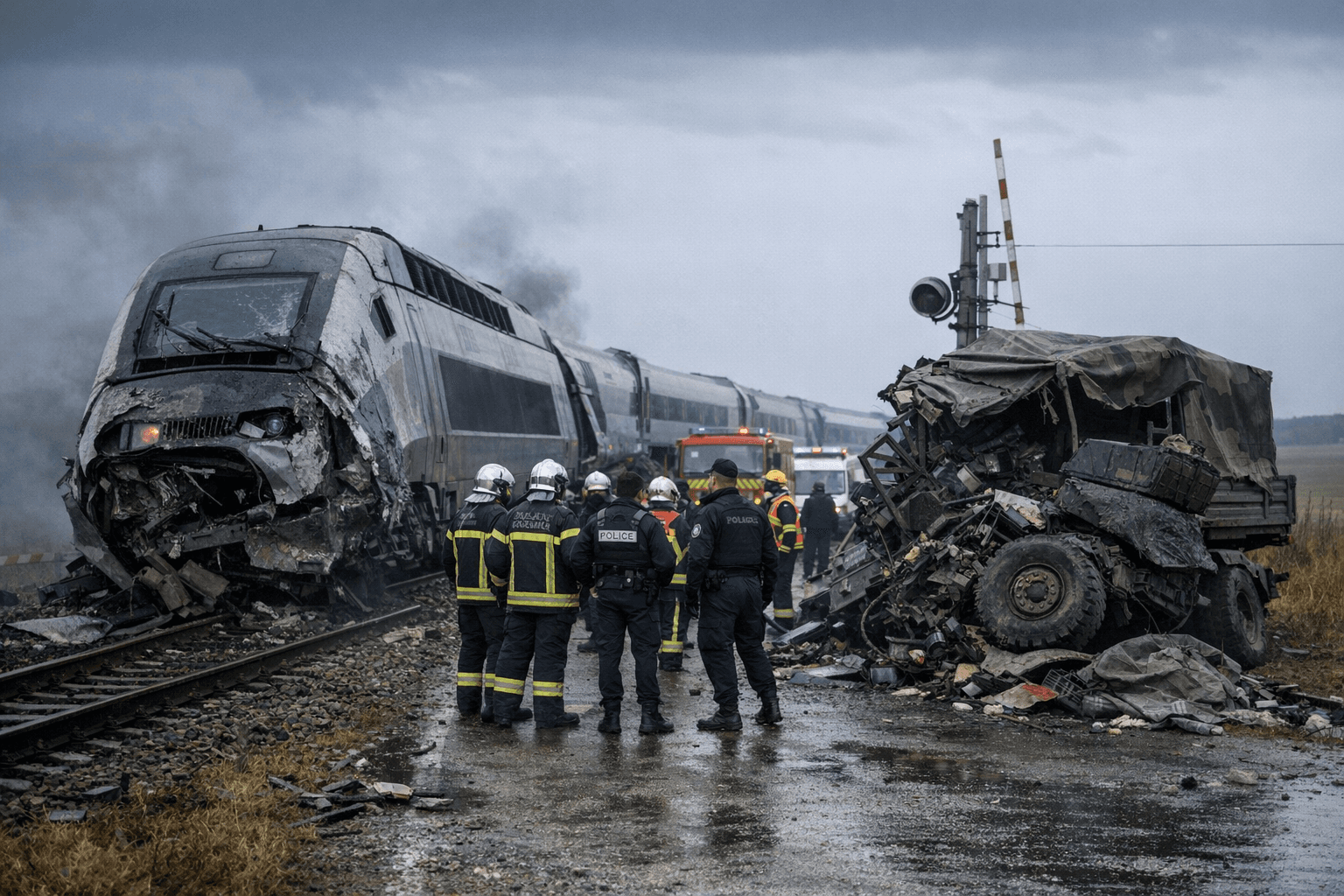
SNCF suspended rail services between Béthune and Lens until at least the end of Tuesday as investigators and emergency teams remained at the site.
The accident highlights a structural vulnerability within France's high-speed rail network. While dedicated high-speed lines, known as LGVs, have no level crossings and carry an exceptional safety record, TGVs also operate on conventional corridors where such crossings exist, exposing them to the same collision risks as ordinary trains. A near-identical scenario unfolded on 19 December 2007, when a TGV travelling at approximately 100 km/h struck a truck at a level crossing near Tossiat in eastern France, killing the truck's driver and injuring 25 people aboard the train. That precedent, combined with Tuesday's fatality, is likely to intensify scrutiny of how military convoys and other heavy vehicles are managed at crossings on routes shared with high-speed services.
This article was produced by Prism’s automated news system from verified source data, official records, and press releases, then run through automated quality and moderation checks before publishing. The system is built and supervised by the people who set the standards it runs under. Read our full AI policy.
Did this article answer your question?