Thailand Confirms First Human Psittacosis Case, Urges Bird Owner Caution
Thailand confirmed its first documented human case of psittacosis in late 2025 in a bird owner who kept birds in a poorly ventilated area and has since recovered.
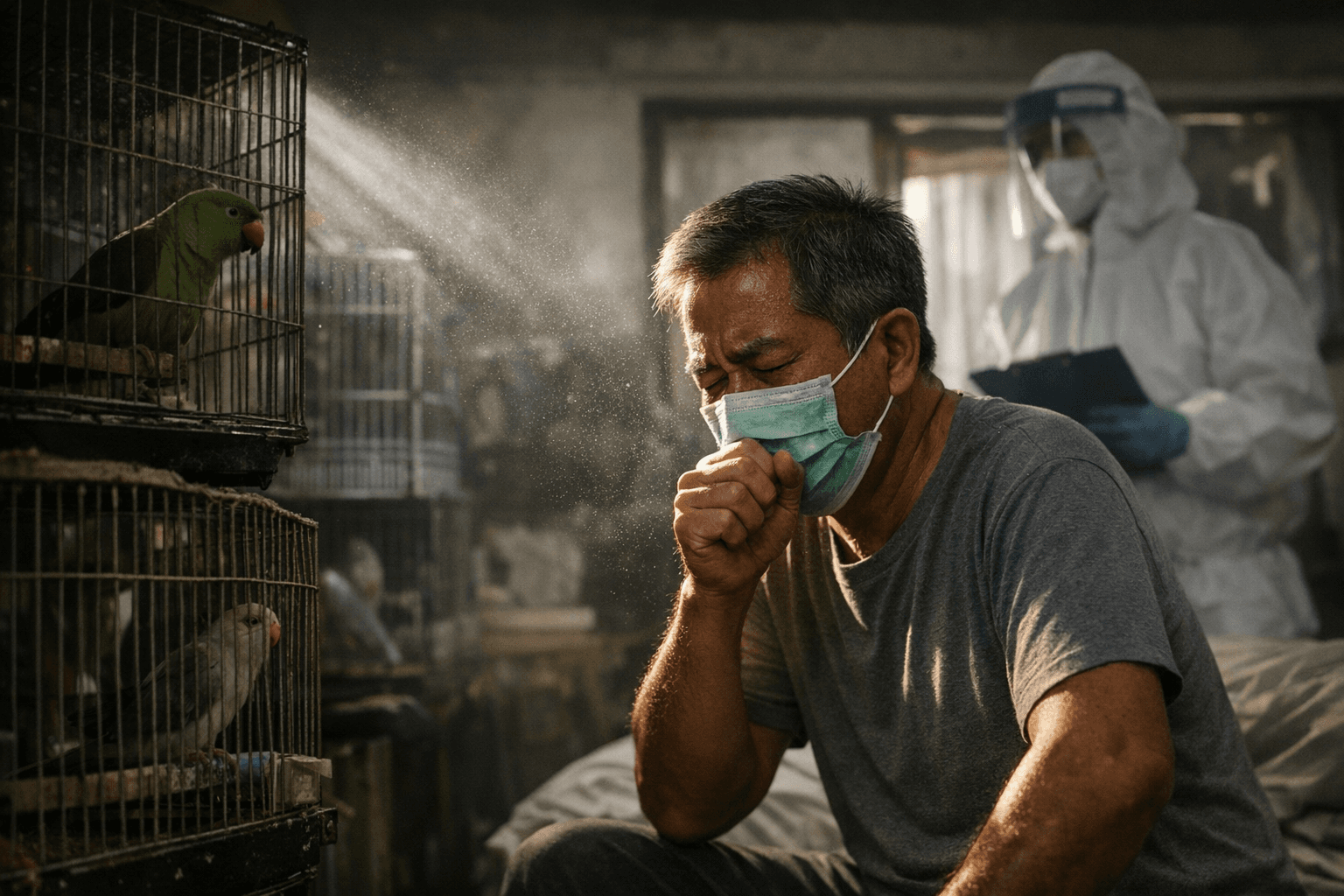
Thai authorities confirmed what they described as the country's first documented human case of psittacosis, identified in late 2025, in a bird owner who had an underlying medical condition, kept birds in a poorly ventilated space and did not use protective equipment while cleaning cages, Nationthailand and Traveldoctor reported. The patient received treatment and "has fully recovered," the coverage states.
The Ministry of Digital Economy and Society (DES) coordinated verification of the report with the Department of Disease Control under the Ministry of Public Health and the Anti-Fake News Centre (AFNC), and DES spokesperson Wetang Phuangsup was named in Nationthailand's account of the review. DES and AFNC reviewed monitoring results and fake-news reports before confirming the case as "true news" through inter-agency checks, a process Beaconbio also summarized as coming "following inter-agency verification."
Traveldoctor's Health Alerts page summarized the clinical and exposure details: "The infected individual, who has since recovered, was a bird owner who likely contracted the fever due to poor ventilation conditions and lack of PPE at his aviary." Nationthailand added that the patient had an underlying condition and a history of keeping birds in a poorly ventilated area, and that the patient did not use protective equipment while cleaning the cage.
Officials named the bacterium Chlamydophila psittaci as the cause in the reporting captured by Nationthailand and repeated the common-name warning that psittacosis is also known as parrot fever. Nationthailand cautioned that "Psittacosis, a silent threat from birds, can lead to severe illness with one inhalation" and noted that the bacterium is found in many birds and poultry species. Multiple outlets described the transmission route in the same terms: people can become infected by inhaling airborne particles from dried droppings, feathers or bird secretions, and Traveldoctor and Travelvax reiterated that the bacterial infection is treatable.
The DES account referenced the policy on preventing and addressing security and social threats set by Minister Chaichanok Chidchob as the context for AFNC involvement and the push to elevate public awareness and resilience against technology-enabled disinformation. Nationthailand said the confirmation became "a hot topic that has animal lovers and the public on alert," prompting the official verification steps.
Significant gaps remain in the public record released so far. No patient name, age, sex, city or province has been published; no laboratory methods (culture, PCR or serology), testing laboratory, or strain details have been reported; no specific bird species at the patient's premises were identified; and there is no public account of contact tracing, avian testing results or whether the case was notified to international bodies. Those missing items were flagged in the consolidated reporting pulled together by the outlets that covered the confirmation.
Thai officials have urged bird owners and people who work with birds to exercise caution and to improve ventilation and use protective equipment when handling cages and droppings, based on the exposure circumstances reported. The confirmed, treated and recovered case emphasizes the need for vigilance in aviaries and home collections while health agencies complete verification and provide any further specific guidance.
Know something we missed? Have a correction or additional information?
Submit a Tip