Thailand Mobilizes Military, Evacuates Thousands as Southern Floods Kill Dozens
Torrential rains and record flooding across southern Thailand on November 26 prompted large scale rescue operations and widespread evacuations, officials said. The military used boats, helicopters and an aircraft carrier to evacuate patients and deliver supplies, tens of thousands were displaced, and the disaster is already straining regional supply chains and public services.

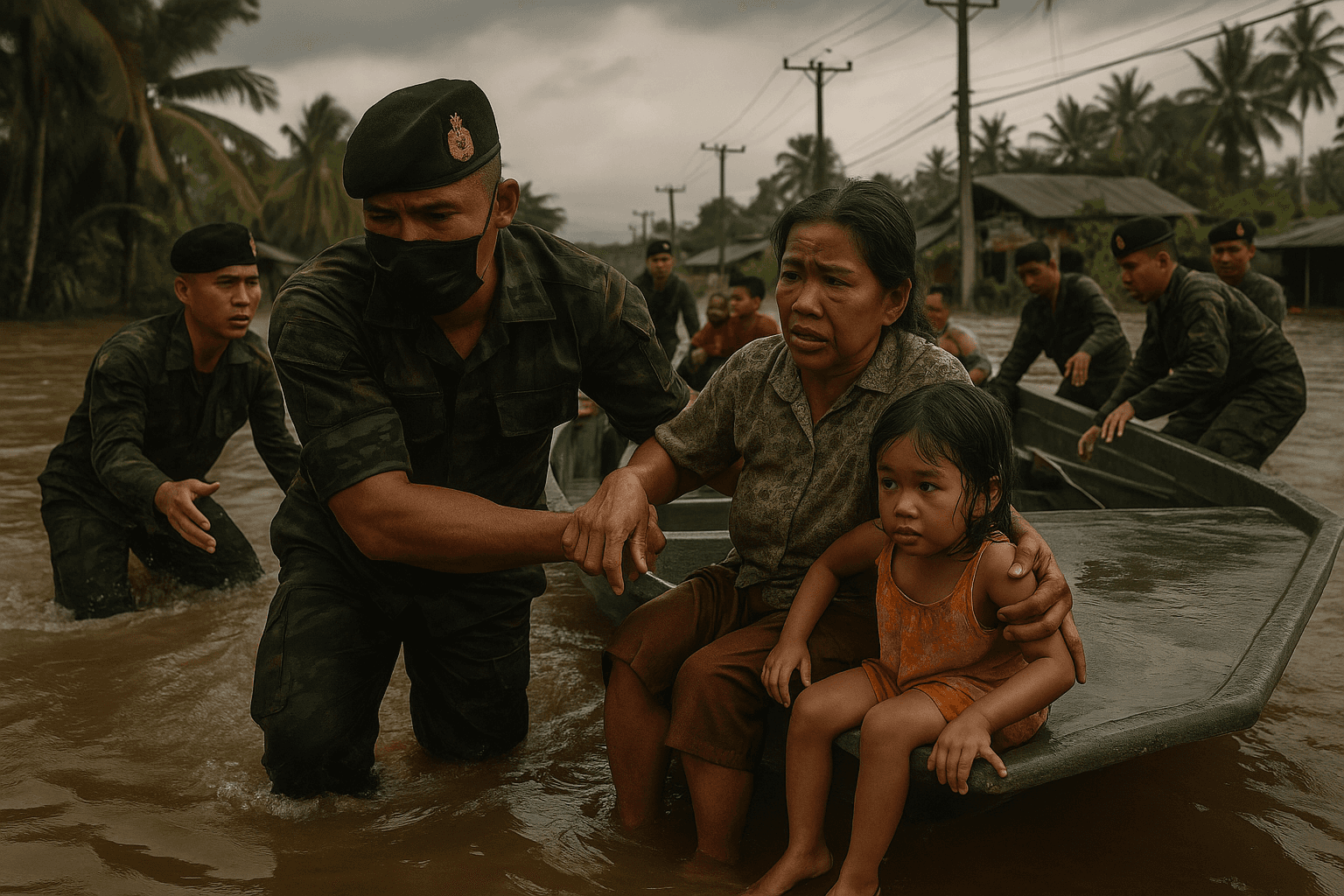
Torrential rains and record floodwaters swept through southern Thailand on November 26, forcing large scale evacuations, inundating hospitals and killing dozens as officials and reporters documented severe damage in provincial hubs including Hat Yai. Authorities said the military mobilized boats, helicopters and an aircraft carrier to reach isolated communities, deliver food and medical supplies, and evacuate critically ill patients from inundated hospitals. Reuters journalists and local officials reported severe inundation in urban centers that are normally regional commercial and transport hubs.
Casualty figures varied as the situation developed, with initial tallies described as dozens of fatalities and many more injured. Tens of thousands of residents were displaced and moved to higher ground or temporary shelters. Several hospitals were overwhelmed by floodwater and power outages, prompting emergency transfers of patients by air and sea. Transport arteries were blocked by high water and debris, complicating relief efforts and heightening short term risks to food, fuel and medical supplies for affected communities.
The floods reached across borders, with heavy rains and flooding also documented in parts of Malaysia and Indonesia. The regional scope of the event raises the prospect of broader disruptions to trade and logistics in Southeast Asia. Hat Yai serves as a commercial hub for southern Thailand and as a crossroads for overland trade, and its paralysis could reverberate through domestic supply chains for weeks. Agricultural activity is at risk in low lying plantations and small farms, and southern provinces are major producers of natural rubber and palm oil, commodities that are sensitive to transportation bottlenecks and harvest timing.
Beyond immediate humanitarian needs, the disaster underscores longer term economic vulnerabilities. Emergency response will require substantial public spending on shelter, medical care and transport, while reconstruction of roads, bridges and drainage infrastructure will add to fiscal pressures. The insurance sector may face rising claims for property and business interruption, though coverage rates in rural Thailand remain limited. For businesses, the immediate concerns include damaged facilities, workforce displacement and disrupted logistics, any of which can reduce output and raise costs for both domestic markets and exporters.
Policy implications are stark. The scale of the response highlights gaps in urban drainage, coastal defenses and hospital resilience that policymakers will need to address. Analysts say investments in resilient infrastructure, improved early warning systems, coordinated regional contingency planning and nature based flood mitigation would reduce future economic and human costs. Climate signals that warming increases the frequency and intensity of extreme precipitation events suggest such floods may become more common, raising the long term imperative for adaptation.
In the coming days authorities will be focused on search and rescue, restoring critical services and assessing damage. Short term needs include clean water, shelter and medical support for displaced populations, and logistical corridors to bring supplies into hard hit towns. The broader economic aftermath will depend on how quickly transport links are reopened and how extensive damage to housing, farms and industry proves to be.
This article was produced by Prism’s automated news system from verified source data, official records, and press releases, then run through automated quality and moderation checks before publishing. The system is built and supervised by the people who set the standards it runs under. Read our full AI policy.
Did this article answer your question?