Thailand’s Death Railway station resurfaces after decades underwater
A dam drawdown exposed Nithe Station after more than 40 years underwater, giving historians a brief chance to study a death-railway depot before the reservoir refills.

A submerged station on Thailand’s wartime Death Railway has reappeared after more than four decades underwater, turning a maintenance project at Vajiralongkorn Dam into a fleeting opening for historians, descendants and memorial-keepers. Nithe Station, once a major depot on the 415-kilometer line linking then Siam with Burma, now Myanmar, stood exposed as researchers rushed to document what remains before water returns.
The railway was built under Japanese wartime rule by about 60,000 Allied prisoners of war and hundreds of thousands of Asian laborers forced into brutal conditions. More than 12,500 POWs and 75,000 laborers died during construction, giving the line its grim nickname and making every resurfaced fragment a potential historical record. The reservoir was drained for maintenance, and the exposed station in Sangkhlaburi, in western Thailand’s Kanchanaburi province, has become a rare site for survey work rather than a routine tourist stop.
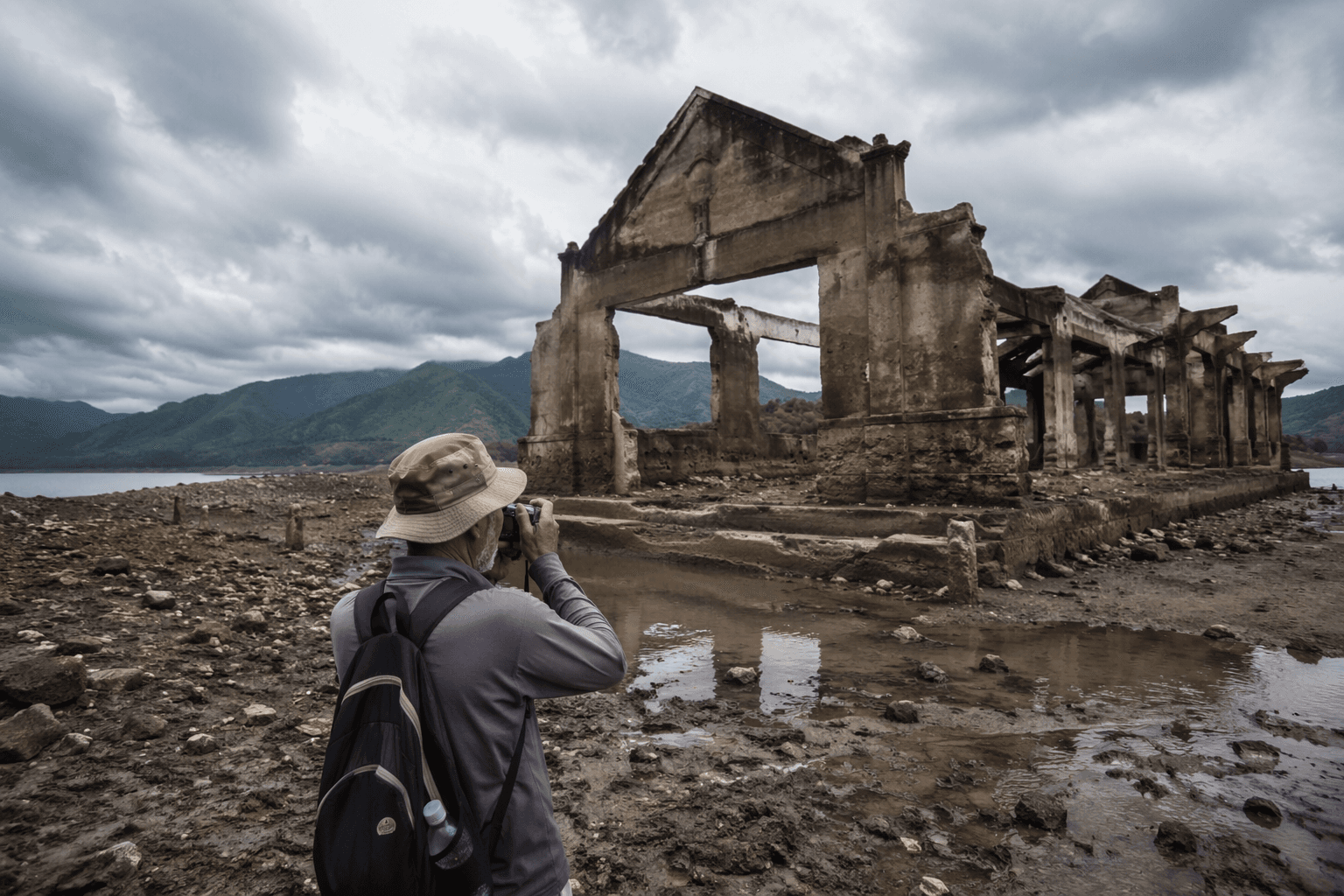
Andrew Snow of the Thailand-Burma Railway Centre said the station can help “show relatives in the future” what happened there. Snow’s father was captured in Singapore in 1942 and forced to work on the railway, a reminder that the line’s legacy still lives in family histories across the region. Martyn Fryer traveled from Australia because his grandfather died as a POW building the line, and he wanted to see “what infrastructure is lying under the water.”
The exposure matters because the window is short. The reservoir is expected to refill in August, and the Southeast Asian rainy season could bring water back sooner, cutting off access before detailed study is complete. That has left researchers racing to record the station, assess what survives and determine whether any artifacts can be preserved before the site disappears again.
The resurfaced station also sits within a wider landscape of remembrance. Parts of the historic railway still operate today, carrying locals and drawing tourists, while places such as the Hellfire Pass Interpretive Centre and Memorial Walking Trail in Kanchanaburi preserve the memory of Allied POWs and rōmusha forced to build the Burma-Thailand Railway. Official materials there emphasize the deaths caused by forced labour, disease, malnutrition and violence.
For descendants, the exposed remains have become more than an archaeological curiosity. They are a temporary, physical link to a wartime system of exploitation whose traces still shape memory, preservation debates and historical research across Asia.
This article was produced by Prism’s automated news system from verified source data, official records, and press releases, then run through automated quality and moderation checks before publishing. The system is built and supervised by the people who set the standards it runs under. Read our full AI policy.
Know something we missed? Have a correction or additional information?
Submit a Tip