The Billion-Dollar Self-Improvement Industry Sells Change Most People Never Achieve
A $48 billion industry promises transformation, but only 9% of resolution-makers follow through. Neuroscience and clinical psychology reveal why willpower is the wrong tool entirely.
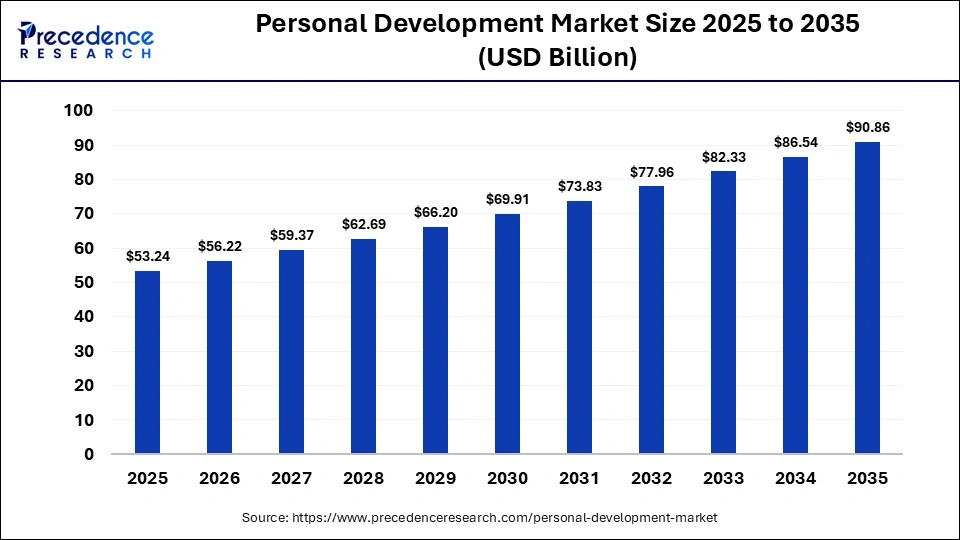
Somewhere between the promise and the result, billions of dollars disappear. The global personal development market, valued at $48.4 billion in 2024 according to Grand View Research, is built on a single premise: that the right system, the right book, the right coach can reliably deliver a better version of you. Custom Market Insights projects that figure could balloon to $90.9 billion by 2034. And yet the most widely available data on whether people actually change tells a different story, one the industry has little incentive to advertise.
A Market Built on Aspiration
The self-improvement sector has grown well beyond motivational speakers and airport bookstores. Digital learning platforms, AI-driven coaching tools, and an expanding corporate wellness sector have all contributed to its acceleration, with Grand View Research projecting the market will reach $67.21 billion by 2030 at a compound annual growth rate of 5.7%. North America remains the dominant regional market, and the United States is the primary engine of self-help consumption globally.
The industry's pitch is fundamentally one of control: apply enough willpower, follow the prescribed framework with sufficient discipline, and transformation will arrive on schedule. This framing is not incidental. It is the product. Without the promise of control, there is no premium to charge.
The Arithmetic of Failure
The gap between that promise and actual outcomes is not a minor discrepancy. It is the central fact of the industry. Research published by Ohio State University's Fisher College of Business found that only 9% of Americans who make New Year's resolutions actually complete them. The attrition is swift and consistent: 23% quit by the end of the first week, 43% by the end of January, and 81% before the end of the second year.
Strava, the fitness tracking app, drilled even further into the data and pinpointed the second Friday in January as "Quitters' Day," the single day when the highest number of users abandon their stated goals. The pattern is too consistent to be explained by bad luck or insufficient motivation. It points to something structural in how people attempt to change.
Two Brains, One Losing Fight
Cognitive neuroscience offers a more useful framework than willpower for understanding why. Research published in Trends in Cognitive Sciences and reviewed on ScienceDirect describes two competing brain systems governing behavior: a stimulus-driven, habitual system and a goal-directed system. The habitual system operates automatically, reinforced by years of repetition. The goal-directed system is where conscious intention lives. The problem is that these systems are not equally matched.
As the neuroscience literature frames it, "habit expression is thought to occur when the influence of the stimulus-driven system outweighs the engagement of the goal-directed system," explaining "suboptimal behaviors where people do not act in line with current beliefs and goals, such as action slips, impulsive behaviors, and compulsions." Willpower is a product of that goal-directed system, which means every act of self-discipline is a conscious system fighting an automated one. The automated system almost always wins over time.
Neuroplasticity does make change biologically possible. UCL researcher Phillippa Lally's work on habit formation has contributed to the empirical understanding of how long new behavioral patterns take to consolidate. The answer is not 21 days, as popular mythology holds. Real neural rewiring requires sustained repetition across months. The self-improvement industry, which profits from rapid promises, rarely leads with that figure.

The Self-Help Book Problem
Books represent perhaps the most democratized corner of the industry, and the evidence for their effectiveness is decidedly uneven. A study in the Journal of Happiness Studies found that bibliotherapy research, where it exists, does show some mental health improvements exceeding no treatment at all. Scientific American has noted that bibliotherapy, under those conditions, can produce results that "often equal the benefits obtained by psychotherapy."
The catch is substantial: only a small fraction of self-help books on the market have ever been subjected to rigorous empirical testing. The vast majority are sold and consumed with no clinical evidence behind them at all. More troubling still is what happens with books that have been tested and found harmful. Researcher Rosen, in a 1987 study, documented that a self-help desensitization program produced the largest negative experimental effect ever recorded in the psychotherapy literature, meaning it made participants measurably worse. The book existed. People read it. It caused harm. And for most of the industry, that kind of accountability mechanism simply does not exist.
The Case for Strategic Surrender
The most substantive challenge to the willpower model comes not from critics of self-help culture but from within clinical psychology itself. Acceptance and Commitment Therapy, developed by psychologist Steven C. Hayes and building in prominence since the 1980s, is grounded in research suggesting that the control instinct is often counterproductive.
Research hosted by the National Institutes of Health's PubMed Central links what ACT calls "experiential avoidance," defined as "efforts to control unwanted thoughts and feelings," to "a diverse array of psychological and behavioral difficulties." The more energy someone invests in suppressing or overriding an unwanted internal state, the more entrenched that state tends to become. The solution ACT proposes is not more discipline but what it terms psychological flexibility: "the ability to contact the present moment more fully" and commit to actions aligned with personal values rather than rigid self-control scripts.
Mindfulness-based approaches, supported by a growing body of NIH-published research through 2025, reinforce the same counterintuitive logic. The goal is to "observe internal experiences with curiosity and openness rather than attempting to control or avoid them." A 2017 study in Frontiers in Psychology applied ACT principles specifically to health behavior change and found meaningful support for this model. Real and durable change, this body of evidence consistently suggests, may require less force and more flexibility.
What This Means for Anyone Buying In
None of this makes self-improvement a scam or aspiration a mistake. It means the industry's dominant metaphor, the idea that change is a product you can purchase and install through willpower, is empirically weak. The neuroscience points toward environment design and repetition over time. The clinical research points toward acceptance and values-based commitment rather than suppression and rigid control. And the market data reveals that tens of millions of people cycle through these systems every January without the industry ever being held accountable for the 91% it fails.
At $48.4 billion and climbing, the industry is extraordinarily good at one thing: selling the feeling of being about to change. The distance between that feeling and the change itself is where most of the real work, and most of the real science, actually lives.
This article was produced by Prism’s automated news system from verified source data, official records, and press releases, then run through automated quality and moderation checks before publishing. The system is built and supervised by the people who set the standards it runs under. Read our full AI policy.
Did this article answer your question?