Thousands Gather in Barcelona to Rally Global Progressive Resistance
More than 6,000 people from 40 countries met in Barcelona to test whether the left can turn anti-far-right protest into an electoral strategy.
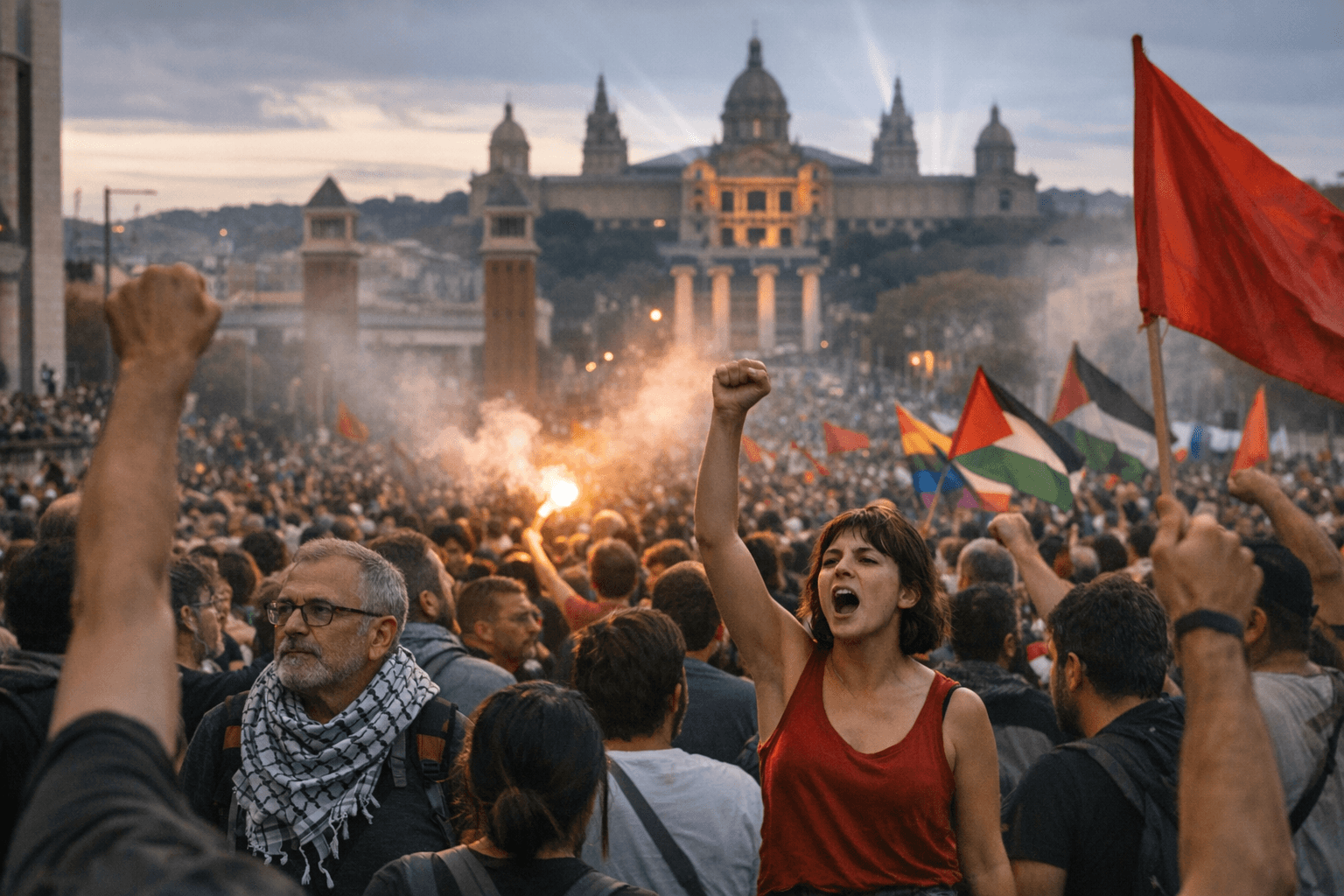
More than 6,000 activists, politicians and organizers from over 40 countries filled Barcelona’s Fira Gran Via for a two-day attempt to turn progressive anger into a practical political plan. The April 17-18 summit, billed as the inaugural Global Progressive Mobilisation, was designed as a coordinated answer to the rise of the far right and growing authoritarianism.
Spain’s Socialist Prime Minister Pedro Sánchez gave the gathering its clearest political edge, using Barcelona as a stage for a transnational message: progressives can still build power if they make democracy, equality and public services look credible to voters again. Luiz Inácio Lula da Silva of Brazil was one of the central figures alongside Sánchez, while other reported attendees and invitees included South Africa’s Cyril Ramaphosa, Mexico’s Claudia Sheinbaum, Colombia’s Gustavo Petro, Uruguay’s Yamandú Orsi, European Council President António Costa and former Swedish prime minister Stefan Löfven.
The summit was not just a show of solidarity. Organizers and speakers pushed a policy agenda that tried to bridge global reform and everyday anxieties. Discussions ranged from reforming the United Nations Security Council and taxing billionaires to the more immediate politics of wages, inflation and household bills. That mix reflected a central lesson many on the left say they have absorbed after recent losses and stalled momentum: abstract warnings about fascism are not enough unless they are paired with concrete answers to the cost of living.
The institutional agenda was especially pronounced. Participants pressed for Security Council reform, stronger African representation and a female UN secretary-general, a package that cast the United Nations as a symbol of a broader push for a more representative international order. Lula, speaking to supporters waving red flags and chanting anti-fascist slogans, framed progressivism as a defense of multilateralism built to work for everyone.
The Barcelona meeting also doubled as a referendum on the left’s belief that the political climate may be shifting. Supporters pointed to Donald Trump’s falling polling numbers, Victor Orban’s removal after 16 years in government and a weaker-than-expected showing by the French far right in local elections as signs that nationalist momentum may not be unstoppable. Sánchez sharpened that message by arguing that the far-right international was running out of momentum.
AP reported that Sánchez hosted two overlapping Barcelona events focused on democracy and progressive politics, underscoring how deliberately the Spanish government used the city as a hub for the broader effort. The summit was presented as the fourth in a series that began in New York in 2024 and continued in Santiago, Chile, in July 2025.
That history matters because it shows the project is trying to become more than a conference circuit. The challenge now is whether the progressive coalition gathering in Barcelona can move beyond symbolism, find a language voters trust, and prove that anti-far-right resistance can become durable electoral power.
This article was produced by Prism’s automated news system from verified source data, official records, and press releases, then run through automated quality and moderation checks before publishing. The system is built and supervised by the people who set the standards it runs under. Read our full AI policy.
Did this article answer your question?