Thousands march across U.S. demanding federal immigration agents leave Minnesota
Several thousand protesters in Minneapolis and demonstrations nationwide pressed for federal agents to withdraw after two fatal shootings, highlighting community fear and legal battles.
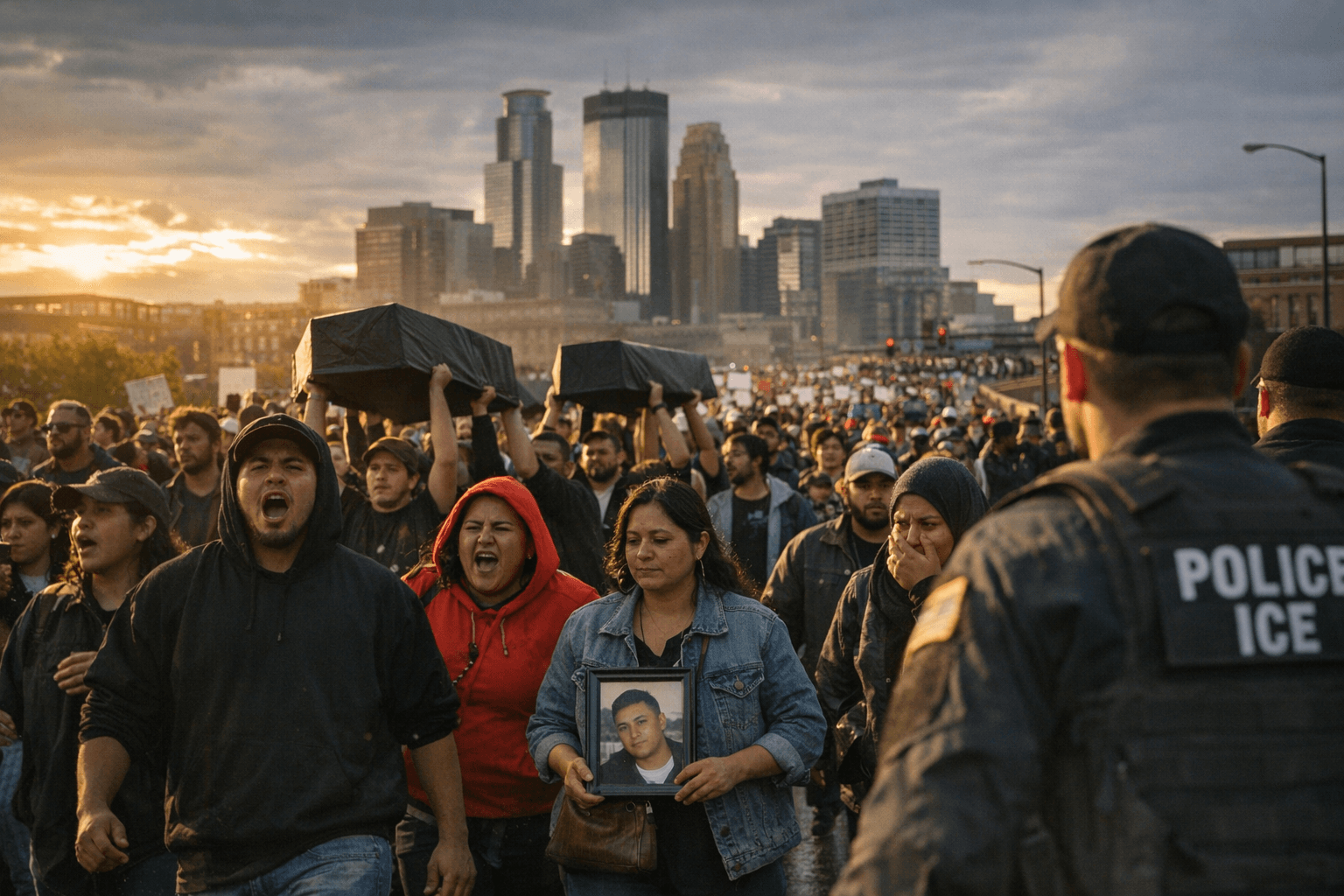
Several thousand people marched through downtown Minneapolis and thousands more gathered in cities across the United States this weekend to demand that federal immigration agents leave the Minneapolis–Saint Paul area after two recent fatal shootings intensified outrage and fear in immigrant communities.
Organizers led a march that moved past Government Plaza between City Hall and the Hennepin County Government Center, along Washington Avenue and to The Commons park near U.S. Bank Stadium. Many carried a large-scale replication of the Preamble to the U.S. Constitution and stood in bitter temperatures described by participants as some of the coldest in years. Organizers asked people "not to work, go to school or go shopping to show their solidarity," and student groups from Somali and Black communities helped call for a nationwide strike to pressure officials to end what protest leaders call heavy-handed federal enforcement.
The demonstrations follow two shootings earlier in January that turned national attention to the federal operation. An ICE agent shot and killed Renee Good in her car on Jan. 7; some reports identify her as Renee Nicole Good. On Jan. 24, federal border agents killed 37-year-old nurse Alex Pretti in Minneapolis. The deaths, advocates say, have deepened mistrust and transformed the national conversation on immigration enforcement.
Local leaders and activists described immediate public health and social harms. Cheniqua Johnson, a city councillor, said the presence of the federal operation has left residents afraid to leave their homes for basic errands. "It feels more like the federal government is here to [lay] siege [to] Minnesota than to protect us," she said, and officials reported calls from community members struggling to perform everyday tasks amid the raids and arrests.
The deployments, known as Operation Metro Surge, were challenged in court by the state of Minnesota alongside the cities of Minneapolis and St. Paul, which argued the operation amounted to a "federal invasion" that included warrantless arrests, excessive force and targeted enforcement of Somali immigrants. The administration pushed back in filings, asserting that "Put simply, Minnesota wants a veto over federal law enforcement." A U.S. district judge, Katherine Menendez, denied a request to immediately halt the operation and allowed it to continue while the lawsuit proceeds.
The protest wave extended beyond Minneapolis. Organizers of memorial rides said the events were "one of over 200 confirmed across 43 states taking place this weekend" in memory of those killed by federal agents, and activists picketed Target stores in Washington, D.C., and elsewhere, urging the retailer to call for independent investigations and to affirm solidarity with immigrant communities. At a D.C. picket, Slobodan Milic of Free DC told onlookers, "I want them to see that we are not just standing idly, while our neighbors are being kidnapped. We are standing for our brothers and sisters in Minneapolis." Demonstrators chanted "boycott target," "ice out," and "I believe that we will win."
Community organizers also tied the enforcement operation to wider economic and housing concerns, calling for an end to taxpayer spending on immigration enforcement and a moratorium on evictions as part of broader demands. Activists reported clustered actions ranging from small sidewalk pickets in below-freezing conditions to larger strikes that organizers say shut dozens or hundreds of businesses on earlier action days.
Public officials and federal authorities continue to spar over legal authority and the scale of deployments. Local health and social service providers warn the actions are already undermining access to food, care and stability in immigrant neighborhoods. With the court battle ongoing and demonstrations planned to continue, officials and advocates say the conflict will continue to test the intersection of federal enforcement, local governance and community well-being.
This article was produced by Prism’s automated news system from verified source data, official records, and press releases, then run through automated quality and moderation checks before publishing. The system is built and supervised by the people who set the standards it runs under. Read our full AI policy.
Did this article answer your question?

