Three Weekend Moab Rescues Include Airlifts; Officials Urge Winter Gear
Three Moab-area rescues required two airlifts and a nighttime retrieval, highlighting icy slickrock, early darkness, and the need for winter traction, lights, and warm layers.
Two airlifts and a nighttime search-and-rescue in the Moab area over the weekend underline how quickly winter conditions can turn routine outings into serious incidents. Grand County responders pulled three separate incidents on January 20, 2026, ranging from a motorcycle crash in Nash Wash to a hiker fall near Picture Frame Arch and a group that became disoriented at Corona Arch after dark.
A motorcycle crash in Nash Wash sent one rider to the air. Grand County EMS stabilized the patient at the scene and Intermountain Health flight crews transported the rider by medical helicopter to definitive care. The airlift was necessary because of the location and the rider’s injuries, officials said.
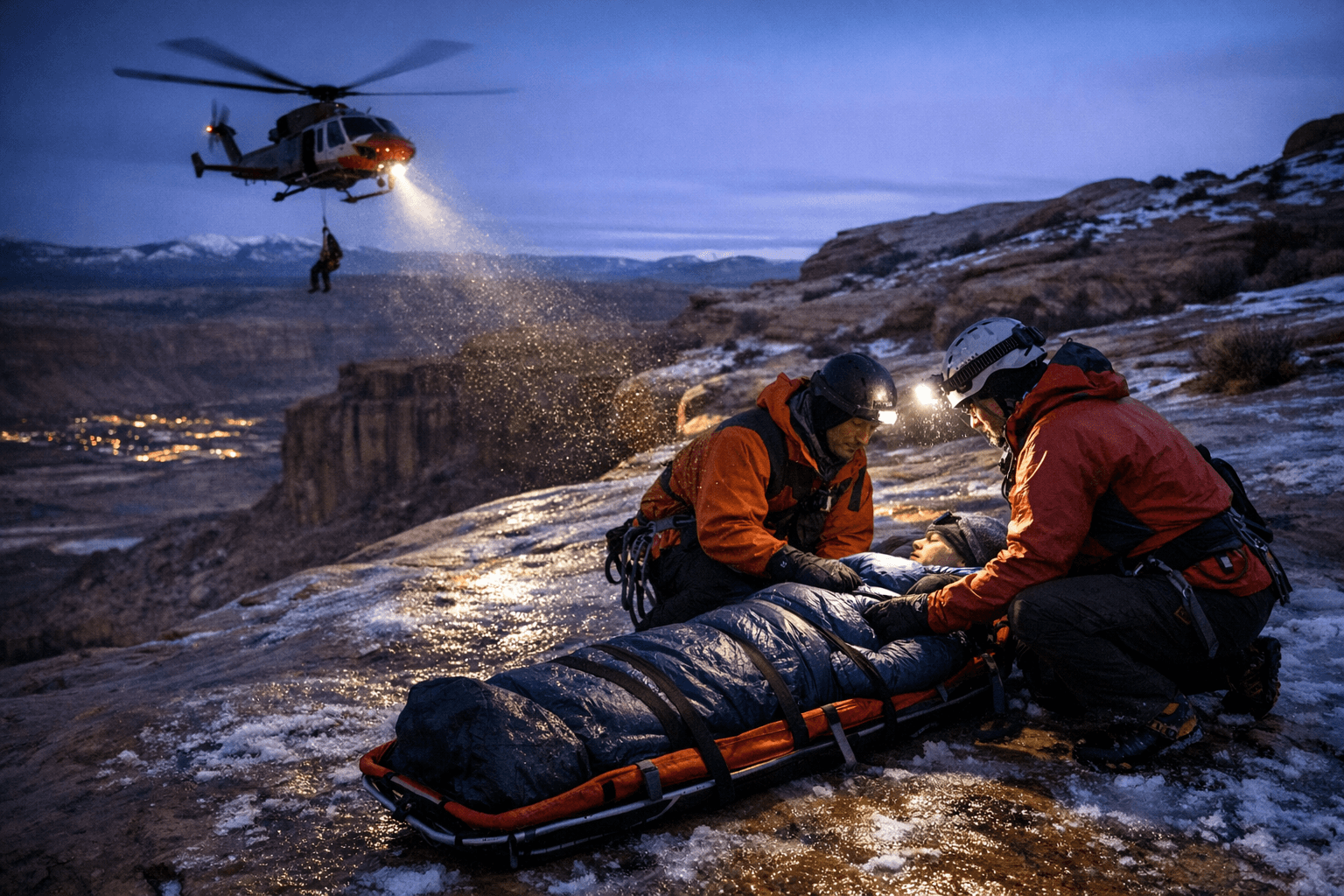
Shortly afterward crews responded to a hiker who slipped on icy slickrock while descending from Picture Frame Arch. Rescue teams packaged the patient, lowered them down a steep sandstone slope and transferred the patient to a medical helicopter for transport to a trauma-capable hospital. Utah DNR Law Enforcement assisted at the scene, and the coordinated response involved ground teams and flight crews to move the patient safely off the slickrock and out of the canyon.
On Sunday evening, three visitors at Corona Arch became disoriented after dark and became what locals call rimrocked, stuck or stranded on ledges and cliffs where routefinding is difficult without light. Grand County Search and Rescue located the visitors’ headlamps and led the group back to the trailhead without injury. The corona incident demonstrates how quickly short winter daylight and confusing terrain can leave well-intentioned visitors off route.
These incidents carry clear lessons for anyone heading into Moab’s backcountry this winter. Traction aids are essential on frozen sandstone; microspikes or sticky-soled winter footwear reduce slip risk on slickrock. Carrying reliable headlamps and spare batteries buys a safe exit if a hike runs long. Warm layers and an insulating pad can prevent hypothermia for people who must wait for rescue, and a tested communication device is critical because cell service in the canyon country is spotty.
Grand County EMS, Intermountain Health flight crews, Utah DNR Law Enforcement and Grand County Search and Rescue mobilized to manage all three calls. Their work ensured injured and stranded visitors were moved to care or brought safely back to trailheads, but winter conditions continue to elevate risk.
For readers planning winter trips around Moab, plan short routes, time hikes well before dusk, add traction devices to your pack, test your lights and comms, and carry insulating layers and a pad. These precautions reduce the chance you become another call to emergency crews and help keep trails open and safe for the community.
Know something we missed? Have a correction or additional information?
Submit a Tip