Three workers die from toxic fumes during sewage cleaning in Ludhiana factory
Three workers, including a father and son, died after toxic fumes hit a sewage-cleaning crew at a Ludhiana factory, triggering a negligence probe.
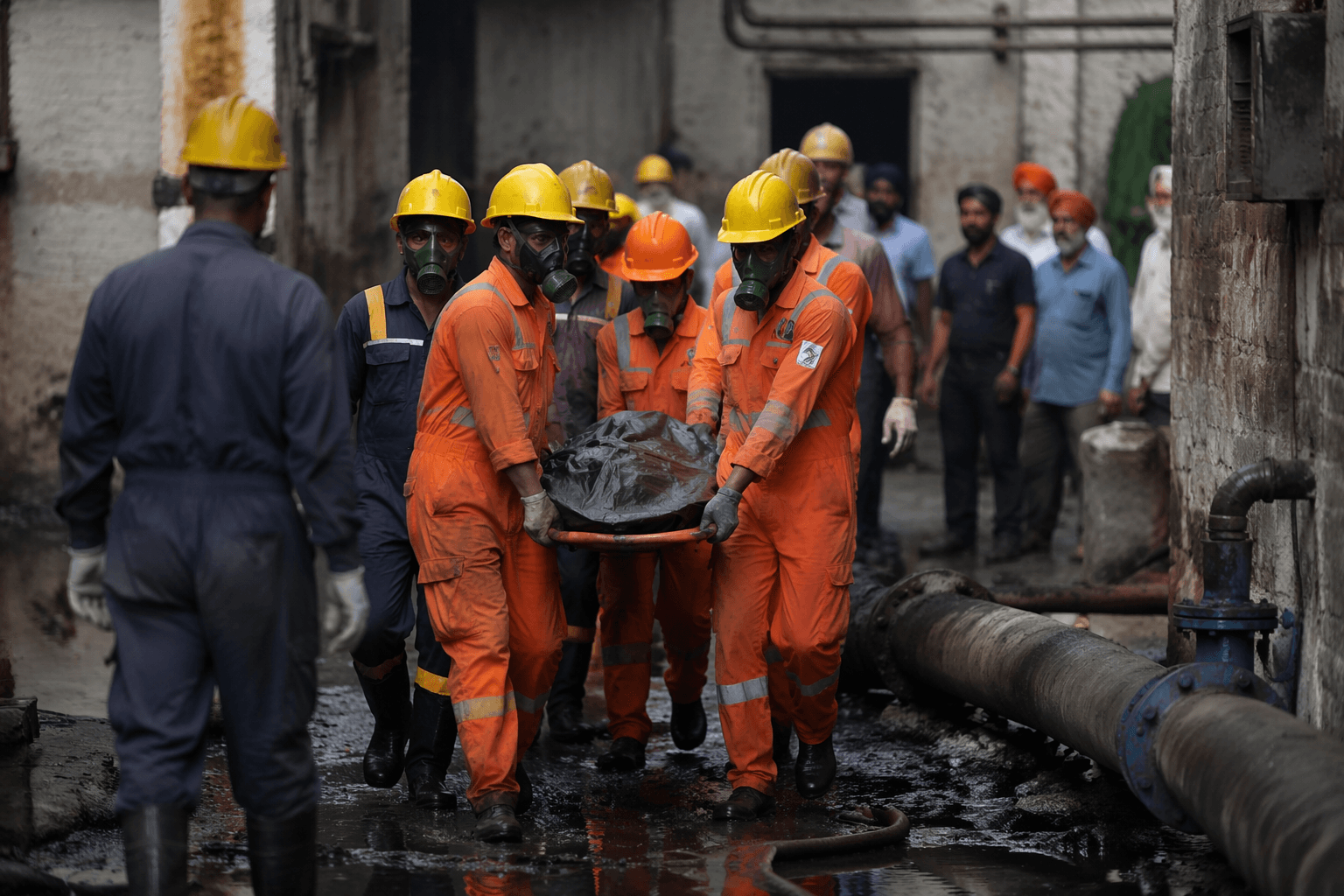
At Deep Tools in Ludhiana’s Industrial Area-A on RK Road, a sewage-cleaning job turned deadly when toxic fumes overwhelmed a work crew, killing three men and sending two others to hospital. The episode has put safety gear, gas testing, contractor oversight and confined-space entry procedures under sharp scrutiny.
Police identified the dead as Maan Singh, 46, his son Amit, 24, and Shriram. Deepak Kumar and Rajender Kumar were taken for treatment after losing consciousness in the factory’s sewage or effluent area, which workers had been called to clean at the hand-tool manufacturing unit. Ludhiana DCP (Rural) Jaskiranjit Singh Teja said both survivors were stable and under treatment.
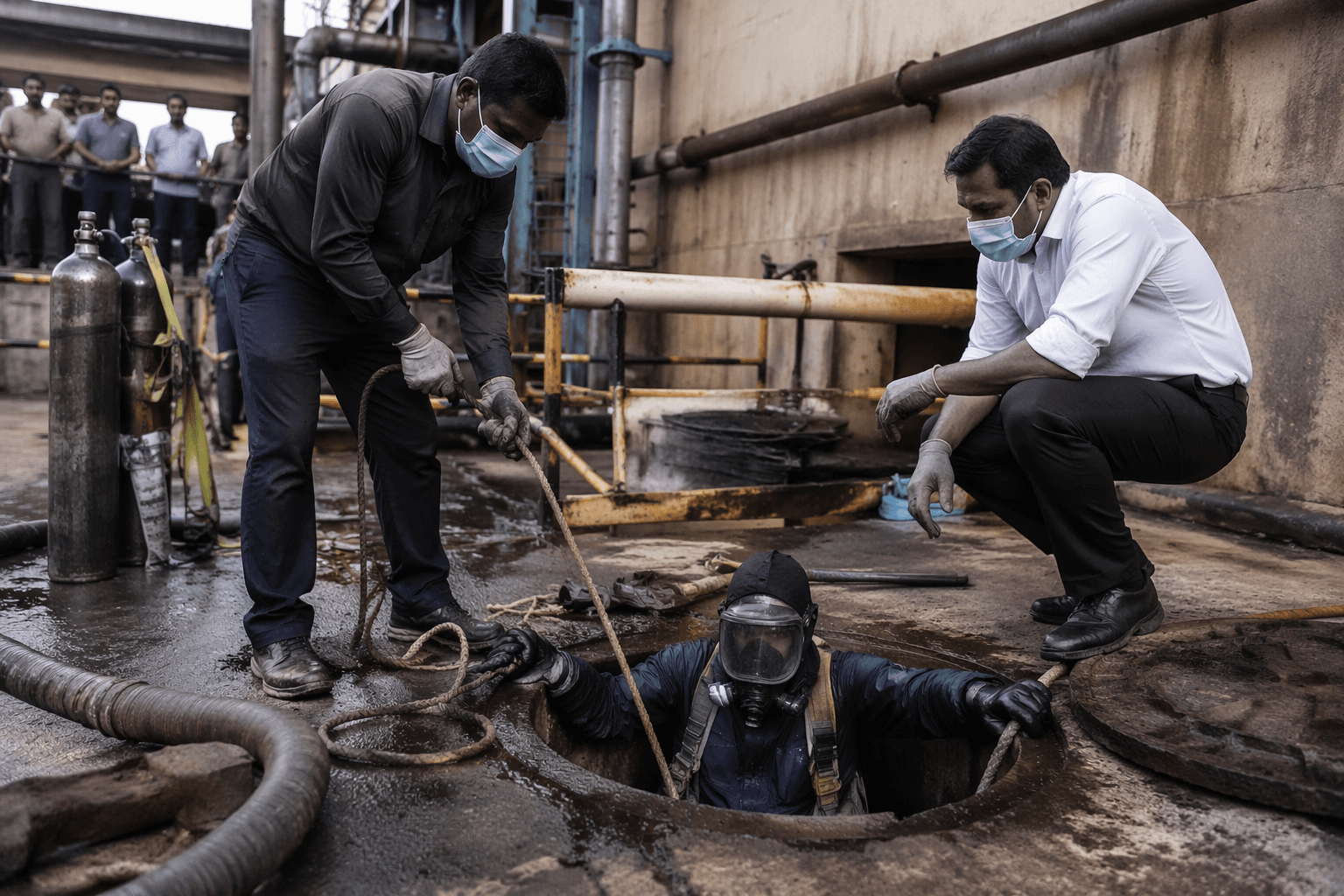
Officials said the exact gas had not yet been confirmed, even as investigators examined whether a sewage line or waste-disposal tank had been opened without adequate precautions. Police Commissioner Swapan Sharma said an FIR was being registered against the factory management for alleged negligence. The question now is whether the men were given protective equipment, whether the space was tested before entry, and whether anyone on site was prepared to respond when the fumes spread.
The deaths fit a recurring pattern in hazardous sanitation work, where workers are sent into confined spaces with little protection and weak supervision. Advisory guidance from the Ministry of Housing and Urban Affairs’ Emergency Response Sanitation Unit says fatalities in sewers and septic tanks often happen when workers lack training, protective equipment and supervision. That warning is central to the Ludhiana case, where the immediate cause was a toxic exposure inside an industrial sewage system, not a mechanical accident.
Indian law places the duty squarely on employers and managers. Section 36 of the Factories Act bars entry into confined spaces with dangerous fumes or gases unless practical safety measures have been taken and either a competent person certifies the space safe or workers use suitable breathing apparatus with a lifeline. In a private factory in one of Ludhiana’s busy industrial belts, the deaths of Maan Singh and Amit, a father and son, now raise the broader question of whether routine cleaning work was treated as disposable labor rather than a high-risk task requiring enforcement.
This article was produced by Prism’s automated news system from verified source data, official records, and press releases, then run through automated quality and moderation checks before publishing. The system is built and supervised by the people who set the standards it runs under. Read our full AI policy.
Know something we missed? Have a correction or additional information?
Submit a Tip