TINA returns as investors flood back into U.S. stocks after ceasefire
Global investors put $28 billion into U.S. stocks after the ceasefire, but the rush looks driven more by weak alternatives than pure conviction.

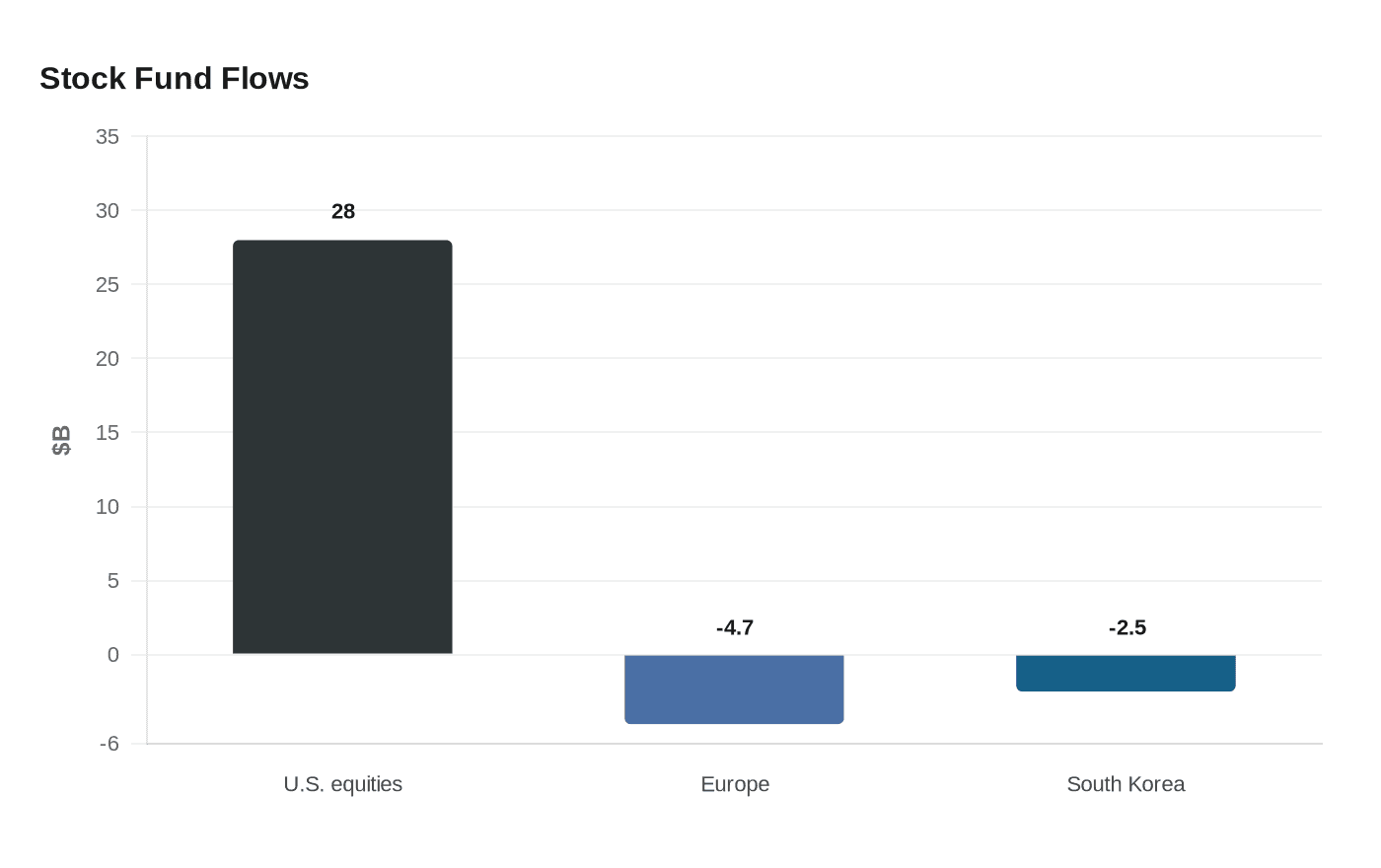
Global investors poured a net $28 billion into U.S. equities after Donald Trump’s April 7 ceasefire announcement, a sharp reversal that suggests caution is sending money back to Wall Street as much as optimism is. U.S.-based investors accounted for nearly $23 billion of that inflow, even after pulling a net $56 billion out of U.S. stocks earlier in 2026.
The swing revived an old market mantra, TINA, or There Is No Alternative, after weeks in which investors had leaned toward TIARA, or There Is A Real Alternative, and chased Europe and emerging markets. The reversal was abrupt. Bank of America cited EPFR data showing European stocks suffered a record $4.7 billion outflow in the week to April 15, while South Korean equity funds saw a record $2.5 billion exit. The message from asset allocators was clear: when geopolitical shock eased, money did not stay scattered for long.
The U.S. market regained its edge for practical reasons. Reuters reported that the S&P 500 closed at a new record high on April 15, its first since the U.S.-Iran conflict began, and by the April 19 analysis the index was 2% above pre-war levels. The recovery has been faster than in other regions because the feared oil shock faded, corporate earnings remained firm and the American economy looked more insulated from global disruption than many rivals.
That insulation matters. Reuters also reported on April 15 that the U.S. nearly became a net crude exporter for the first time since World War Two, underscoring how much more energy security now buffers the country from Middle East turmoil. The International Monetary Fund’s April 2026 World Economic Outlook reinforced the relative-growth case, projecting 2.3% U.S. growth for 2026 versus 1.1% for the euro zone.
Investors are still not all-in on America. U.S. equities had a cumulative net outflow of about $30 billion in 2026 as of the April 19 analysis, though that was almost a quarter of the level seen in mid-March. But the direction of travel has shifted fast. Morgan Stanley Investment Management chief investment officer Jim Caron said on April 10 that the 2025 view that Europe would outperform U.S. stocks had changed, while Franklin Templeton strategist Michael Browne argued that after repeated external shocks, investors tend to return to the economy that has performed best over the long term, is spending the most in the short term and is producing the best results. Gabriel Shahin of Falcon Wealth Planning put it more simply: investors are recognizing that “the S&P remains resilient and the engine is still humming.”
This article was produced by Prism’s automated news system from verified source data, official records, and press releases, then run through automated quality and moderation checks before publishing. The system is built and supervised by the people who set the standards it runs under. Read our full AI policy.
Did this article answer your question?

%3Amax_bytes(150000)%3Astrip_icc()%2FCertificate-of-deposit-2301f2164ceb4e91b100cb92aa6f868a.jpg&w=1920&q=75)
