To Lam confirmed as Vietnam’s party leader, consolidating five-year mandate
Vietnam’s Communist Party confirmed To Lam today as leader for the next five years, completing the congress process and signaling continuity at the top.
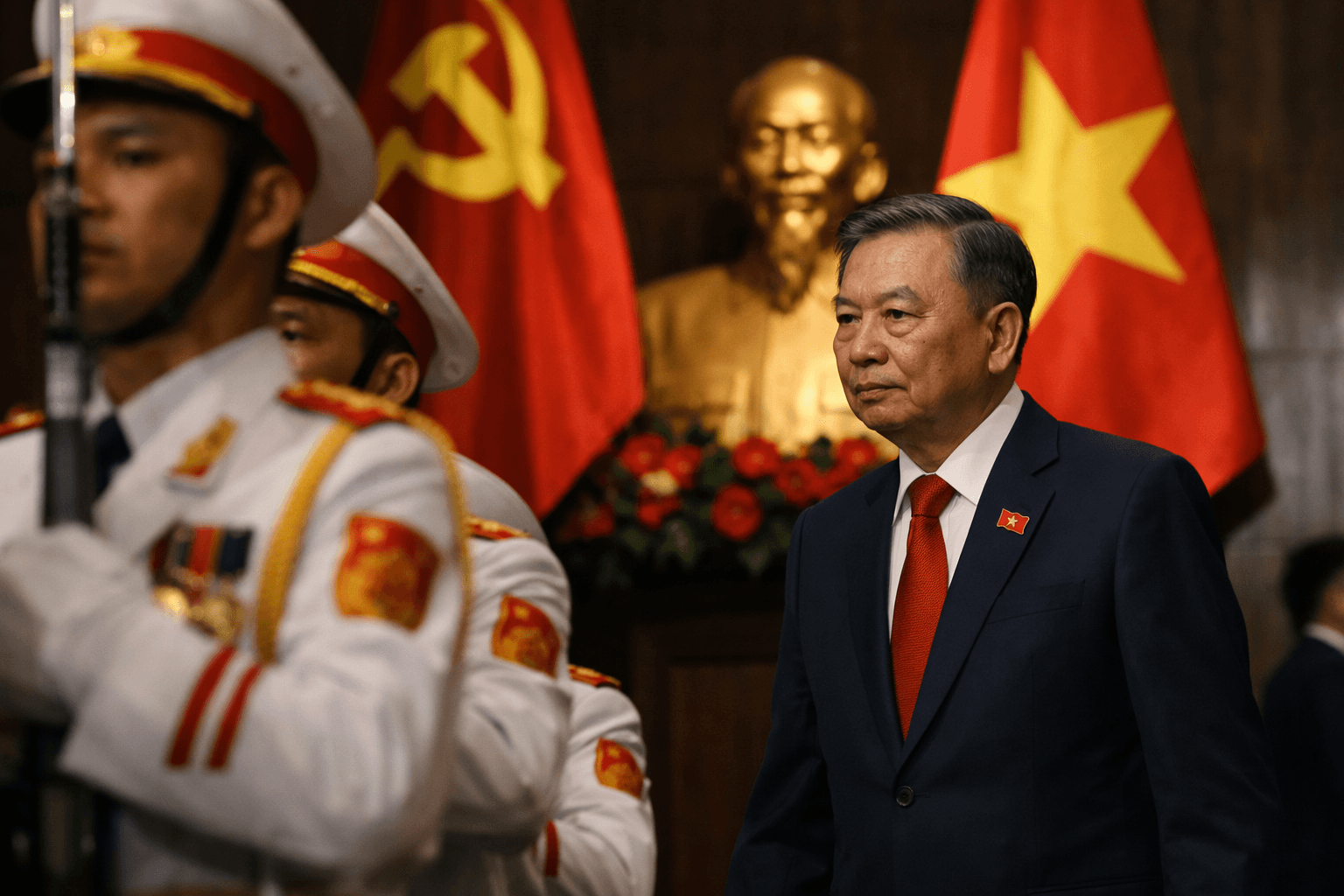
Vietnam’s Communist Party confirmed To Lam today as the party’s leader for the next five-year term, after a meeting of the party’s central committee completed the formalities of the national congress. The announcement brings to a close a carefully managed succession process and sets the tone for Hanoi’s domestic and foreign policy priorities through 2031.
The central committee’s confirmation follows selections made during the congress that concluded earlier, formalizing a leadership lineup intended to project unity and stability within the one-party state. The post of party leader carries decisive influence over Vietnam’s political agenda, including economic management, internal security, and the cadre appointments that determine policy implementation at every level of government.
For international observers, To Lam’s elevation is notable for what it suggests about continuity. The leadership transition does not indicate a sharp break with the party’s current direction; instead it appears to prioritize steady governance amid an era of intensifying geopolitical competition in Southeast Asia. Vietnam balances a rapidly growing economy with delicate diplomatic ties to China, deepening economic ties to the United States and Europe, and a prominent role within the Association of Southeast Asian Nations.
Domestically, the confirmation is likely to reinforce a focus on social stability and state-led modernization. The party has consistently prioritized economic growth while maintaining political control, and a consolidated leadership team will be expected to navigate mounting challenges: slowing global demand, the pressures of technological change, climate-related risks, and the management of social grievances in a tightly regulated political environment. Investors and partners will be watching for signs of policy continuity or shifts in regulatory approach, especially in areas such as foreign investment, digital governance, and state enterprise reform.
Human rights groups and some Western governments are also likely to scrutinize the new leadership for its record on civil liberties and space for dissent. Vietnam’s alignment of national security priorities with economic openness creates an enduring tension that new leadership must manage, with implications for foreign aid, trade agreements, and international legal obligations.
Regionally, Hanoi’s choices under the new leadership matter for maritime and security dynamics in the South China Sea and for cooperation within ASEAN on trade, infrastructure, and transnational challenges such as migration and climate adaptation. Major powers courting Vietnam for strategic and economic partnerships will read the confirmation as a signal of predictability, at least in the near term, even as they assess whether Hanoi will lean toward deeper ties with one partner over another.
Looking ahead, practical indicators of To Lam’s agenda will emerge in the coming weeks as the government spells out cabinet portfolios, legislative priorities, and foreign trips. Those actions will reveal whether the party leadership will emphasize economic liberalization, a tightened security posture, or a nuanced blend aimed at protecting stability while pursuing growth. For a country at the intersection of U.S.-China rivalry and rapid domestic change, the confirmation marks an important waypoint in Vietnam’s political trajectory.
This article was produced by Prism’s automated news system from verified source data, official records, and press releases, then run through automated quality and moderation checks before publishing. The system is built and supervised by the people who set the standards it runs under. Read our full AI policy.
Did this article answer your question?