Tommy Robinson rally draws 60,000 in London, stirs nationalist fervor
About 60,000 people filled Tommy Robinson’s London march, where flags, crosses and anti-Starmer chants showed far-right street politics moving into the open.
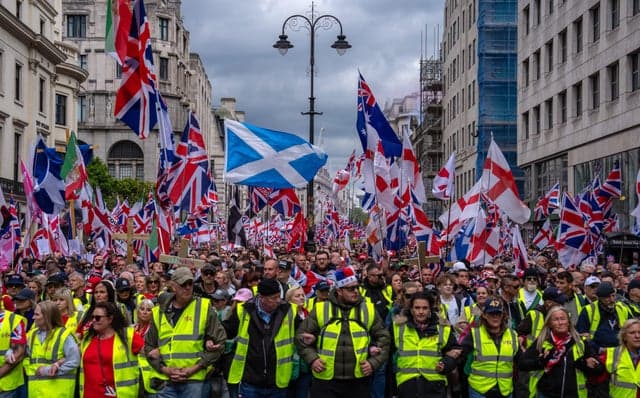
A sea of St. George’s Cross and Union flags moved through central London as police estimated about 60,000 people joined Tommy Robinson’s “Unite the Kingdom” march, one of the largest right-wing mobilizations Britain has seen in recent years. The crowd was kept under strict Public Order Act conditions, confined to a south-bound corridor from Kingsway to Parliament Square, but the message carried far beyond the route: “we want Starmer out,” “Christ is King,” and a hard-edged politics of national grievance.
Robinson, whose real name is Stephen Yaxley-Lennon, used the rally to push supporters toward political action ahead of the next general election. Marchers wore red “Make England Great Again” hats, carried wooden crosses and crucifixes, and some appeared in Knights Templar-style dress. Christian symbolism ran alongside nationalist imagery, while Israeli flags and Iranian monarchist flags also surfaced in the crowd, underscoring how the rally blended multiple ideological currents rather than a single, tidy cause.
The scale of the mobilization mattered as much as the slogans. Police deployed around 4,000 officers and brought in drones, helicopters, armored vehicles and, for the first time in a public order operation, live facial recognition cameras. The operation had to account not only for the march itself but also for a concurrent pro-Palestine demonstration and the FA Cup final, turning central London into a test of how much far-right street politics can be contained, policed and normalized in a single day.
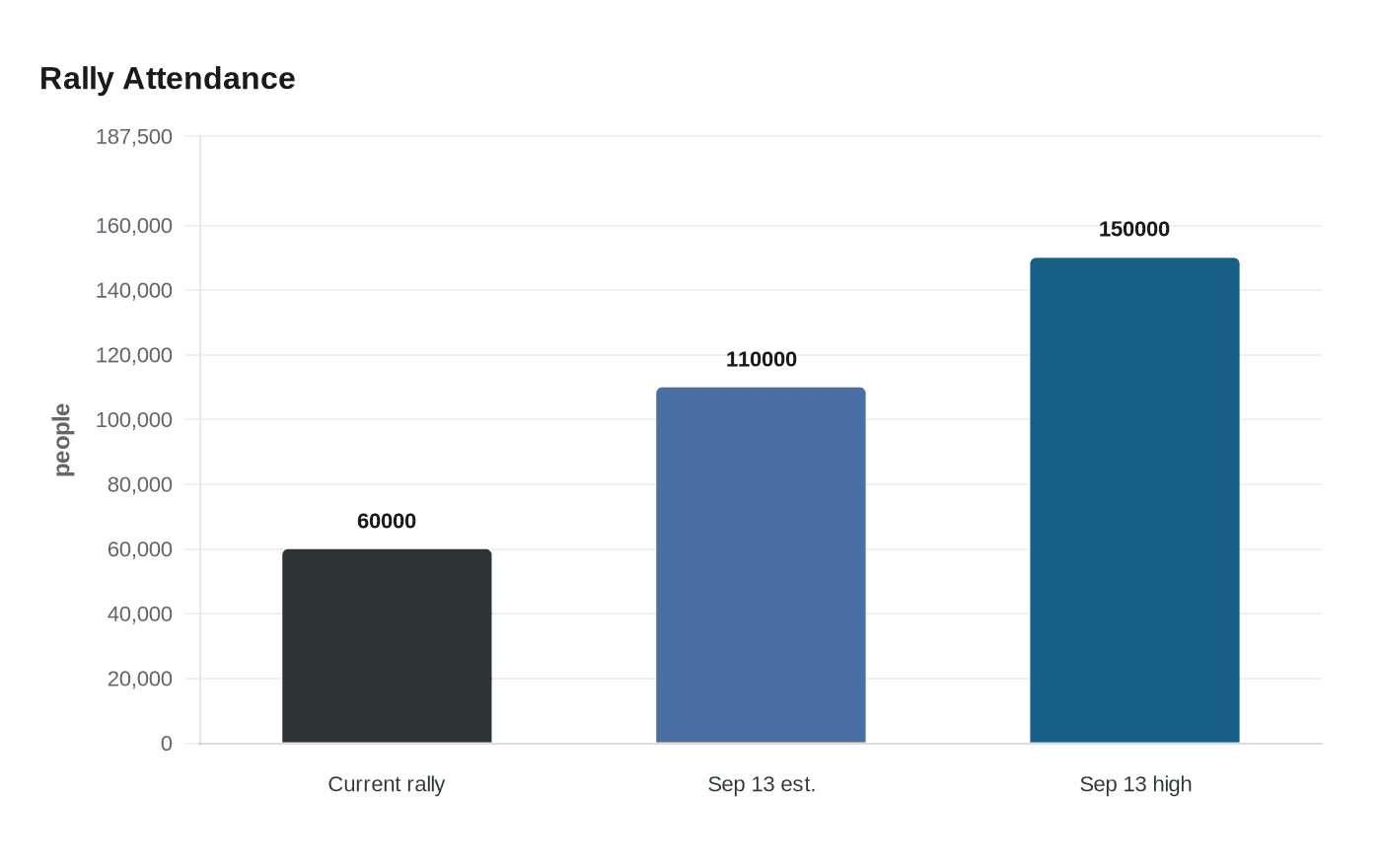
The turnout came after a similar Robinson-led rally on September 13, 2025, when police estimated about 110,000 people attended and some outlets put the figure as high as 150,000. That earlier march left 26 officers injured and led to at least 25 arrests, with around 5,000 people joining a Stand Up to Racism counter-protest. Police said it was “too big to fit into Whitehall,” a line that captured both the size of the demonstration and the challenge it posed to the capital.
This year’s crowd was smaller, but it still showed that Robinson can summon a large, committed following into the heart of London with anti-immigration, anti-government and religiously coded messaging. Amnesty International condemned the rally as bringing racism, violence and fear to London’s streets. The scale, the symbolism and the policing response all pointed to the same reality: what once could be dismissed as fringe agitation now has enough reach to shape the city’s streets and Britain’s political atmosphere.
This article was produced by Prism’s automated news system from verified source data, official records, and press releases, then run through automated quality and moderation checks before publishing. The system is built and supervised by the people who set the standards it runs under. Read our full AI policy.
Did this article answer your question?

