Toyota launches Woven City, a privacy-minded testbed for mobility innovation
Toyota opened Woven City near Mount Fuji as a living lab for mobility, but its data-heavy design raises hard questions about privacy and resident rights.
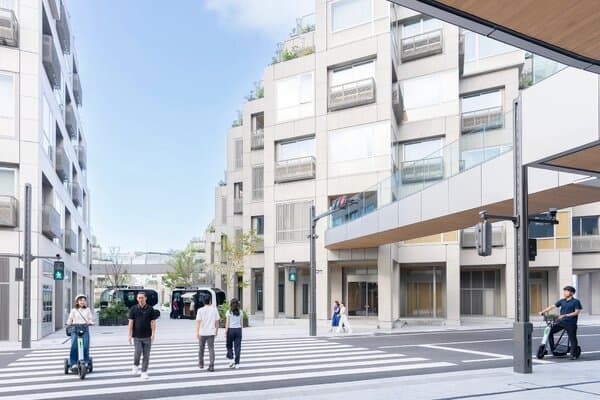
Toyota has turned a former factory site in Susono, Shizuoka Prefecture, into something more ambitious than a showcase neighborhood. Woven City opened on September 25, 2025 on the former Higashi-Fuji Plant site near Mount Fuji, with Toyota calling it a test course for the future of mobility and a place where residents, visitors and partner companies would co-create new products and services around the movement of people, goods, information and energy.
The project has been years in the making. Toyota first announced its shift toward becoming a mobility company at CES 2018, then unveiled the Woven City concept at CES 2020. Phase 1 construction finished in October 2024, after groundbreaking on February 23, 2021. At CES 2025, Toyota said launch would come in fall 2025 or shortly afterward, and when the site formally opened, the first residents, called Weavers, began moving in alongside 20 Inventors starting co-creation activities.
Toyota said Phase 1 is expected to accommodate about 300 residents, though the first wave was much smaller and made up mainly of Toyota and Woven by Toyota employees and their families. That detail matters because Woven City is not being built as a conventional suburb. It is a controlled environment for testing robotics, autonomous vehicles, AI and new urban systems in daily life, with Toyota and Woven by Toyota framing the campus as a place to solve social problems and improve safety while generating real-world data on how people and machines interact.

That data ambition sits at the center of the privacy debate. Toyota’s official privacy materials say the company will establish a personal data protection management framework and codify rules for the collection, use and provision of personal data. In April 2026, Toyota and Woven by Toyota added another layer to the experiment by unveiling Woven City Infra Hub and Woven City Data Fabric, tools meant to unify citywide data while respecting individual preferences and privacy. The promise is privacy-minded. The mechanism is still data-intensive.
Outside observers have not treated that tension lightly. A Konrad-Adenauer-Stiftung report used Woven City as a case study in smart-city privacy and data-security concerns, and academic research that surveyed Susono City officials, Toyota employees, university professors, civil society personnel and local citizens found unease about the disconnect between Woven City and Susono City, weak information sharing, financial worries and uncertainty over whether nearby residents will see tangible benefits. For Toyota, Woven City is a bold prototype of private-sector urbanism. For everyone else, it is also a test of who gets to govern the rules when a corporation builds a city and calls it the future.
This article was produced by Prism’s automated news system from verified source data, official records, and press releases, then run through automated quality and moderation checks before publishing. The system is built and supervised by the people who set the standards it runs under. Read our full AI policy.
Did this article answer your question?