Traders Brace for Turmoil as Hormuz Shipping Grinds to Halt
Hormuz traffic stalled after gunfire and warnings, sending Brent to $96.85 and S&P 500 futures down 0.9% as traders priced in a wider shock.
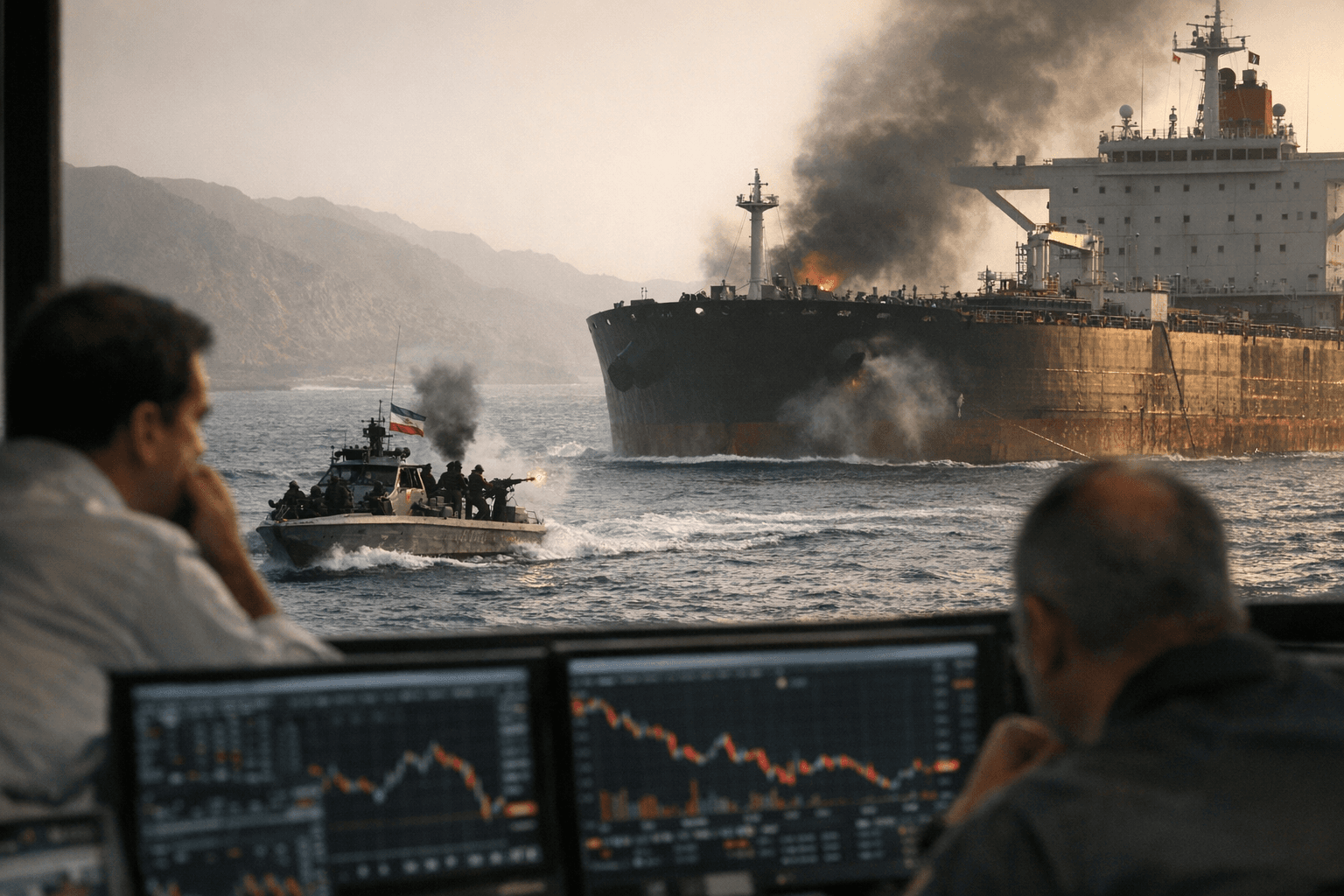
Commercial traffic through the Strait of Hormuz has ground to a halt after gunfire, warnings and a brief rebound that quickly faded, leaving one of the world’s most important energy arteries looking more like a combat zone than a shipping lane.
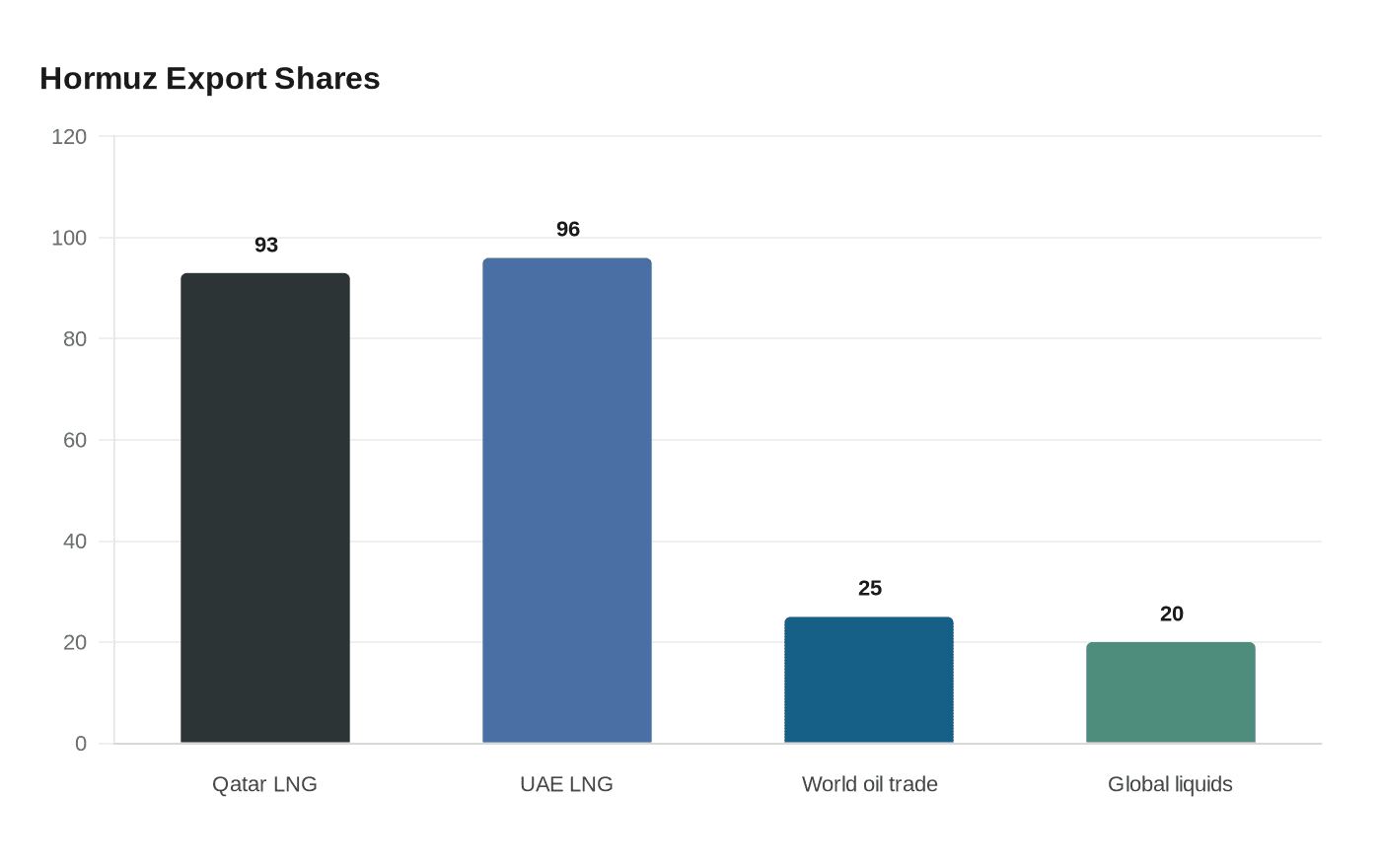
That matters because the strait is only 29 nautical miles wide at its narrowest point, with inbound and outbound ships funneled through 2-mile-wide channels. Roughly 20 million barrels a day of crude oil and oil products moved through it in 2025, about a quarter of world seaborne oil trade, while about 93% of Qatar’s LNG exports and 96% of the UAE’s LNG exports also passed through the waterway. The U.S. Energy Information Administration said oil flow through the strait averaged 20 million barrels a day in 2024, equal to about 20% of global petroleum liquids consumption.
The market reaction on April 20 was immediate. Brent crude jumped about 7% to $96.85 a barrel in early Asian trading, while S&P 500 futures fell about 0.9%. The euro weakened and the yen eased as investors absorbed the latest shift in Iran-related tensions and the renewed closure of the strait. That followed a sharp reversal on April 17, when oil fell more than 9% after Iran said passage was open during the ceasefire period. The whipsaw showed how quickly headlines in the Gulf can move energy prices, currencies and equity futures in the same session.
UN Trade and Development said on April 1 that the Strait of Hormuz remained practically closed, warning that higher oil and gas prices could lift living costs, slow trade and growth in 2026, and intensify financial pressure on developing countries through weaker currencies, falling stock prices and higher external debt costs. The Dubai crude benchmark also suspended nominations on March 2 for grades that required transit through the strait, a sign that shipping disruption had already moved beyond rhetoric and into the trading system.
The security picture has deteriorated alongside the market move. UK Maritime Trade Operations logged 30 incidents affecting vessels in and around the Arabian Gulf, the Strait of Hormuz and the Gulf of Oman between Feb. 28 and April 14, including 18 attack reports. Among them were a tanker hit by an unknown projectile north of Dubai on March 31 that caused a fire, a container ship struck south of Kish Island on April 6, and a bulk carrier hit by two unidentified projectiles near Ras Al Hadd, Oman, on April 7.
The spillover is not limited to oil. The United Nations warned that disruptions threatened fertilizer supplies, food security and the next planting season, with FAO chief economist Máximo Torero saying roughly 30% to 35% of crude oil, 20% of natural gas and 20% to 30% of fertilizers were not moving. The International Energy Agency says alternative pipeline capacity around the strait is only about 3.5 million to 5.5 million barrels a day, far short of what normally passes through. Most of that oil goes to Asia, leaving China, India, Japan and Korea especially exposed if the shutdown lasts.
This article was produced by Prism’s automated news system from verified source data, official records, and press releases, then run through automated quality and moderation checks before publishing. The system is built and supervised by the people who set the standards it runs under. Read our full AI policy.
Did this article answer your question?

